Most tile manufacturers already run an ERP. That’s not the problem. The problem is what the ERP doesn’t talk to.
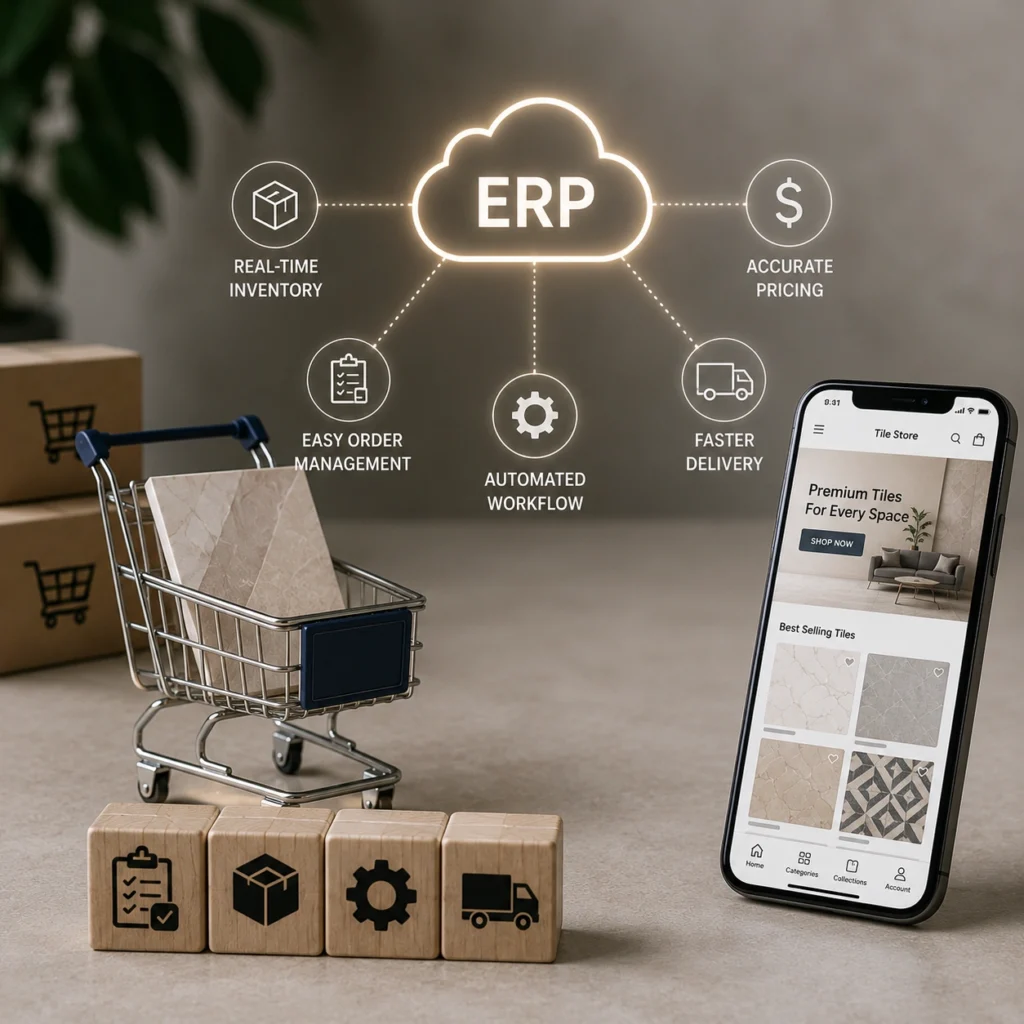
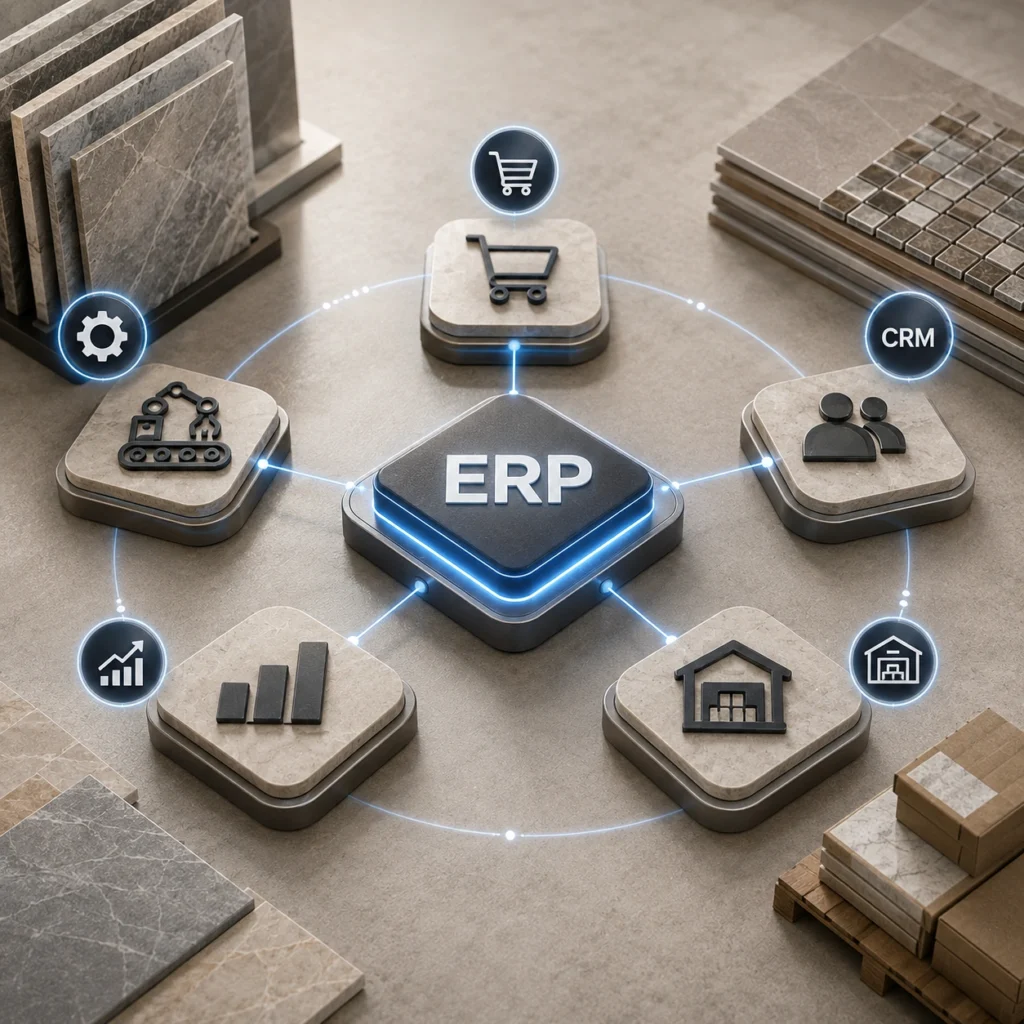
Orders sit in one system. Inventory lives in another. Dealer pricing hides in a spreadsheet somebody updates on Fridays. Meanwhile, a customer waits three days to hear whether a lot number is still available. This is where modern ERP integration solutions change the math, and it’s why our tile-industry ERP integration solutions focus on connecting the systems that actually move revenue. Below are the five integrations that matter most right now, and honestly, most manufacturers should tackle them in this order.
Why ERP Integration Matters for Tile Manufacturers
Tile isn’t a simple SKU. You’ve got shade variation, lot batches, coverage math, waste factors, dealer tiers, and warehouse locations that don’t sync neatly. A standalone ERP handles the finance side well. It rarely handles the operational reality of a manufacturer moving thousands of square meters a week across dealers, retailers, and direct buyers.
Integration is what closes that gap.
Done right, it removes duplicate entry, eliminates the “call the office” bottleneck, and gives every team the same version of the truth. Done poorly, it creates a second mess on top of the first one. That’s why the order of these integrations matters as much as the integrations themselves.
The 5 ERP integrations every tile manufacturer should prioritize
Here’s the shortlist. Each one solves a specific operational headache, and each unlocks the next.
1. Ecommerce platform integration
If your ERP and your ecommerce store aren’t connected, you’re basically running two businesses that pretend to be one.
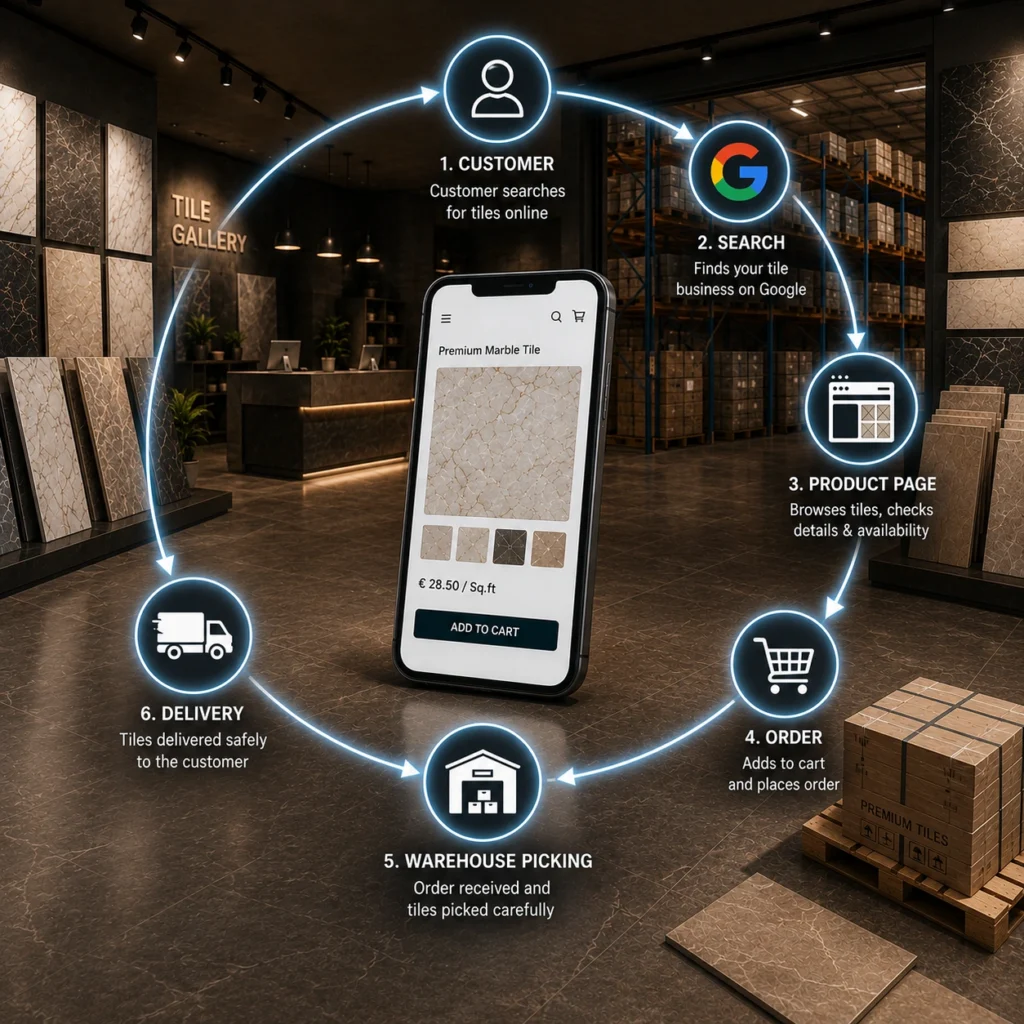
An ERP-to-ecommerce integration (typically Magento or Shopify Plus for tile brands) keeps pricing, inventory, product data, and orders in sync in real time. When a designer in Chicago buys 40 boxes of a matte porcelain, the ERP knows immediately. The warehouse gets picked. Finance sees the invoice. Nobody re-types anything.
What this actually fixes:
- Overselling stock you don’t have
- Manual order entry (and the typos that follow)
- Delays in updating price lists across regions
- Broken product info between catalog and invoice
For a mid-sized manufacturer running promotions or SKU expansions monthly, this integration alone usually pays for itself within a quarter. Our tiles ecommerce development work is almost always paired with an ERP hookup on day one, because there’s little point in a modern storefront that lies about stock.
2. B2B dealer portal integration
Dealers are the lifeblood of most tile manufacturers. Yet a shocking number of manufacturers still take dealer orders over email, WhatsApp, or a PDF form.
A proper B2B dealer portal, wired into the ERP, gives every dealer their own login with tier-based pricing, credit limits, order history, and live inventory. No calls to the sales rep to check “is this in stock.” No spreadsheet arguments about last quarter’s discount slab.
A few things this changes fast:
- Dealer order processing time drops sharply, sometimes by more than half
- Repeat orders become one-click reorders
- Credit exposure is visible before the order ships, not after
- Sales reps stop being data-entry clerks and start selling again
Our B2B dealer management portal solution is built around role-based access, custom pricing rules, and automated workflows that push straight to the ERP. That’s the whole point. If your dealers hate their ordering experience, they’ll drift to whichever competitor makes it easier.
3. Warehouse and inventory management integration
This is the one manufacturers underestimate the most.
Your ERP holds the order. Your WMS runs the pick, pack, and dispatch. If they aren’t talking, someone in the warehouse is walking to a printer, checking a lot number by eye, and calling the office. Multiply that by 500 orders a day and you see the problem.
A real WMS-to-ERP integration handles barcode and RFID scanning, lot-level tracking (critical for shade variation), multi-warehouse stock visibility, and automated dispatch confirmation. Inventory accuracy climbs into the mid-90s. Stockouts become rare, not routine.
Worth adding: this integration is also where AI-based demand forecasting starts to earn its keep. Once your ERP has clean, live inventory data from every warehouse, forecasting stops being guesswork. Our inventory management platform plugs into whatever ERP you already run, so you don’t have to rip anything out.
4. CRM integration
Manufacturers often treat CRM as a sales-team tool. It isn’t. It’s a manufacturing tool disguised as a sales tool.
When Salesforce, HubSpot, or Dynamics CRM is integrated with the ERP, a few useful things happen. Sales reps see live credit status, order history, and open invoices before they quote. Marketing sees which SKUs actually convert. Finance sees pipeline value tied to real accounts, not vibes. Support sees the full order timeline when a dealer calls about a delayed shipment.
The under-appreciated benefit? Forecasting gets sharper. When your CRM pipeline flows into ERP demand planning, production scheduling starts responding to real signals instead of last year’s numbers.
Skip this one and your sales team will keep making promises the factory can’t keep.
5. PIM (product information management) integration
This one’s last on the list but rising fast in priority.
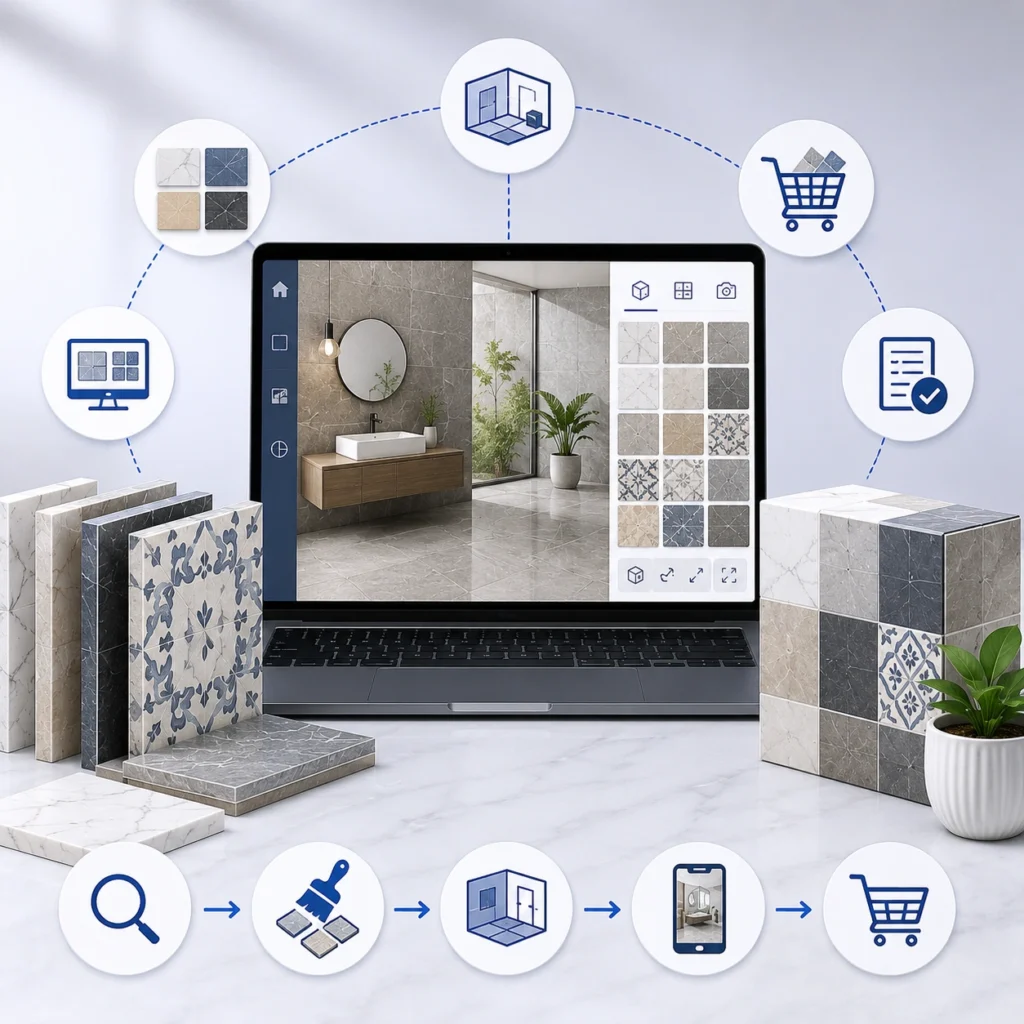
Tile catalogs are complicated. Every SKU carries dimensions, finish, PEI rating, slip resistance, batch photos, room shots, technical PDFs, and translated descriptions for export markets. Managing that inside an ERP is painful. Managing it across ecommerce, dealer portal, marketplaces, and print catalogs without a PIM is nearly impossible.
A PIM integrated with your ERP becomes the single source of truth for product data. Update a spec sheet once. It flows everywhere. Add a new collection. Every channel picks it up automatically.
Common wins:
- Faster launch cycles for new collections
- Consistent product data across every touchpoint
- Fewer returns from mis-specced orders
- Easier export expansion (translations, unit conversions, compliance data)
For manufacturers pushing into new regions or marketplaces, this integration is what makes scale not feel like chaos.
What Happens When ERP Systems Aren’t Integrated
A quick reality check, because the cost of skipping this stuff is often invisible until it isn’t.
Warehouses ship wrong lot numbers. Dealers get quoted prices that don’t match invoices. Ecommerce stock counts lag by 24 hours. Sales reps quote from stale price lists. Finance closes books late every month. Support spends half its day tracking down an order status. Every one of these is a symptom of the same root cause: disconnected systems.
Manufacturers who run integrated stacks close orders faster, keep dealers happier, and forecast better. That’s not a pitch. It’s just what the operations data shows.
How to Prioritize ERP Integrations for Your Tile Business
You don’t have to do all five at once. In fact, don’t.
A practical order for most tile manufacturers looks like this:
- Ecommerce or dealer portal first, depending on which channel drives more revenue
- WMS and inventory next, because it makes everything else more accurate
- CRM once your sales team is ready to actually use it
- PIM last, unless you’re expanding into new markets or marketplaces soon
That said, it depends on your bottlenecks. A manufacturer bleeding time on dealer orders should start with the portal. A manufacturer losing sales to stockouts should start with WMS. Talk to a partner who’s been through this before, ideally one who’s connected to SAP, NetSuite, Epicor, Odoo, and Dynamics enough times to know where the potholes are.
Connect Your ERP With the Systems That Drive Your Business
Every quarter you wait is another quarter of duplicate entry, missed orders, and dealers chasing your sales team for stock updates. We build ERP integrations designed for how tile actually moves, across ecommerce, dealer portals, warehouses, CRMs, and PIMs. No generic templates. No guesswork. Just clean, bidirectional connections that make your existing systems finally work like one.
FAQs
1. Which ERP works best for tile manufacturers?
There isn’t one universal answer. SAP and Microsoft Dynamics fit large enterprises. NetSuite and Odoo work well for mid-market manufacturers. Epicor and Sage have strong followings in specific regions. The right ERP is the one your integrations can actually connect to without a custom nightmare.
2. How long does an ERP integration project take?
Depends on scope. A clean ecommerce-to-ERP hookup can go live in 8 to 12 weeks. A full ecosystem (ERP plus WMS plus dealer portal plus CRM) usually runs 4 to 9 months in phases. Anyone quoting you 3 weeks for a full stack is optimistic.
3. Do I need a PIM if my ERP already stores product data?
Usually, yes. ERPs handle transactional product data well. They struggle with rich media, marketing copy, multi-language content, and channel-specific attributes. If you sell across more than two channels, a PIM stops being optional.
4. Can integrations work with older or legacy ERP systems?
Yes, though it’s harder. Legacy ERPs often need middleware or custom APIs. It’s doable, but the cost calculation changes. Sometimes it’s worth budgeting a phased ERP upgrade alongside the integration work.
5. Will ERP integration disrupt daily operations?
It shouldn’t, if it’s done in phases with parallel-run testing. Big-bang cutovers are where disruption happens. A staged rollout keeps the business running while systems come online.