
Tile moves differently from almost anything else a warehouse handles. It’s heavy, it breaks, and two pallets of the same product can arrive in slightly different shades. That combination turns an ordinary supply chain into a daily juggling act for manufacturers, distributors, and retailers. Guess wrong and you’re either sitting on dead stock or apologizing to a contractor halfway through an install. This guide covers where tile supply chains actually break, what’s shifting this year, and how a connected tile inventory management solution closes the gaps.
What Is Supply Chain Management in the Tile Industry?
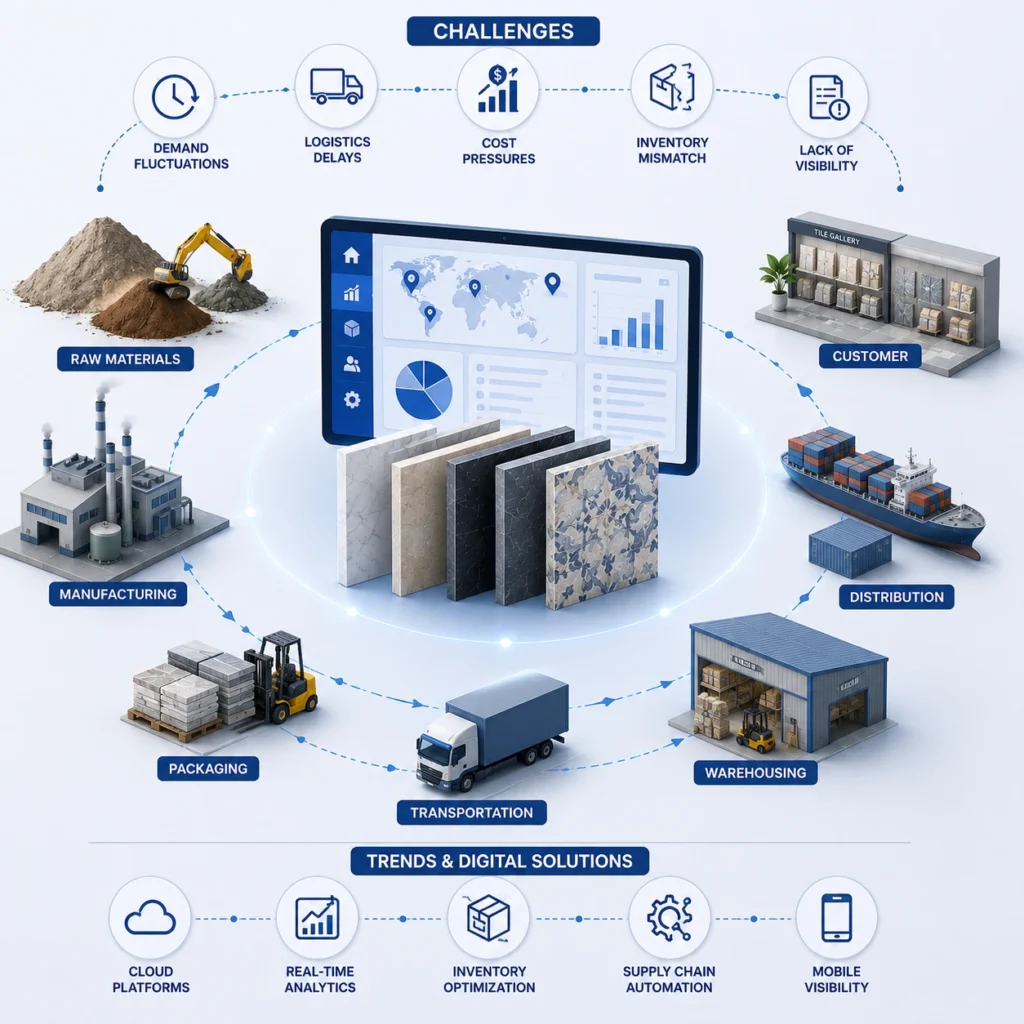
Supply chain management in the tile industry is the full path of moving tile from raw material to a customer’s floor. It runs through sourcing, manufacturing or import, warehousing, and lot tracking that ties each batch to its shade. Transportation has to handle weight and fragility, then distributors push stock out to dealers, each with their own pricing. Delivery closes the loop: the right boxes, from the right lot, on time and intact.
What makes the tile supply chain so hard to manage?
Tile is an unforgiving product to move. A single order can weigh several tons, so freight is expensive and damage is a constant threat. Shade variation makes it worse. Tiles from different production batches rarely match perfectly, which means tracking lots isn’t optional. It’s the line between a clean install and an expensive callback.
A lot of the catalog ships from overseas too. Long ocean transit, customs holdups, and high minimum order quantities push buyers to commit months in advance, often on forecasts that don’t hold. Layer in the seasonal swings of renovation and new construction, and you get a planning problem with very little room for error.
The businesses that feel this pain most? Usually the ones still running everything on spreadsheets and phone calls.
Common Supply Chain Challenges in the Tile Industry
A few issues show up again and again, no matter the size of the operation.
1. Lot and shade mismatches between shipments
When restocked tile arrives in a different shade and nobody catches it, the problem lands on the customer. A homeowner notices the patchy floor, the retailer eats the replacement, and trust takes a hit. Without lot tracking tied to each order, matching the right batch to the right job is mostly luck.
2. Inventory Inaccuracies and Stock Mismatches
This one’s quiet but costly. Your system says 400 boxes are on hand. The floor has 280. The other 120 were damaged, miscounted, or sold and never recorded. So you promise stock you can’t ship, or you reorder product you already own. Either way, somebody’s unhappy.
3. Long and unpredictable lead times
Imported tile can take weeks to arrive, and that window keeps moving. When forecasting is weak, teams overcorrect. They overbuy slow movers and run dry on the bestsellers, tying up cash in exactly the wrong inventory.
4. Breakage, freight, and handling costs
Tile damaged in transit or during picking is money gone. Manual picking raises the odds of broken corners and wrong pulls, and every replacement order stacks fresh freight on top of the original loss.
5. Disconnected systems and manual orders
When the website, the warehouse, and the ERP don’t share data, staff retype the same order three times. Errors creep in, processing slows down, and your sales team spends its day on data entry instead of customers.
Key Supply Chain Trends in the Tile Industry (2026)
The good news is that the tooling has finally caught up with the complexity. A few shifts stand out.
Predictive demand forecasting is moving from guesswork to data. Systems now read historical sales, seasonal patterns, and market signals to flag what you’ll actually need, which trims both stockouts and dead stock.
Live inventory visibility is becoming the baseline. Instead of a number that’s a week old, teams expect counts that update the moment tile is received, moved, or shipped, accurate down to the lot and the pallet.
B2B buying has gone digital. Dealers no longer want to phone in orders during business hours. They’d rather log in, see real availability and their own pricing, and place an order at midnight if that’s when they’re working.
Supplier strategies are shifting too. After years of disruption, more companies are diversifying sourcing and adding regional suppliers to reduce their exposure to a single long lane.
And sustainability now reaches into logistics. Buyers and builders increasingly ask about waste, packaging, and freight emissions, which pushes smarter ordering and fewer wasted shipments.
How digital solutions fix tile supply chain problems?
Technology won’t carry pallets for you. But the right systems strip out the guesswork that causes most of the damage.
1. Real-Time Inventory Visibility Across Warehouses
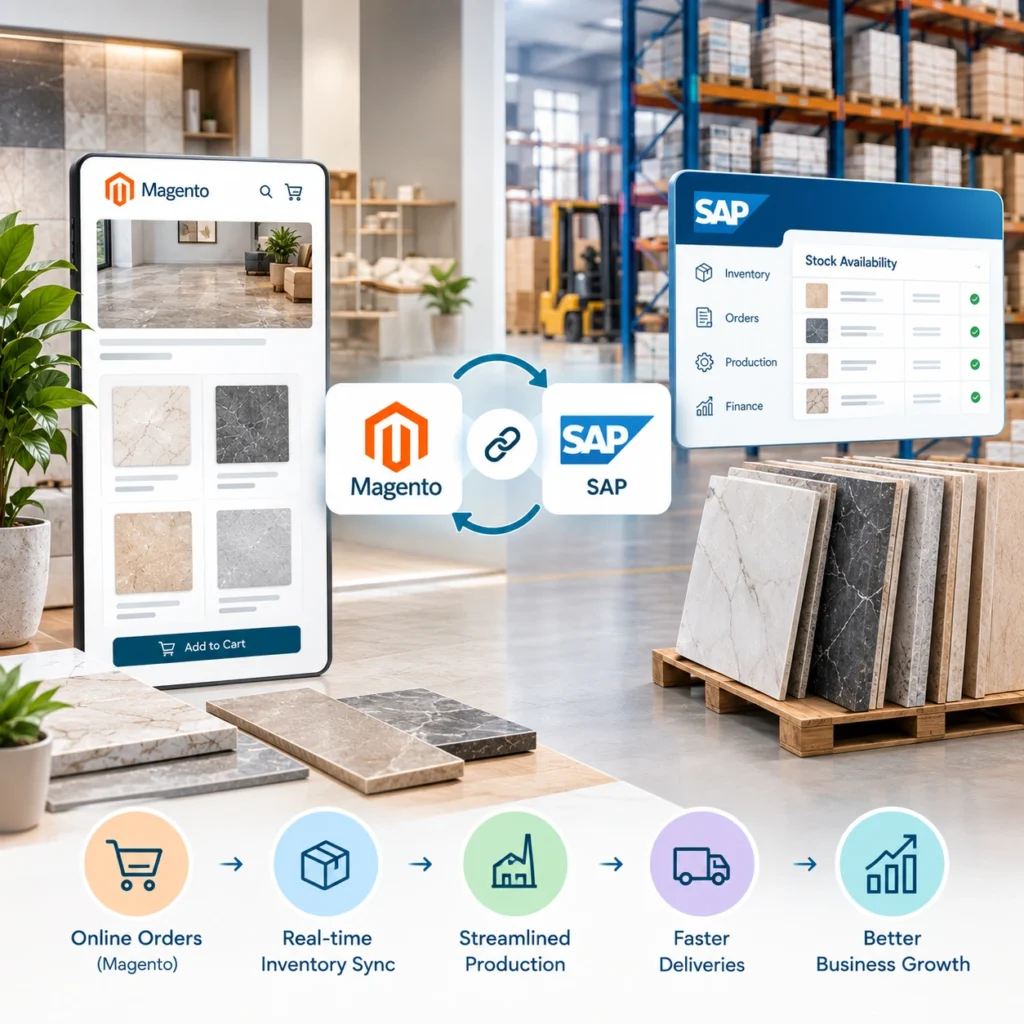
A proper inventory platform tracks each tile movement as it happens and syncs stock across warehouses, showrooms, and distribution centers from one dashboard. What the website shows is what’s truly available, down to the lot. Barcode scanning at receiving cuts errors sharply, and lot tracking keeps shade matching reliable. Our inventory and warehouse solution is built around this kind of visibility, and it targets up to a 95 percent drop in inventory errors.
2. Forecasting and automated replenishment
Instead of reordering on gut feel, demand forecasting uses your own sales history and seasonal trends to recommend what to buy and when. Automatic reorder triggers fire before bestsellers run out, while slow movers stop quietly eating shelf space and cash.
3. ERP and CRM Integration
Your ERP runs the business. Bidirectional integration connects it with your store, dealer portal, and warehouse so data flows once and stays consistent. We build ERP and system integration solutions for SAP, NetSuite, Microsoft Dynamics, and Sage, which removes the retyping and the errors that come with it.
4. B2B Dealer Portals for Faster Ordering
A dealer portal lets buyers order on their own, around the clock, with their negotiated pricing and live stock right in front of them. Orders sync straight to the ERP, invoices generate automatically, and routine processing stops swallowing your sales team’s day. Companies using our B2B dealer portal solution aim to cut order processing costs by roughly 70 percent.
5. Tile Calculators That Reduce Returns
A surprising share of tile returns come from customers ordering the wrong quantity. Coverage, waste, and grout calculators help buyers get the math right the first time. Fewer reorders, less return freight, and less strain on everything downstream.
Where Should Tile Companies Start?
You don’t have to fix everything at once. A handful of moves give you the most return early.
- Start with inventory accuracy, since almost every other problem traces back to not knowing what you actually have on hand.
- Get lot and shade tracking in place before you scale, because retrofitting it after a quality complaint is painful and expensive.
- Connect your ERP to your sales channels early, so you aren’t building processes around manual data entry that you’ll later have to unwind.
- Give dealers a self serve ordering option only once your stock data is trustworthy. Automating bad numbers just spreads the mess faster.
- Add buyer facing calculators to product pages to cut wrong quantity orders at the source.
Pick the bottleneck that’s costing you the most right now and solve that one first. Momentum matters more than a perfect roadmap.
Ready to tighten up your tile supply chain? Tile IT Solutions builds inventory, ERP, and B2B systems made specifically for tile, flooring, and building materials companies. Tell us where things are breaking and we’ll show you what a connected setup looks like.
FAQs
1. What does supply chain management mean in the tile industry?
It covers everything from sourcing and importing tile to storing it, tracking lots, and getting the right boxes to the right customer without breakage or shade mismatches. Tile’s weight, fragility, and batch variation make it trickier than most product categories.
2. Why is lot tracking such a big deal for tile?
Because tiles from different batches don’t always match. If you can’t tie inventory to specific lots, you risk shipping mismatched shades for the same job, which usually ends in a return or a redo.
3. Can software really cut breakage and freight costs?
Not directly, but it helps a lot. Better picking accuracy means fewer broken pulls, and accurate stock means fewer panic reorders and less return freight. Those savings add up fast.
4. Is this only worth it for big distributors?
No. A single showroom with messy stock counts loses sales too. Smaller operations often see the fastest wins, since the gap between manual and connected systems is so wide.
5. Which systems should we connect first?
Usually inventory and ERP. Once those two share clean data, adding a B2B portal or an online store on top is far smoother and a lot less risky.