
Ask any interior designer what slows a tile project down, and you’ll rarely hear “the tile.” It’s the back and forth. The sample that arrived cracked. The client who loved the swatch and hated the finished wall. The mood board that looked stunning in Photoshop and forgettable in the actual living room.
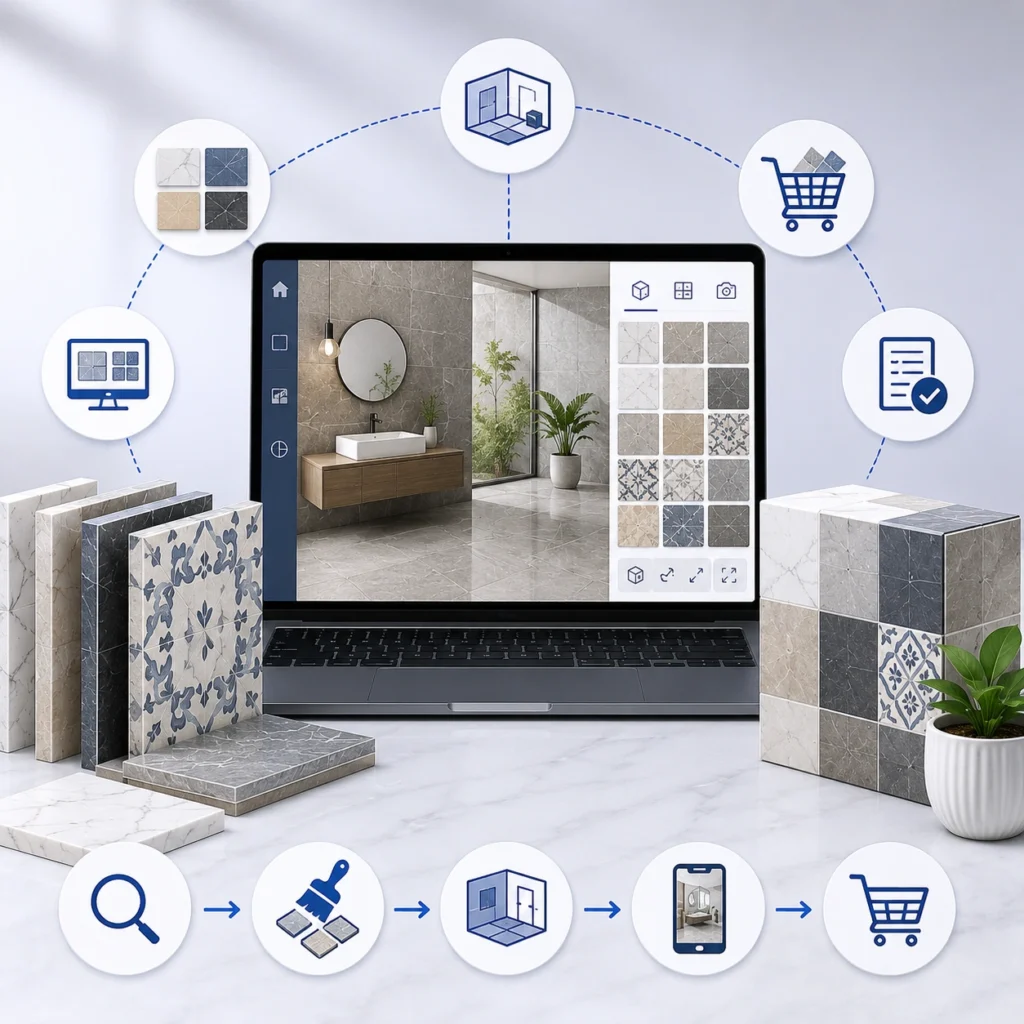
Tile is a physical, textured, light-sensitive material. Flat imagery just doesn’t do it justice. And when designers work without proper 3D or AR visualization tools, the whole workflow starts leaking time, money, and client confidence. Modern platforms like Tile IT Solutions’ 3D and AR visualization solution exist specifically to close that gap, but before we get there, it’s worth understanding where the pain actually lives.
Common Tile Visualization Challenges for Interior Designers
Most of these problems don’t show up on a single project. They compound quietly across a designer’s calendar, showing up as missed deadlines, revision fatigue, and slower client sign-offs. Here are the six that come up most often.
1. Samples Don’t Show the Full Picture
A 4×4 sample tells you the color. Maybe the finish. It cannot show you how a 24×48 rectified porcelain will behave across a 300 square foot open-plan floor.
Scale changes everything. Veining that looks subtle on a sample can dominate a room. A matte finish that felt calm in the studio can read cold under afternoon light. Designers know this. Clients usually don’t.
Without visualization, the only way to bridge that gap is experience and vocabulary. Which works, until the client sees the installed floor and says the two words no designer wants to hear: “It’s different.”
2. Client Approval Takes Too Long
Here’s a familiar cycle.
You shortlist three tiles. The client picks one. You order samples. Two weeks pass. The samples arrive. The client changes their mind. You pull two more options. Another two weeks. Now the trades are asking when they can start.
Static images and physical samples force clients into an act of imagination. Some clients are great at it. Most aren’t. Every extra approval round pushes the project timeline and eats into the designer’s margin.
With a 3D visualizer, the client sees the tile applied to their actual room, at scale, under realistic lighting, in minutes. Decisions get made in one sitting instead of six.
3. Mood Boards Don’t Always Show the Final Look
Photoshop mood boards are a designer staple. They’re also a compromise.
The tile image on a mood board is usually a manufacturer’s product shot, taken flat, under studio lighting, at a random scale. Drop it into a rendered room and something feels off. Grout lines look painted on. The reflection is wrong. The texture reads like wallpaper.
Clients pick up on this even when they can’t articulate it. They approve the board, then feel uneasy when construction begins. That unease turns into change orders.
Photorealistic 3D rendering, with accurate grout width, tile edge treatment, and light response, removes the guesswork. What the client sees on screen is what actually gets installed.
4. The Cost of Physical Tile Samples
Samples aren’t free. Shipping isn’t free. Storage isn’t free either, and any designer with a studio knows how quickly a sample library sprawls.
Multiply that across a firm handling twenty active projects. Now you’re looking at meaningful monthly spend, plus the environmental footprint of moving heavy ceramic around the country.
A few realities designers don’t often say out loud:
- Discontinued lines still sit on studio shelves
- Half the samples pulled for a project never make the final cut
- Shipping delays regularly hold up presentations
- Clients often lose samples between meetings
Digital visualization doesn’t eliminate physical samples entirely. Nothing beats touch for the final call. But it cuts sample requests dramatically at the shortlist stage, which is where most of the waste happens.
5. Presenting Tile Designs to Remote Clients
Post-2020, a lot of design work happens over Zoom. Try presenting tile options through a laptop camera. The color shifts. The texture flattens. The client squints and asks you to hold the sample closer.
Designers working with clients in other cities or countries face this constantly. Physical samples cost time and freight to ship. Video calls degrade material fidelity. Static PDFs feel dated.
An interactive tile visualizer the client can open on their own device solves this in one move. They walk through options with the designer in real time, save favorites, and come to the next meeting with a real shortlist instead of vague preferences.
6. Keeping Up With Tile Trends and Custom Requests
Tile trends move faster than they used to. Large-format slabs, terrazzo revivals, hand-glazed zellige, book-matched marble looks. Clients see something on Instagram Thursday and ask about it Friday.
Without a fast way to visualize new products in a client’s actual space, designers have two options. Guess, or delay. Neither is great.
A visualization platform tied to a manufacturer’s live tile catalog and ecommerce setup gives designers instant access to new arrivals and lets them show clients how a trending product would actually look in their kitchen, not in a stylized studio shot.
The Business Impact of Poor Tile Visualization
There’s a quieter cost to poor visualization: lost projects.
When a client can’t confidently visualize the outcome, they hesitate. Hesitation often becomes withdrawal. The designer ends up quoting three projects to win one, when better visualization tools could have closed the original conversation.
Firms using 3D and AR tools consistently report faster close rates, fewer revision rounds, and cleaner project handovers to installers. That’s not marketing talk. It’s the natural outcome of removing ambiguity from a visual decision.
How 3D Tile Visualization Helps Interior Designers
Visualization isn’t a nice-to-have anymore. Clients under 40 expect it. Manufacturers are adding it to their websites. Retailers offering in-store 3D previews are pulling business from those that don’t. Designers who lean into these tools spend less time chasing samples and more time actually designing.
The gap between firms with proper visualization capability and firms still emailing PDF mood boards is widening. And it’s going to keep widening.
Ready to Improve Your Tile Visualization Process?
If your studio still runs on printed samples and PDF moodboards, you’re leaving hours and clients on the table each month. Talk to Tile IT Solutions about a 3D and AR visualization setup that fits how your team actually works.
FAQs
1. Do 3D visualizers replace physical samples completely?
No. Touch and true color verification still matter for the final selection. What they replace is the shortlist phase, where most sample waste happens.
2. Are AR tile visualizers accurate enough for client presentations?
Modern platforms render grout lines, edge profiles, and light reflection accurately. Combined with a physical sample at final approval, accuracy is more than sufficient for professional work.
3. Can small design studios afford visualization tools?
Many are subscription-based or offered by tile manufacturers at no cost. Smaller studios usually access these through their supplier partnerships rather than buying enterprise software.
4. How much time does 3D visualization save on a typical project?
Designers report cutting the tile selection phase from three or four weeks down to under a week. That’s mostly time saved on sample logistics and client indecision.
5. Does the client need special equipment to use these tools?
A smartphone or a laptop is enough for most web-based visualizers. AR features need a camera, which every modern phone has.