A purpose-built Shopify storefront for FloorDeals that combined a bespoke area calculator, a free sample funnel, 30+ SEO-optimised collection pages, and a multi-payment checkout into one conversion-focused buying journey for LVT and laminate flooring.
Vedi Tutti i Casi di Studio
FloorDeals is a UK-based online flooring retailer selling Luxury Vinyl Tile and laminate flooring to homeowners, interior designers, and trade buyers. The product range covers LVT in wood, stone, and herringbone effects alongside laminate in multiple thicknesses, finishes, and room-specific specifications. Customers arrive with different levels of certainty. Some know the product they want and are ready to buy. Others are still comparing looks and finishes from a room photo. A trade buyer calculating materials for a renovation job needs something different again. The platform has to serve all three without making any one of them work harder than they should.
Flooring is one of the harder product categories to sell online. The material cannot be seen at full scale on a screen. Colours shift between a lifestyle photo and a real floor under a specific room's light. And the purchase quantity is not obvious: a customer with a 14m² bedroom does not instinctively know how many packs of a specific plank size to order.
FloorDeals needed a storefront that handled all of this without pushing customers toward the phone. The existing setup was not doing that. A homeowner browsing for a grey laminate had no clear path through the catalogue. Filtering by colour, room, thickness, and style simultaneously was either missing or unreliable. Customers reached the product page without a clear way to calculate what they needed, guessed the quantity, and either under-ordered and had to reorder, or over-ordered and requested refunds. Both outcomes created support overhead.
The sample request process was not structured either. A customer wanting to check a colour in their actual room before committing to a large order had no easy route to request one. That shopper was being lost entirely rather than captured as a lead and nurtured toward a purchase.
At checkout, payment options were limited and delivery costs appeared late in the process. Mobile buyers in particular were dropping off before completing a transaction.
Tiles IT Solutions built FloorDeals on Shopify with a custom theme, and developed a set of purpose-built features to handle the specific decisions a flooring buyer needs to make before they can check out with confidence.
The catalogue was reorganised around three discovery paths running in parallel. The first is product type: LVT, Laminate, Room, and Sale at the top level. The second is a collections hub with over 30 themed landing pages, each with its own hero image, descriptive copy, and keyword-rich content. Collections cover LVT Wood, LVT Herringbone, Laminate Grey, 8mm Thickness, Beautiful Bathroom Flooring, and many others. Every collection is a distinct, indexable URL with unique content, serving both navigation and organic search simultaneously. The third path is room and lifestyle browsing: homepage modules let a visually driven shopper start from a bedroom or kitchen photo rather than a product name.
The area calculator on the product page was the most important single feature. A shopper enters their room length and width in metres. The calculator returns the exact area in square metres and the corresponding pack count and total price instantly. The calculated quantity feeds directly into the Add to Cart action. No manual arithmetic, no guessing, no under- or over-ordering. That one feature removed the two most common causes of post-sale support: reorders from customers who bought too little, and refund requests from customers who bought too much.
The free sample request flow was built as a context-aware modal triggered directly from the product page. The form confirms which product the sample applies to, collects name, email, phone, and delivery address in one short form, and includes a newsletter opt-in. A customer who is not ready to buy becomes a contactable lead with a known product interest. That lead goes into the email marketing flow and gets nurtured toward a purchase rather than being lost.
The checkout was rebuilt around speed for mobile and wallet buyers. Shop Pay and Google Pay appear above the standard form on both the cart page and the checkout itself. Address autocomplete reduces entry errors on mobile. Klarna sits alongside standard card options for larger orders where a buyer wants to spread the cost. Delivery costs calculate dynamically once an address is entered, so there are no shipping surprises at the final step.
Trust signals were placed at every stage: a delivery and warranty messaging bar on the homepage, free-shipping threshold reminders on the product page and in the cart, customer reviews on product cards, and a six-point reassurance strip covering delivery speed, support, and the brand's 15-year track record.
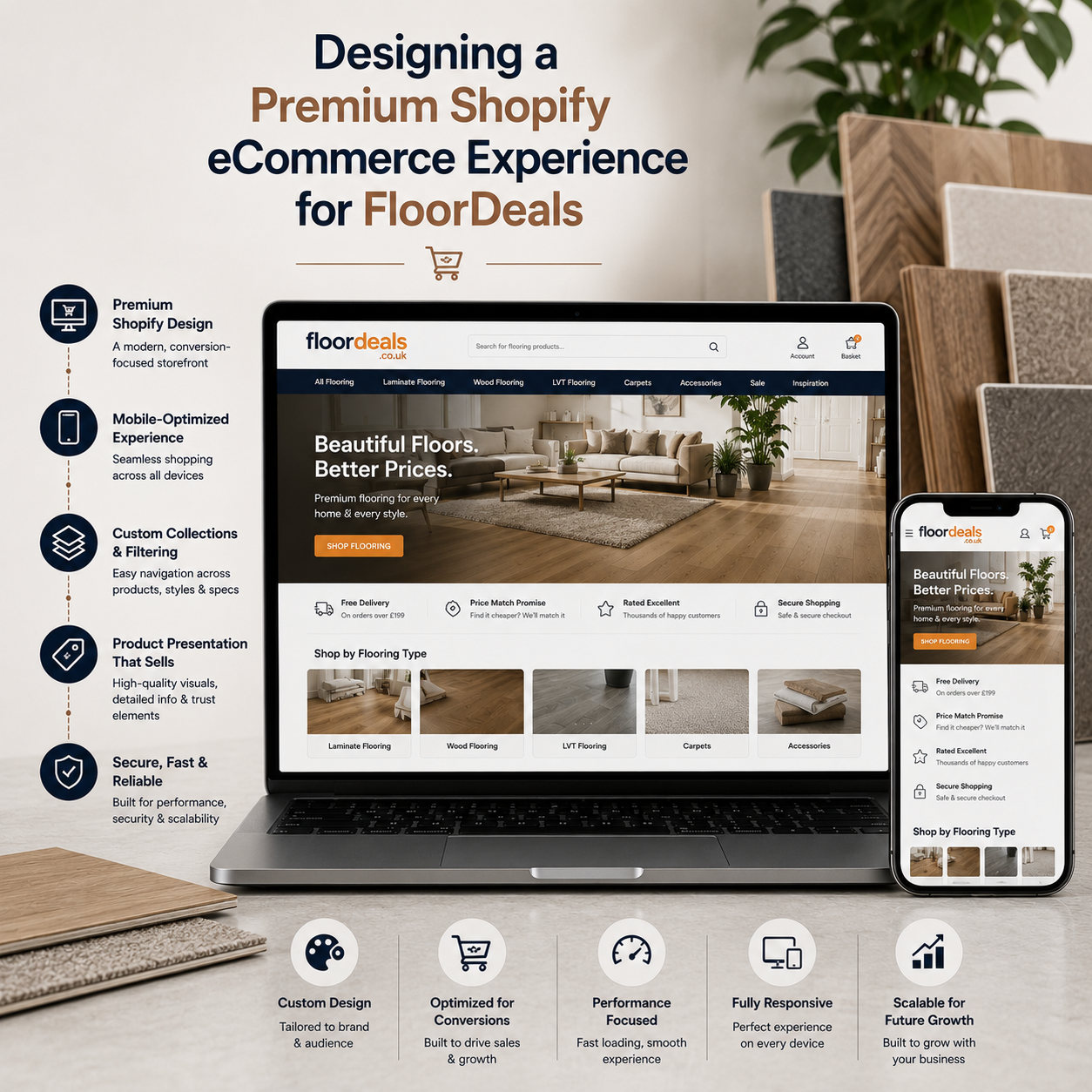
Before: A homeowner looking for a grey herringbone LVT had no structured path through the catalogue. Product pages offered no quantity guidance. Customers guessed their pack count, got it wrong, and called in. Sample requests had no dedicated flow. Mobile checkout was slow and conversion dropped off before payment. Delivery costs appeared only at the final step.
After: Three discovery paths cover every type of buyer from the first click. The area calculator turns room dimensions into an accurate pack count and price on the product page itself. Sample requests are captured in a structured modal that builds the email list. Shop Pay and Google Pay are available before the standard checkout form. Delivery costs show once an address is entered, not at the payment step.
Shop PayMost flooring customers do not abandon it because the product is wrong. They abandon because the process is unclear: how much do I need, can I see it first, what will delivery cost, and how do I pay. This build answers all four of those questions before the customer has to ask.