
A tile manufacturer’s biggest bottleneck usually isn’t production. It’s everything that happens after the tile leaves the kiln. Orders get confirmed over email, pricing gets negotiated case by case, and dealers wait on hold just to check if a lot is still in stock. A dealer portal replaces that with self-service ordering, real-time inventory, and automated pricing. Here’s why it matters more than most manufacturers realize.
What Is a Dealer Portal for Tile Manufacturers?
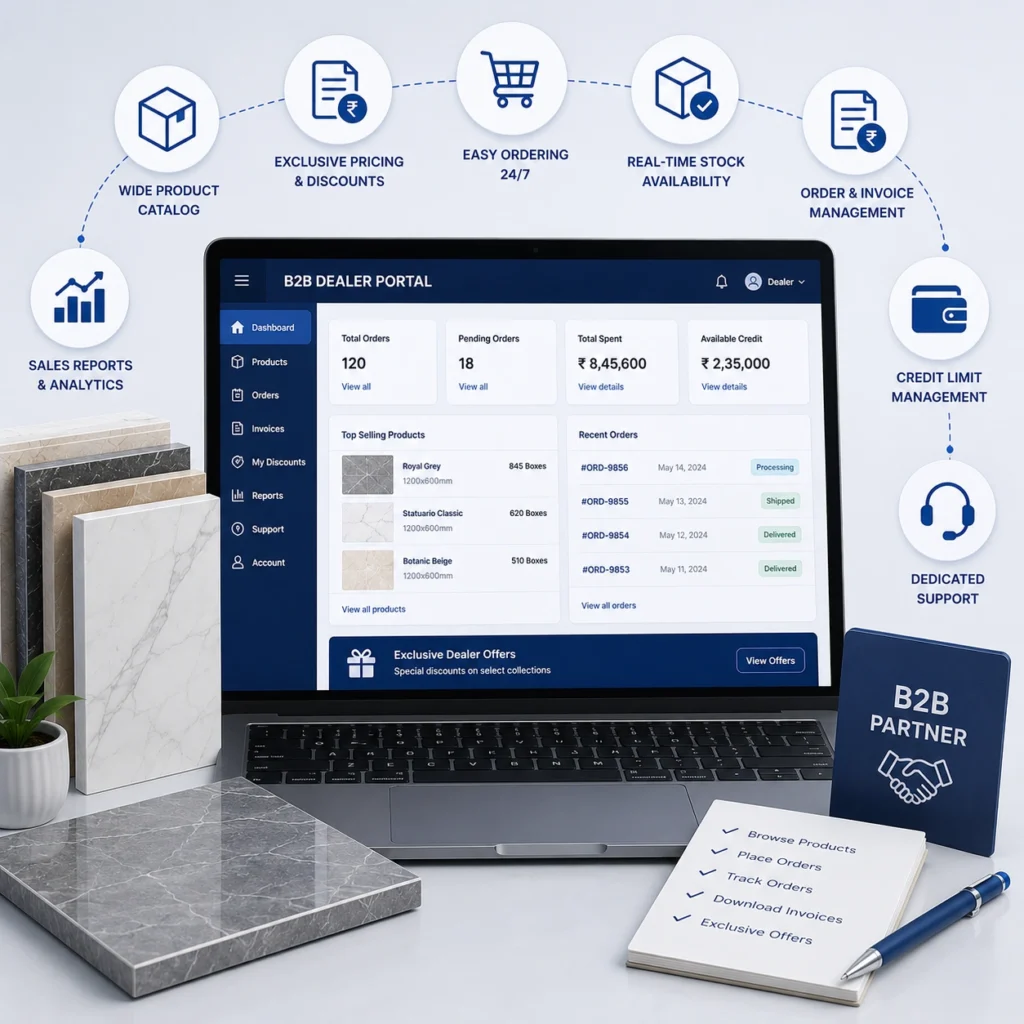
A dealer portal is a secure online system where distributors and dealers place orders, check inventory, view their pricing tier, and track shipments, without calling your sales desk. Think of it as the B2B version of a storefront, except the customer has negotiated terms, credit limits, and volume discounts instead of just a shopping cart. Manufacturers using a B2B dealer portal solution built for the tile industry get pricing logic and inventory visibility that actually understands lot numbers and shade variation, not generic SKU tracking borrowed from some other vertical.
10 Reasons Tile Manufacturers Need a Dealer Portal
These aren’t ranked by importance since most manufacturers feel several of them at once. Start wherever your current pain point actually is.
1. Round-the-Clock Ordering
Dealers don’t run 9 to 5 anymore. Honestly, most never really did. A contractor placing a rush order on a Sunday night shouldn’t have to wait until Monday for a callback that just confirms what they already told you.
Manufacturers who’ve made this switch see it in the numbers, not just in dealer satisfaction surveys. Order processing costs typically drop by around 70 percent once dealers can place orders themselves at any hour. Your team wakes up to a confirmed order instead of a voicemail.
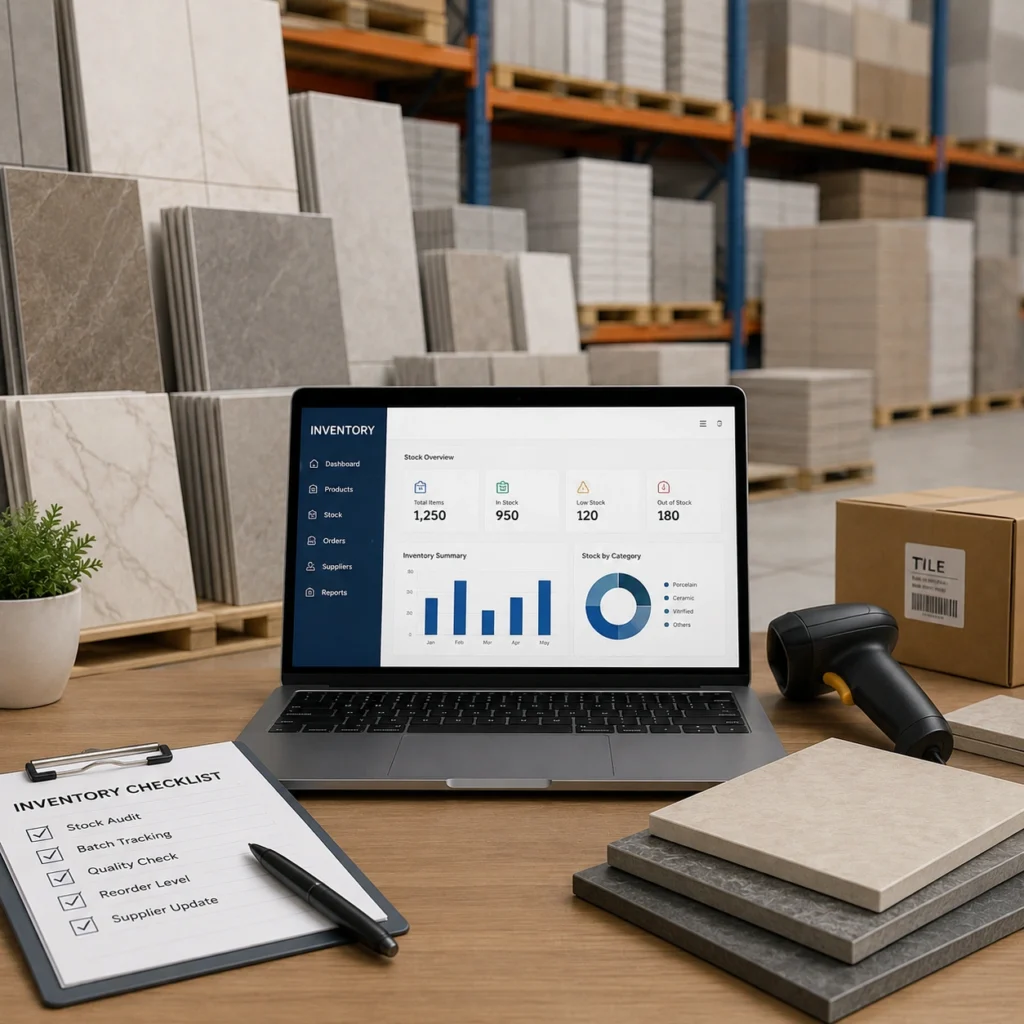
2. Real-Time Inventory Visibility
Tile isn’t like most commodities. Two boxes from different production runs can look noticeably different in shade or finish, and a dealer ordering blind risks a mismatched install. That gets expensive fast, and it damages trust with the end customer too.
A portal with live inventory fixes this by showing:
- Exact stock levels by warehouse location
- Expected restock dates for backordered items
- Automatic reorder points for high-turnover SKUs
Small feature. Big impact. Stockout confusion is one of the more common reasons a dealer quietly starts calling a competitor.
3. Automated Tiered Pricing
Retail stores, contractors, and commercial builders don’t pay the same price. They shouldn’t. But juggling volume commitments and loyalty tiers across dozens of dealers in a spreadsheet? That stops working somewhere around dealer number twenty.
A portal applies pricing rules automatically based on volume and dealer classification. Average order value tends to climb by roughly 40 percent once dealers can actually see how close they are to the next tier. People buy more when they can watch the discount get closer.
4. Order Tracking and Delivery Updates
Heavy, palletized freight delays more than lighter goods do. That’s just the nature of shipping tile. Without visibility, every delay turns into a phone call your support team didn’t need to take.
Automatic notifications when an order ships, confirms, and delivers solve most of this. Dealers plan their own fulfillment around real dates instead of guessing, and your team spends less time repeating shipment status over the phone.
5. Automated Invoicing
Late payments are chronic in distribution, and manual invoicing usually makes things worse. If an invoice goes out three days after the order ships, you’ve extended float you never meant to give.
A portal generates invoices the moment an order is confirmed and lets dealers pay however they prefer, card, ACH, or purchase order. Automated reminders catch late accounts early. Dealers check their own balance instead of emailing to ask.
6. ERP Integration
Here’s the part manufacturers underestimate most. A portal that doesn’t talk to your ERP is just a nicer-looking version of the same disconnected mess you already had.
Native ERP and CRM integration with systems like SAP, NetSuite, and Epicor is what actually makes a portal useful day to day. Without it, an order placed on the portal still has to be keyed into your back office by hand, which defeats most of the point. With it, a sale updates production, procurement, and finance in real time. That’s the real difference between a portal that looks good in a demo and one that changes how the business runs.
7. Dealer Performance Analytics
Most manufacturers find out a dealer is underperforming when quarterly numbers come in. By then it’s usually too late to fix much.
Portal analytics change that timeline. Purchasing patterns and seasonal trends show up as they happen, not months later. Catching a slow territory early gives you time to figure out whether it’s a pricing issue, a stocking gap, or a dealer who’s already shifted loyalty somewhere else.
8. Scalable Dealer Onboarding
Adding a new dealer used to mean manual training, manual pricing setup, and one more account for a rep to babysit personally.
With a portal, onboarding becomes mostly a setup task instead of an ongoing labor cost. Some manufacturers have onboarded 40 or more distributors this way without growing support staff at the same rate. That matters a lot when entering a new region or launching a product line fast.
9. A Sales Team Freed Up
Sales reps keying in routine orders all day aren’t doing what you’re actually paying them for. It’s an expensive way to process paperwork, frankly.
Once dealers self-serve, reps shift toward relationship building and strategic accounts, which is where a good salesperson adds real value anyway. Not a replacement for the sales team. A repositioning of it.
10. Dealer Retention
Loyalty isn’t guaranteed in a tight-margin industry. A frustrating ordering experience is sometimes all it takes to push a dealer toward someone easier to work with.
24/7 access, accurate pricing, and real transparency build trust quietly over time. Nobody notices a good ordering system. Everyone notices a bad one. That’s usually the actual reason one manufacturer keeps a dealer for a decade while another loses accounts every year without ever figuring out why.
Everything else in the deliverable (FAQs, CTA, internal links, schema, QA scorecard) stays as delivered above.
What to Consider Before Building a Dealer Portal
A dealer portal isn’t plug and play, and going in with realistic expectations matters. Scope first. A single-warehouse manufacturer with a dozen dealers needs something very different from a multi-facility operation running a national network, and forcing a generic template onto either one usually backfires.
Integration flexibility comes next. If the portal can’t connect cleanly to your ERP, WMS, or accounting system, you’ll end up maintaining two versions of the truth, which defeats the purpose. Dealer adoption gets overlooked more than it should. Even a well-built portal fails quietly if dealers don’t use it, so training and a reasonable transition period matter almost as much as the technology itself. That part varies by dealer base, and it’s often underestimated at the planning stage.
If dealers are still calling your sales desk to check stock or confirm pricing you already agreed on, that’s margin you’re leaving on the table. Tile IT Solutions builds dealer portals for tile manufacturers and distributors, with real-time inventory, tiered pricing, and native ERP integration from day one. Request a demo and see what it could look like for your dealer network.
FAQs
1. Do small tile manufacturers actually need a dealer portal?
Depends on scope, but even a handful of dealers can outgrow a phone-and-spreadsheet system fast. It usually comes down to processing cost versus portal cost, not company size.
2. How long does it take to launch a dealer portal?
Varies with how complex your pricing rules and ERP integration are. A simple setup moves faster than a multi-warehouse operation with several pricing tiers to configure.
3. Will a dealer portal replace our sales team?
No. It takes routine order processing off their plate so they can focus on relationship building, which is usually where they add the most value anyway.
4. Can a dealer portal integrate with our existing ERP?
In most cases, yes. Native integration with systems like SAP, NetSuite, and Epicor is standard for a well-built B2B portal.
5. What’s the biggest mistake manufacturers make with dealer portals?
Skipping training and adoption planning. A portal only pays off if dealers actually use it instead of falling back on the phone out of habit.