
Tile isn’t like most warehouse products. One SKU might carry three finishes, two sizes, and shade variation between production lots. Stack on breakage risk and pallet-heavy storage, and small tracking mistakes turn into real money fast, usually a mismatched shipment or a dealer waiting on stock that’s already gone.
Here’s what actually works, based on how tile moves through real warehouses and dealer networks. If your process still runs on spreadsheets, a purpose built inventory management solution fixes most of this in one system instead of five disconnected tools.
10 Best Practices for Managing Tile Inventory
None of these need to happen all at once. Start with whichever one is costing you the most right now.
1. Track Every Lot, Not Just Every SKU
Shade and texture shift between production runs. Without lot tracking, you’re guessing which orders came from a bad batch when a complaint comes in. With it, you isolate the affected shipments in minutes and keep large orders shade consistent from the start.
2. Maintain Real-Time Inventory Visibility Across All Locations
Warehouse staff, showroom teams, and dealers all need to see the same stock count, updated the moment something moves. Otherwise someone confirms an order on inventory that shipped out three hours earlier. That’s not a system bug. That’s just what happens when updates lag.
3. Use Barcode or RFID Scanning to Reduce Inventory Errors
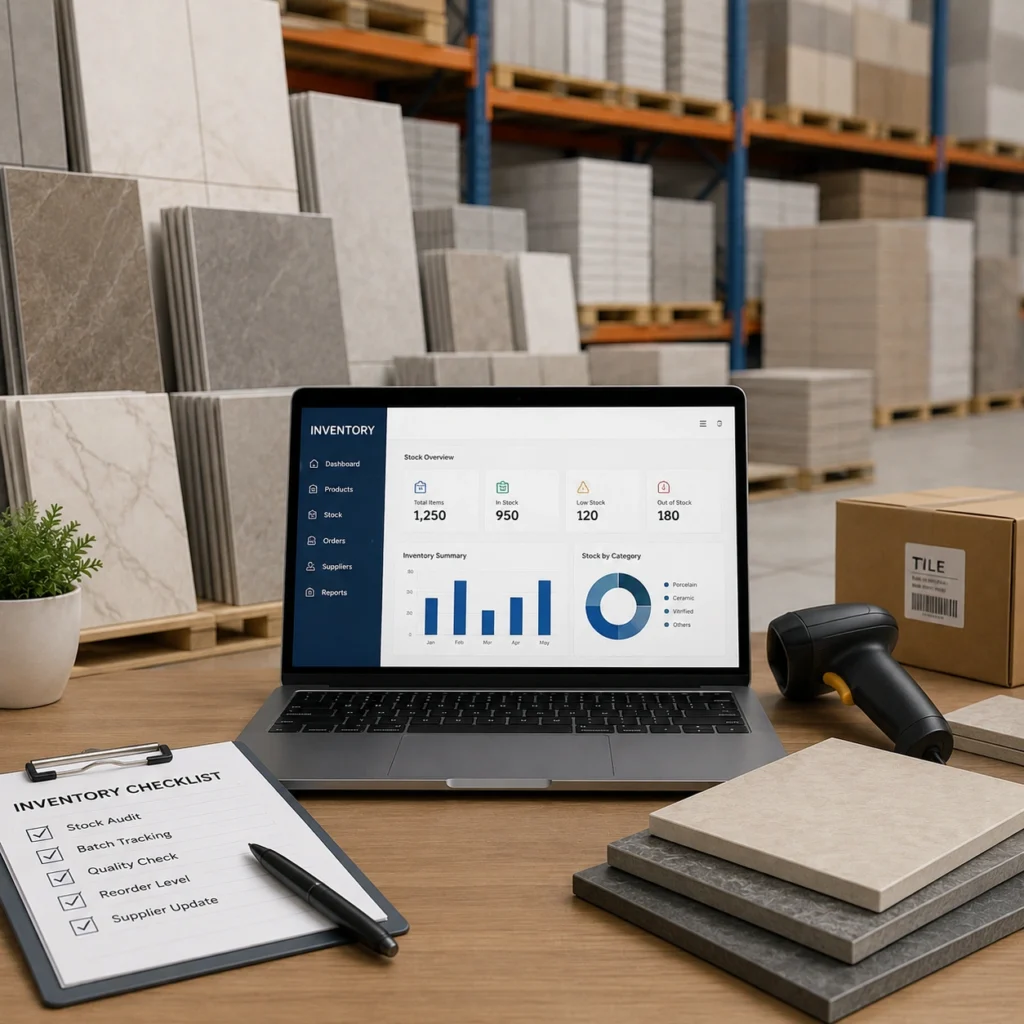
Manual counts are where most errors start. A scanned barcode at receiving and picking removes the guesswork, and RFID adds theft protection for higher value SKUs sitting in a busy warehouse.
4. Forecast Tile Demand Using Sales Data
Certain finishes trend, then fade. Commercial jobs cause sudden spikes on specific SKUs. Pulling from sales history and seasonal patterns beats a gut call almost every time, though honestly, your slow moving niche lines don’t need this level of rigor. Simple reorder thresholds work fine there.
5. Balance Inventory Across Multiple Warehouses
Running multiple locations without shifting inventory between them means one site sits overstocked while another can’t fill orders. A connected system flags the imbalance and suggests transfers before a stockout hits, which also trims freight costs since you’re pulling from the nearest overstocked warehouse instead of the farthest one.
6. Integrate Inventory with ERP and Dealer Portals
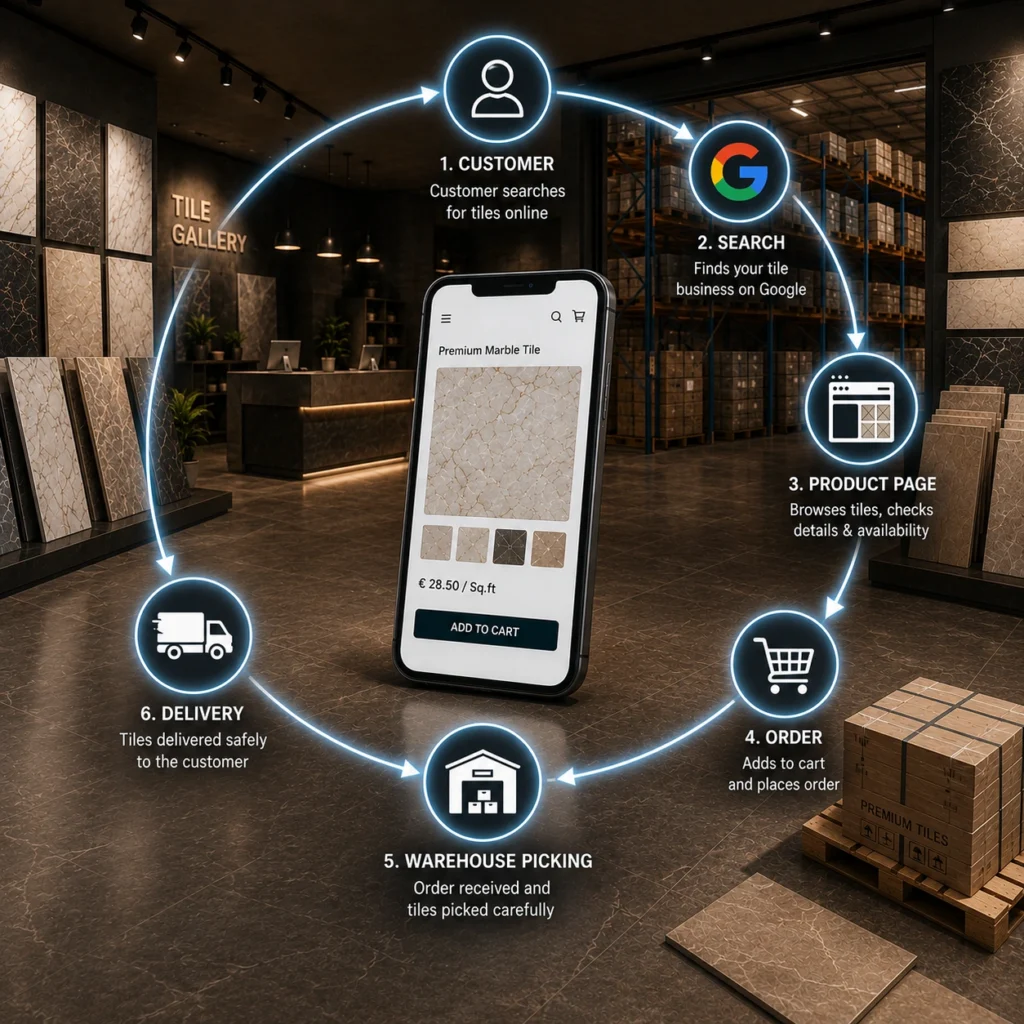
Stock data sitting in isolation only helps half your team. Tie it to your ERP system and your dealer portal so a dealer checking availability sees the exact same number your warehouse does. This is usually where the biggest time savings show up, not from one feature, but from cutting the manual back and forth between systems that don’t talk to each other.
7. Automate Reorder Points for Fast-Moving Tiles
Manual reordering works until someone’s out sick and a bestseller runs dry for two weeks. Automated thresholds catch it before that happens. Just revisit them occasionally. Sales patterns shift, and nobody wants a discontinued color reordering itself on autopilot.
8. Store Tiles Properly to Reduce Breakage
It does. Poor stacking and careless handling turn into write offs that rarely get tracked as their own line item. Proper pallet stacking, protective packaging, and basic staff training cut this down more than people expect.
9. Perform Regular Cycle Counts Instead of Annual Audits
Waiting for one annual count lets small errors pile up for months before anyone notices. Rotating through a portion of stock regularly catches mismatches early and gives you a clean trail when something doesn’t add up.
10.Give Dealers Real-Time Inventory Visibility
Dealers without real visibility either call your sales team constantly or order stock that’s already sold. Giving them direct access to accurate numbers, including expected restock dates, cuts both problems and frees your team up for actual relationship work.
Benefits of Better Tile Inventory Management
A manufacturer running several warehouses and a large dealer network almost always deals with stock mismatches and slow order processing without connected systems. Once inventory, ERP, and the dealer portal talk to each other, order processing speeds up and accuracy climbs, without adding headcount. It just takes systems built to work together instead of five tools stitched together with manual updates.
Dealing with stockouts, shade mismatches, or dealers ordering stock that’s already gone? Contact Tile IT Solutions to build an inventory system that actually fits how tile moves.
FAQs
1. How is tile inventory different from typical retail stock?
Lot based shade variation and breakage risk aren’t things most inventory software accounts for. Tile needs both.
2. What causes most tile inventory errors?
Manual data entry, usually at receiving. Barcode scanning removes most of it.
3. Do small dealers need the same setup as large manufacturers?
Not really. Real time visibility and automated reorder points cover most small dealer needs before forecasting or transfer optimization matter.
4. How often should cycle counts happen?
Monthly or quarterly for most operations, rotating through different sections of stock rather than one big annual count.
5. Can this integrate with an existing ERP?
Yes, and it should. Inventory that doesn’t sync with your ERP just creates duplicate work and pricing mismatches down the line.