Here’s a call every tile showroom knows. A customer ordered last week, the delivery arrived, and the floor is two boxes short. Or four boxes over. Or the new cartons are a shade off from the first ones.
The tile itself is rarely the problem. The estimate was. Most online calculators take a length, a width and a tile size, then spit out one number and call it a day. That works for a DIY blog. It doesn’t work for a store that sells by the carton, by the batch and by the trade account.
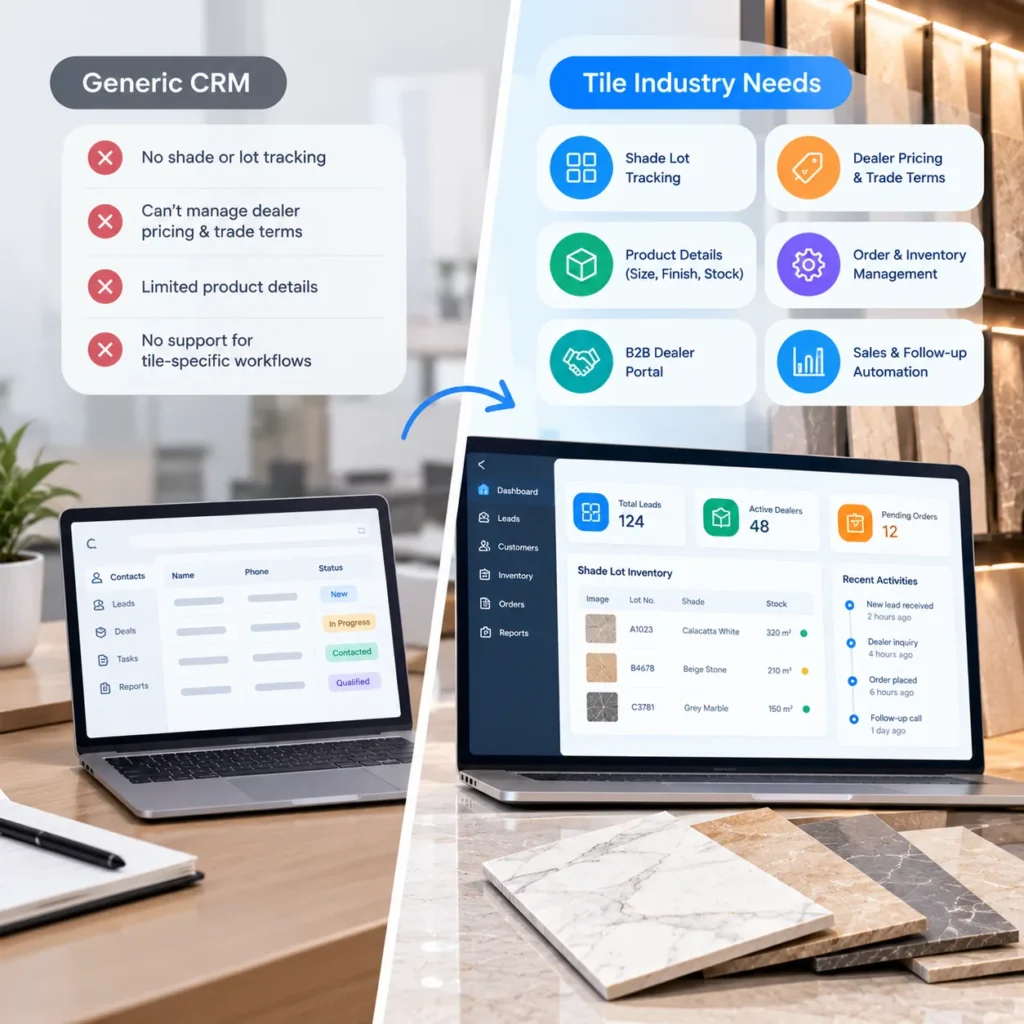
If you run a tile business, your tile store calculator is part of the sales process, whether you treat it that way or not. Tiles IT Solutions builds a tile calculator and tools solution for manufacturers and wholesalers, and the same five gaps keep turning up in stores that don’t have one.
What Does a Basic Tile Calculator Do?
A tile calculator estimates how many tiles, or boxes, a surface needs. The basic version divides room area by tile area, then adds a flat waste percentage.
Fine as a starting point. Honestly, though, that’s where most of them stop. Nothing about stock, batches, add ons, or what happens after the customer sees the number. The five features below are what turn a widget into a sales tool.
5 Essential Features of an Advanced Tile Calculator for Tile Stores
They’re listed roughly in the order they cost you money. If you can only fix one thing this quarter, fix the first.
1. Box Rounding That Respects Batch and Shade Lots
Customers don’t buy 87 tiles. They buy nine boxes of ten, and the three extra tiles are already paid for. Plenty of calculators stop at 87 and leave the maths to the buyer. Others round every room on its own, so a three room job ends up carrying three partial boxes of padding nobody needed. Round once, at the full order level, using the real pieces per box and coverage per carton from your catalogue.
Then comes the part almost everyone skips. Tiles from different production lots can vary a little in shade and size. Put two lots side by side on one floor and you’ll see patches. A calculator should check whether the recommended boxes share a batch, and warn the customer if your stock is split. Before payment, not after delivery. Frankly, this one check prevents more returns than anything else on the list.
2. Waste That Changes With the Layout
Ten percent is the number everyone repeats. For a straight lay in a plain rectangle it’s reasonable. For almost anything else, it’s a guess. Diagonal layouts commonly need around 15 percent, and herringbone climbs higher. A 1200 by 600 mm tile in a narrow bathroom throws off far more offcuts than 300 by 300 mm in the same room.
So let the customer pick the pattern and let the waste adjust itself. Then let your own team override it. Counter staff know which polished porcelain chips on the cutter. One global percentage across a whole catalogue usually means shortfalls on some ranges and overstock on others.
3. Rooms, Cutouts and Units That Match Real Life
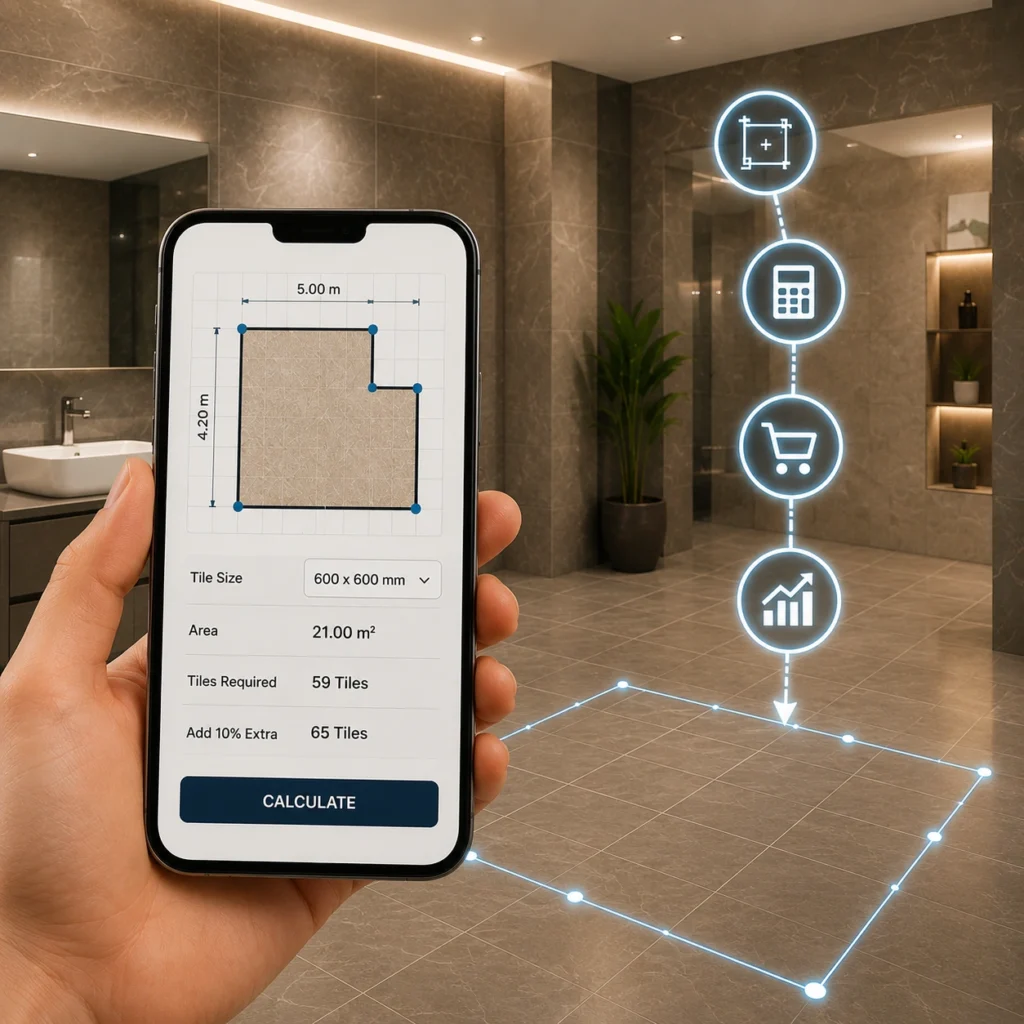
Nobody tiles one clean rectangle. A bathroom has a tub, a niche and a door threshold. A kitchen job covers the floor and a backsplash, often in two different tiles. If the tool only accepts length times width, customers fudge the numbers and you inherit the error. A decent calculator should let people:
- Add several surfaces, L shaped rooms included
- Subtract the tub, the vanity base or a built in wardrobe
- Combine totals by product, since floor tile and wall tile are separate line items
Units matter too, especially in India. The contractor quotes square feet, the architect’s drawing says square metres, and the tile spec is in millimetres. A dealer in Morbi might quote a 600 by 1200 mm vitrified tile while the homeowner in Ahmedabad measured the room in feet. Offer a switch and show the converted figure so the buyer can sanity check it. Small detail. Expensive when it’s wrong.
4. Grout, Adhesive and Trims in the Same Estimate
Picture someone pricing a 120 square foot living room. The tile boxes show up, and right below them sit two adhesive bags, a grout pack and spacers. One click adds everything. Nobody had to push, and the basket just got bigger.
That’s the upsell most stores leave on the table. Grout is a good example, because the right quantity depends on tile size, joint width and grout type, which buyers can’t work out alone. Tiles IT Solutions’ calculator tools include a grout estimate built on exactly those inputs. Trims are the sleeper. Edge profiles are measured by running length, and customers remember them on the last day of the job.
One warning. Coverage rates differ by brand, so pull them from your product data instead of baking in a guess. A wrong adhesive estimate is worse than none, because the customer trusts it.
5. Live Stock, Pricing and a Quote Your Team Can Use
A calculator that lives alone is a dead end. The number appears, the customer closes the tab, and your sales team never hears about it.
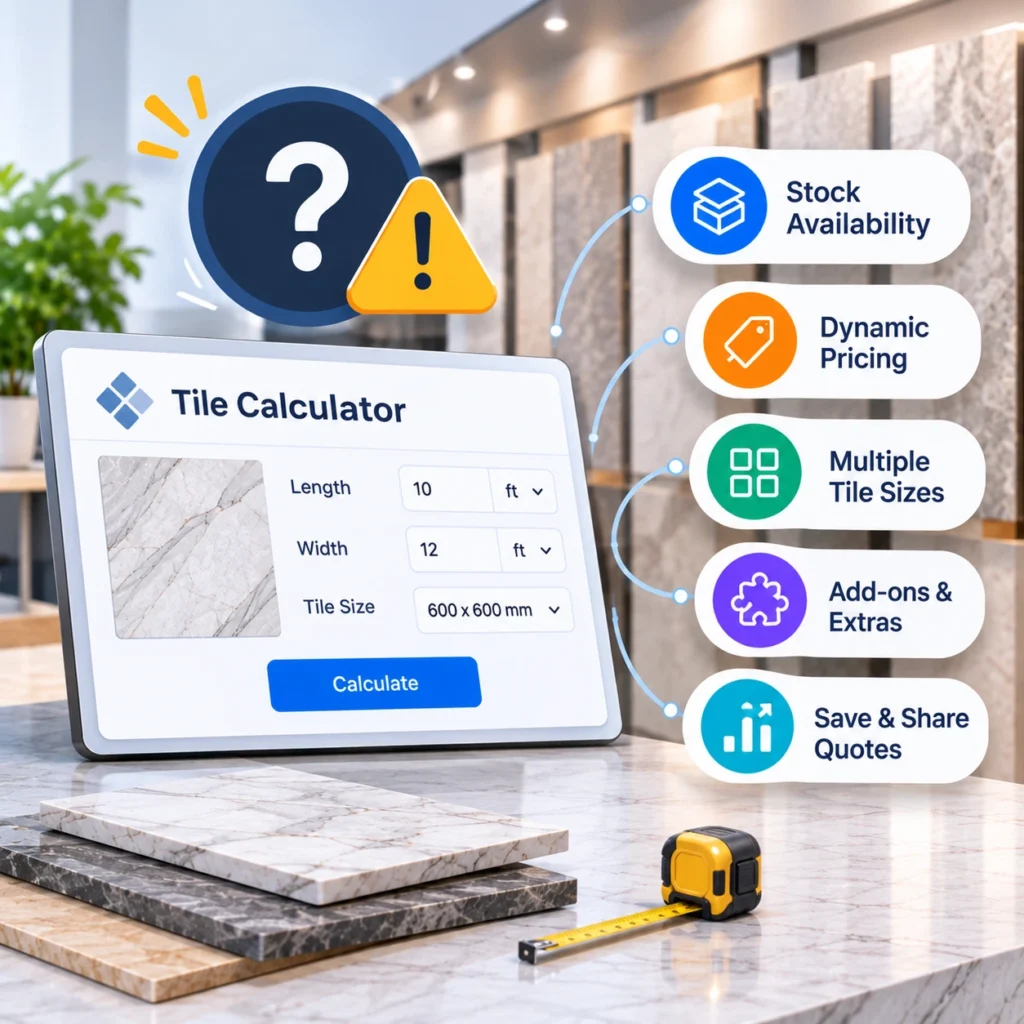
Connect it to stock and price lists first. The estimate should show what’s actually available and the right price for that buyer, trade rates and GST included. If the quantity isn’t in stock, say so. Quoting what you can’t ship is a quick way to lose a repeat customer.
Then catch the lead. Let people save the estimate, share it on WhatsApp or ask for a sample. Plenty of buyers in India pass quotes around on WhatsApp before deciding, so build for that. Send the saved estimate into your CRM so a salesperson sees the full picture. A cold callback becomes a real conversation about the 14 boxes of grey matte porcelain the customer already priced. Our calculators capture lead details and pass them to your CRM, along with usage analytics that show which products people calculate most.
Also Read: How Interactive Tile Calculators Increase Website Conversions
Basic vs Advanced Tile Calculator: Key Differences
Side by side, the gap is bigger than it looks from the outside.
| Capability | Basic calculator | Store ready calculator |
| Quantity output | Tile count | Boxes, rounded once at order level |
| Waste | Fixed 10 percent | Changes with layout and product |
| Batch awareness | None | Warns when stock is split |
| Add ons | Not included | Adhesive, grout, spacers, trims |
| Stock and price | Disconnected | Live, with trade rates |
| Lead capture | None | Saved quote synced to CRM |
How to Choose the Right Tile Calculator for Your Store
You don’t need to rebuild everything at once.
Start with box rounding and batch warnings, because that kills the most painful returns. Layout based waste comes next, then add ons, then the CRM handoff. Each step pays for itself in fewer disputes and bigger baskets. Not every store needs all five on day one. A single location retailer can put multi area entry off for a while. A wholesaler selling to dealers can’t skip live stock.
If you’d like to see how this maps onto your catalogue and sales process, talk to the team at Tiles IT Solutions. We’ll tell you plainly what’s worth building first.
FAQs
1. What should a tile store calculator include?
At minimum, it should convert area into whole boxes, apply a waste allowance that fits the layout, and handle multiple rooms. Stronger versions add batch checks, adhesive and grout estimates, live stock and a saved quote for your sales team.
2. How much extra tile should customers order?
Ten percent is a common starting point for straight layouts. Diagonal patterns often need about 15 percent, and complex patterns or large format tiles can need more. It depends on the room shape and the cuts involved.
3. Why does batch number matter when ordering tile?
Tiles from different production lots can vary in shade or size. Ordering everything from one batch keeps the finished surface consistent, and a matching batch may not be available for a later top up.
4. Can a tile calculator connect to my CRM?
Yes. A calculator can capture customer details and send saved estimates to your CRM, so your sales team follows up with the full context instead of starting cold.
5. Should a tile calculator include grout and adhesive?
It should. Almost every job needs both, and including them in the same estimate prevents under buying while giving your store a natural way to raise order value.