The ceramic industry isn’t the slow mover it used to be. Something shifted around 2022, and manufacturers, distributors, and multi-location retailers started rebuilding how they sell, ship, and support customers.
Buyers expect Amazon-grade experiences even for pallets of porcelain. That pressure is pushing tile brands into modern ecommerce solutions, live inventory sync, AR visualization, and connected ERP setups. Here’s what’s actually working right now, and where a lot of companies keep tripping.
Why Digitalization Matters in Ceramic Industry
A few things happened at once. Contractors started ordering the way retail consumers do. Dealer networks got harder to run from spreadsheets. Freight climbed. Sustainability reporting moved from optional to required, especially for anyone shipping into Europe.
Software caught up too. Tools that were enterprise-only five years ago are within reach for mid-size manufacturers now. So the tech stopped being the blocker. What’s holding most brands back is change management, and everyone underestimates that part.
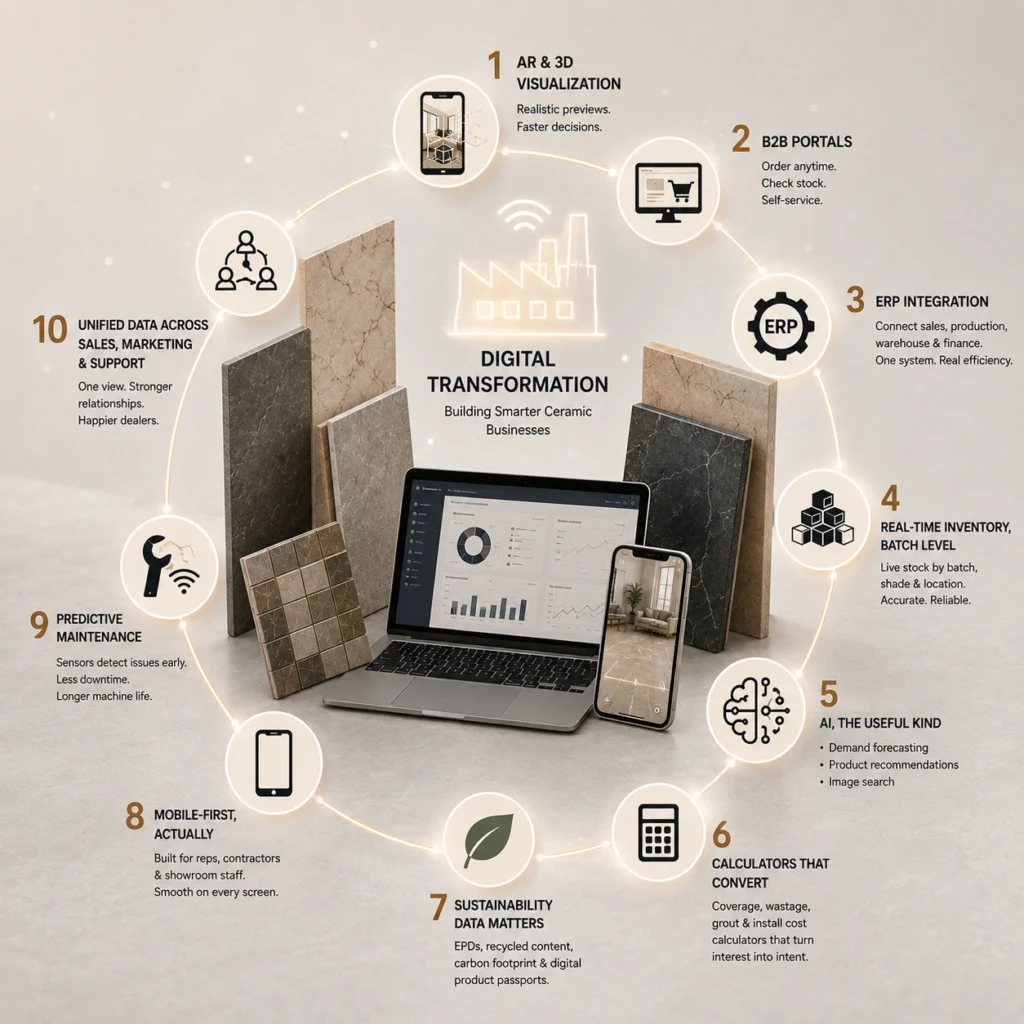
10 Digital Transformation Trends Shaping the Ceramic Industry
1. AR and 3D visualization
A customer walks into a showroom in Pune, likes a large format porcelain, and can’t picture it in her actual living room. She hesitates. She leaves. She doesn’t come back.
That’s the exact moment AR fixes. Point the phone, preview the SKU on the real floor, decide in five minutes. Room-scale AR now works without floor markers, grout and shadow simulation looks real, and shareable renders let couples decide from home. Returns drop. Sales cycles shorten.
Web-based visualizers often cover 80 percent of what a native app does. Cheaper to build. Easier to keep updated.
2. B2B Portals for Ceramic Dealers
Faxing order confirmations in 2026? Some brands still do. They’re also the ones losing accounts.
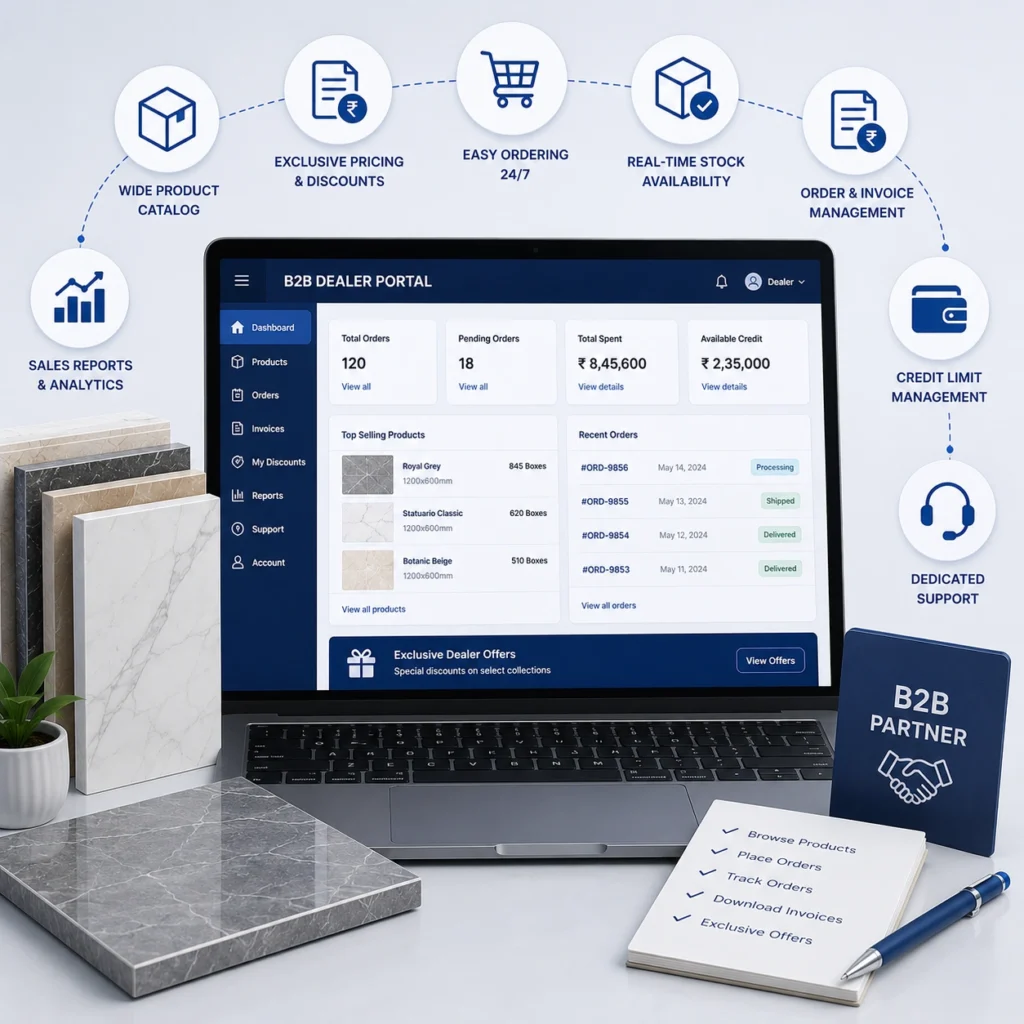
Dealers want to place orders at 11pm, check stock live, and pull invoices without emailing anyone. A modern b2b dealer portal solution with role-based access and real-time pricing has become the floor, not the ceiling.
3. ERP Integration for Ceramic Manufacturing
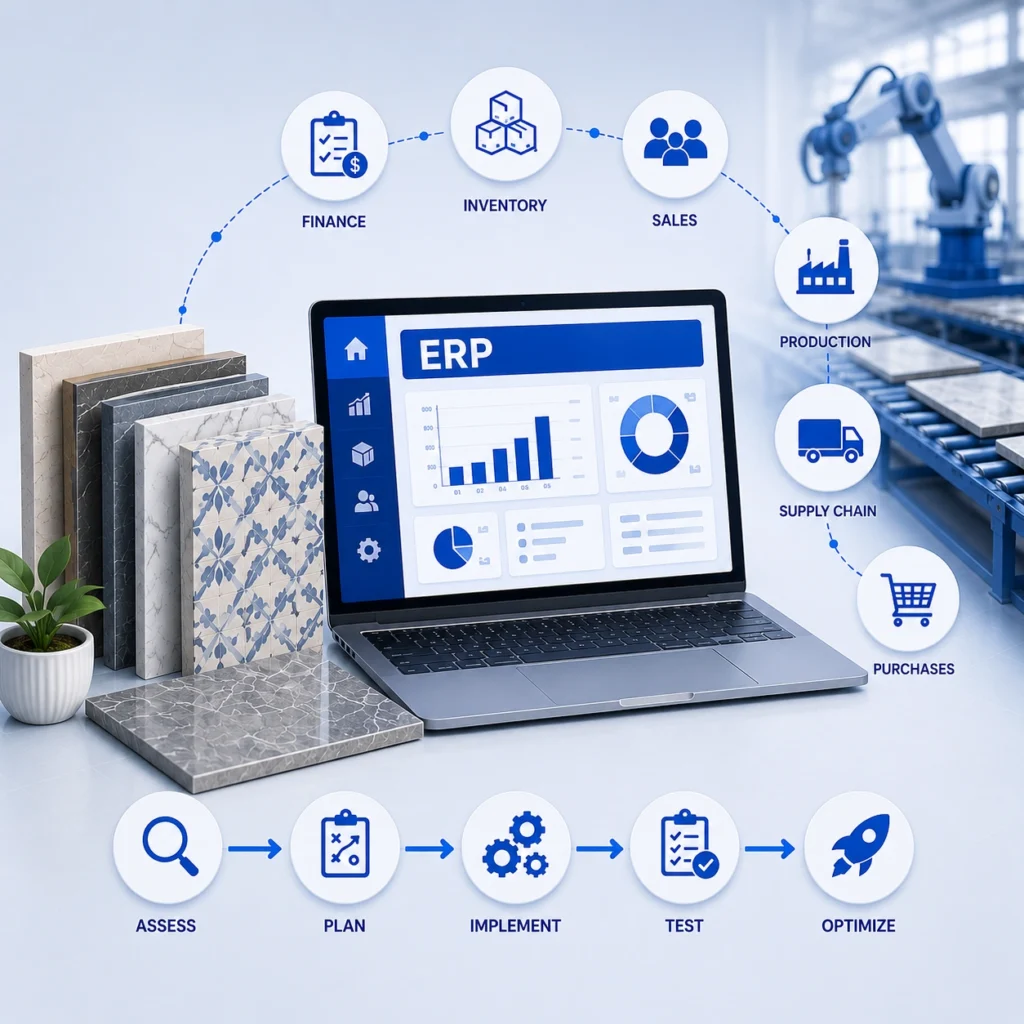
Most projects stall here, and honestly the work isn’t glamorous. Manufacturers run separate systems for production, warehouse, finance, and sales. None of them speak to each other. Sales quotes lead times on gut feel. Finance chases margin numbers a month late. The warehouse counts the same pallet twice.
Connecting all of it through ERP integration sounds boring on a slide deck. In practice, it’s usually the single change that pays back fastest.
4. Real-Time Inventory Management and Batch-Level Tracking
Ceramic SKUs are chaotic. Batch numbers, shade variations, dye lots, partial pallets left over from a canceled order. A website that says “in stock” while the warehouse has 40 boxes in the wrong shade is worse than no website at all.
Batch-level inventory management is quickly becoming the standard. The smart brands are also exposing that view to dealers, not just internal staff.
5. AI for Demand Forecasting and Product Recommendations
Skip the buzzwords. Three places AI is actually earning its keep right now:
- forecasting demand using regional construction starts and permit data
- recommending products from browsing patterns and past dealer orders
- image search that matches an uploaded photo to items in your catalog
Everything else? Mostly hype for now.
6. Online Calculators for Tile Coverage, Wastage, and Installation
Someone who calculates 480 square feet at 8 percent wastage isn’t browsing. They’re buying. Coverage calculators, wastage estimators, grout quantity tools, install cost estimators. They pre-qualify buyers before anyone from sales spends time on them.
Underrated. Cheap to build. Rarely prioritized.
7. Digital Sustainability Data and Product Information
Architects want EPDs. Specifiers want recycled content percentages. Bigger firms want carbon footprint per SKU. Digital product passports are on the EU roadmap, and once that lands, it ripples globally. Cleaning up product data now is much cheaper than scrambling in 18 months.
8. Mobile-First Experiences for Ceramic Sales and Distribution
Field reps working out of their trucks. Contractors on job sites. Showroom staff standing next to the customer. All on phones. A portal that renders like a shrunken desktop layout is functionally broken for them.
9. Predictive Maintenance in Ceramic Manufacturing
Sensors on kilns and presses catch problems before they become full stoppages. Common in large plants across Italy and Morbi. Mid-size manufacturers are usually 12 to 18 months behind, but closing the gap fast.
10. Unified CRM, ERP, and Customer Support Data
A dealer complaint from Monday should be visible to their account rep before the Wednesday call. Right now, most brands can’t do that. CRM sits in one silo, helpdesk in another, ERP in a third. The brands that unify these three quietly win accounts the rest never even know they lost.
Why Digital Transformation Projects Fail in the Ceramic Industry
Rarely a tech problem. Almost always change management.
Sales teams cling to spreadsheets. Warehouse teams distrust anything new for the first six weeks. Executives approve the budget and then skip the training. It’s the same story every time.
What separates the rollouts that work from the ones that stall:
- start with one workflow that hurts, not a full platform swap
- involve the people who’ll actually use the tool every day
- pick a partner who knows ceramic-specific mess like dye lots, calibration, and freight
Where Should Ceramic Businesses Start Their Digital Transformation?
Manufacturers, fix ERP and inventory sync first. Nothing else works with dirty data underneath.
Distributors and dealer networks, build the B2B portal and get live pricing running.
Retailers, focus on visualization, calculators, and a site that actually behaves on a phone.
Modernizing a ceramic business is less about buying software and more about picking the right first move. Our team works exclusively with tile, ceramic, and building materials companies. Look through the full range of solutions we build, or get in touch to talk through where you should start.
FAQs
1. Is digital transformation worth it for a mid-size tile company?
Yes, but only if you fix one workflow first. Trying to do everything at once burns budget and patience. Pick the process costing you the most time every week.
2. How long does a B2B portal rollout take?
Anywhere from 10 weeks to about 6 months. The build is usually faster than cleaning up the product data that has to go into it.
3. Do we need to replace our ERP to modernize?
Almost never. Most brands get much further by integrating what they already have. Rip-and-replace projects fail more often than they succeed.
4. Does AR really reduce returns?
For retail buyers, yes. The drop is most visible on feature walls and large format tiles, which is where buyer regret runs highest.
5. What’s the earliest sign we’re falling behind?
Losing a dealer to a competitor whose portal was open at midnight while yours wasn’t. That’s a revenue problem now, not a tech one.