
Fifteen years of habit is hard to shake. Reps carry samples. Buyers call in orders. Trade shows do the heavy lifting for new accounts. Fine, back when demand stayed local and buyers were willing to wait a week for a callback. Not so fine now.
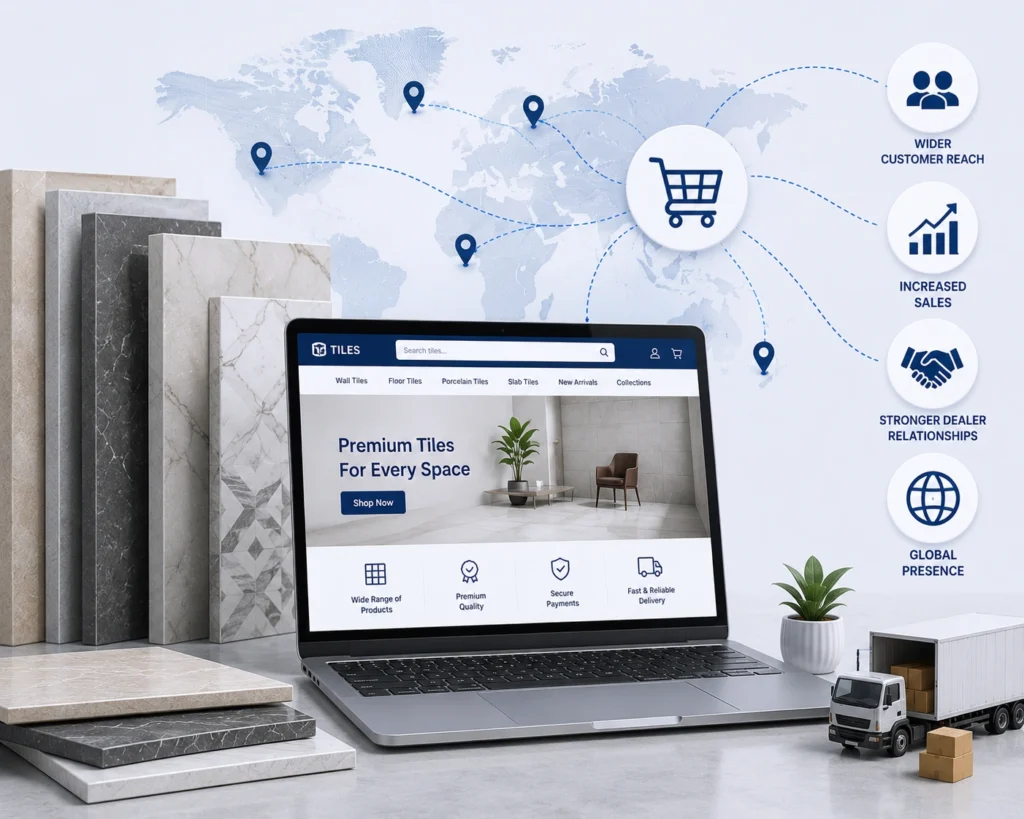
Ecommerce for tile manufacturers has become the quiet dividing line between companies that keep adding dealers and companies still working the same twenty accounts every quarter. A tile ecommerce solution isn’t a replacement for your sales team, honestly. It’s a way for buyers to find you, size you up, and order from you without waiting on anyone.
Why Traditional Sales Channels Cap Your Growth
A phone-and-catalog model has a ceiling, and it’s a low one. Reps can only cover so much territory in a week. Trade shows happen a handful of times a year, not year round. Every new distributor relationship starts the same slow crawl too: emails, spec sheets, sample requests, then more emails.
The buyer on the other end of that process has changed, though. Distributors, architects, and contractors now research suppliers online before they pick up a phone at all. Rapidops reports that B2B ecommerce sales in the building materials sector are on pace to hit $376.72 billion by 2026, and roughly 80 percent of buyers now expect suppliers to offer online ordering as a baseline, not a bonus.
If a buyer can’t check your catalog, pricing, or lead times at 9pm on a Tuesday, they’ll go find someone who lets them. Simple as that.
How Does Ecommerce Actually Expand Your Reach?
Reach is the real story here. Not convenience, not novelty. A working ecommerce platform opens doors a phone line never could, and it does it quietly, in the background, while your team sleeps.
New dealers find you without a cold call. Search visibility and a functional catalog mean distributors looking for a new tile supplier can discover you on their own schedule. You stop depending entirely on trade show foot traffic to fill the pipeline.
Geography stops being the limiting factor it used to be. A regional manufacturer can start taking orders from dealers three states over. Nobody has to fly out and do the full pitch first. The catalog does that legwork now.
Orders land outside business hours, too. Contractors often place them early morning or late at night, in between job sites. An always-on storefront catches that demand instead of losing it to a competitor’s voicemail.
Smaller accounts become worth serving. Not every buyer justifies a dedicated rep relationship, and that’s fine. Accounts that never made sense to fly a rep out for can now browse the full catalog and order themselves.
None of this happens on its own, though. It depends entirely on whether the platform actually reflects how tile gets bought and sold in the real world.
Essential Ecommerce Features Every Tile Manufacturer Needs
A generic online store won’t cut it here. Tile carries lot numbers, shade variation, PEI ratings, and dealer-specific pricing, and a platform built for furniture or apparel has no idea what to do with any of that.
So what should a tile-specific build actually include? A few things, none of them optional:
- Faceted search built around tile attributes: Buyers filter by material, size, PEI rating, and finish, not generic tags borrowed from some other industry’s template.
- Sample and swatch request workflows: Most tile purchases still start with a physical sample in hand. Handle that request badly and buyers bounce to whoever handles it well.
- Dynamic pricing by account type: Dealers, contractors, and retail buyers each see the correct number automatically. That one feature alone eliminates a huge share of the pricing confusion that slows down B2B ordering.
Headless, omnichannel-ready architecture matters too, even if it’s less visible to the buyer. Your catalog should behave the same whether it feeds your main site, a dealer portal, or a marketplace integration you add later.
Mobile deserves its own line, frankly, because manufacturers underestimate it constantly. Contractors research and reorder from job sites, usually on a phone, often one-handed. Slow load times or a catalog that doesn’t zoom properly costs you orders you’ll never see reflected in any report.
Skip enough of these and the platform starts feeling like a digital brochure instead of an actual sales channel. That gap, more than anything else, is where manufacturers lose ground.
Must Read: Tile Ecommerce Website Features That Improve Sales
Why Ecommerce Needs to Connect to Your Other Systems
An ecommerce site sitting off on its own, disconnected from everything else, only gets you halfway there. The real reach gains show up once ecommerce is wired into the rest of the business.
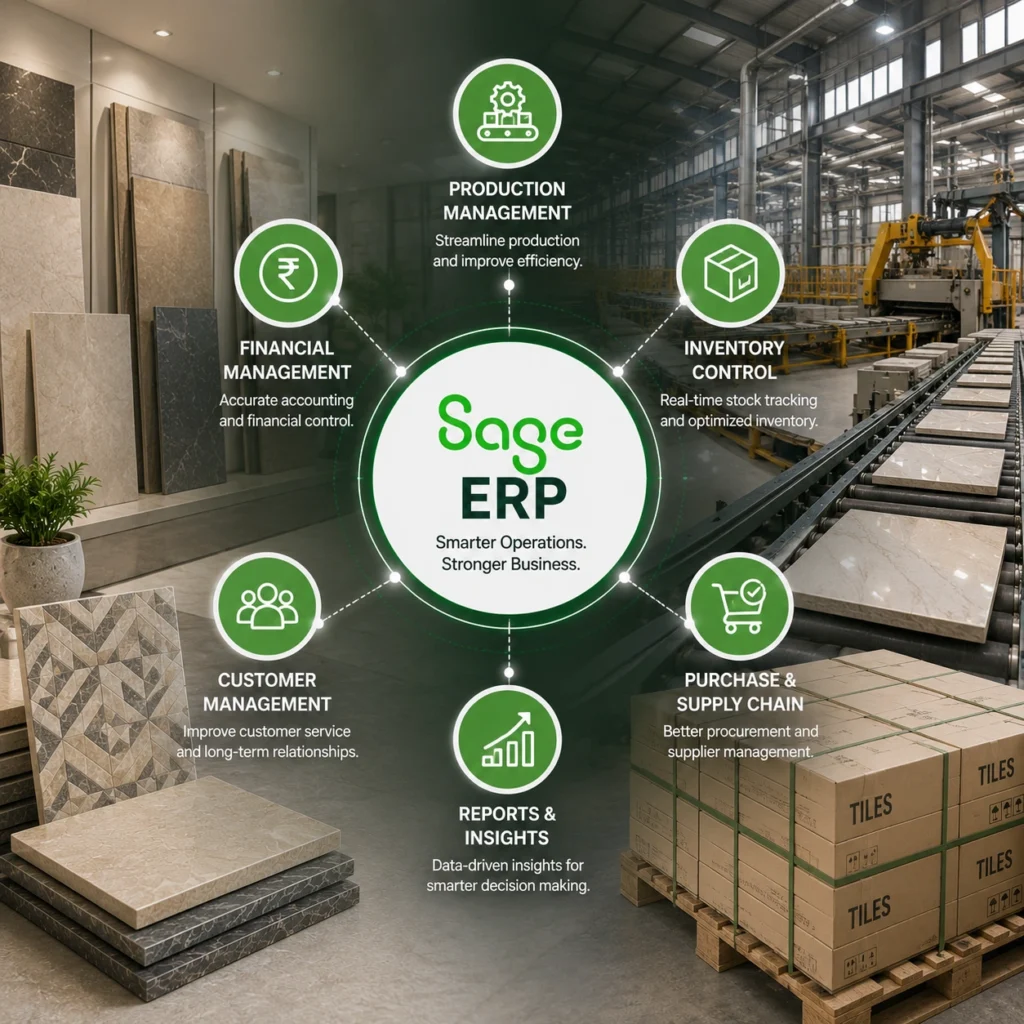
Pair it with a B2B dealer portal and existing distributors get role-based access, bulk ordering, and real-time inventory visibility instead of calling your office for a status update. Connect it to your ERP and CRM systems and orders sync automatically instead of getting keyed in twice by someone in the back office. That single change tends to cut order errors dramatically. Nobody’s retyping numbers off an email into a spreadsheet anymore.
Two more features are worth calling out, since they tend to decide whether a new visitor actually converts:
- Coverage and grout calculators let buyers estimate quantities before they commit, which cuts down on the guesswork that stalls first-time orders.
- AR and 3D visualization tools address the biggest hesitation in online tile buying: not knowing how a tile will actually look once it’s installed.
Neither is required to launch. Both, in most cases, are the difference between a site that gets traffic and one that gets orders.
Common Tile Ecommerce Mistakes That Cost You Sales
Not every ecommerce launch expands reach. Some quietly shrink it instead.
The most common mistake: treating the online catalog as a digital copy of the printed one. A PDF converted into a product grid doesn’t give buyers the filtering, pricing clarity, or sample workflow they actually need. It looks like ecommerce. It doesn’t function like it.
A second mistake shows up just as often. A manufacturer launches a public storefront with retail pricing, then hopes dealers will figure out their real discount later by email. That backfires more than it works. Buyers who see the wrong price once tend to remember it, and trust is hard to rebuild after that kind of stumble.
Worth sitting with this scenario for a second. A mid-sized manufacturer spends six months building a genuinely attractive storefront, skips the ERP integration to save budget, and launches anyway. Three months in, warehouse stock and website stock disagree constantly. Dealers order tile that isn’t actually available. Support tickets stack up faster than sales grow. The storefront looked finished. It wasn’t.
It depends on scope, sure, but in most cases the fix isn’t more design work. It’s going back and connecting the systems that got skipped the first time.
How to Launch Tile Ecommerce Successfully in Phases
Nobody needs to rebuild the entire operation in one project. Manufacturers who see the fastest results tend to work through this in stages instead.
1. Start with the catalog and pricing logic
Structure your product data correctly first, meaning attributes, lot handling, and account-based pricing. Everything else sits on top of this foundation, so get it right early.
2. Connect inventory before adding volume
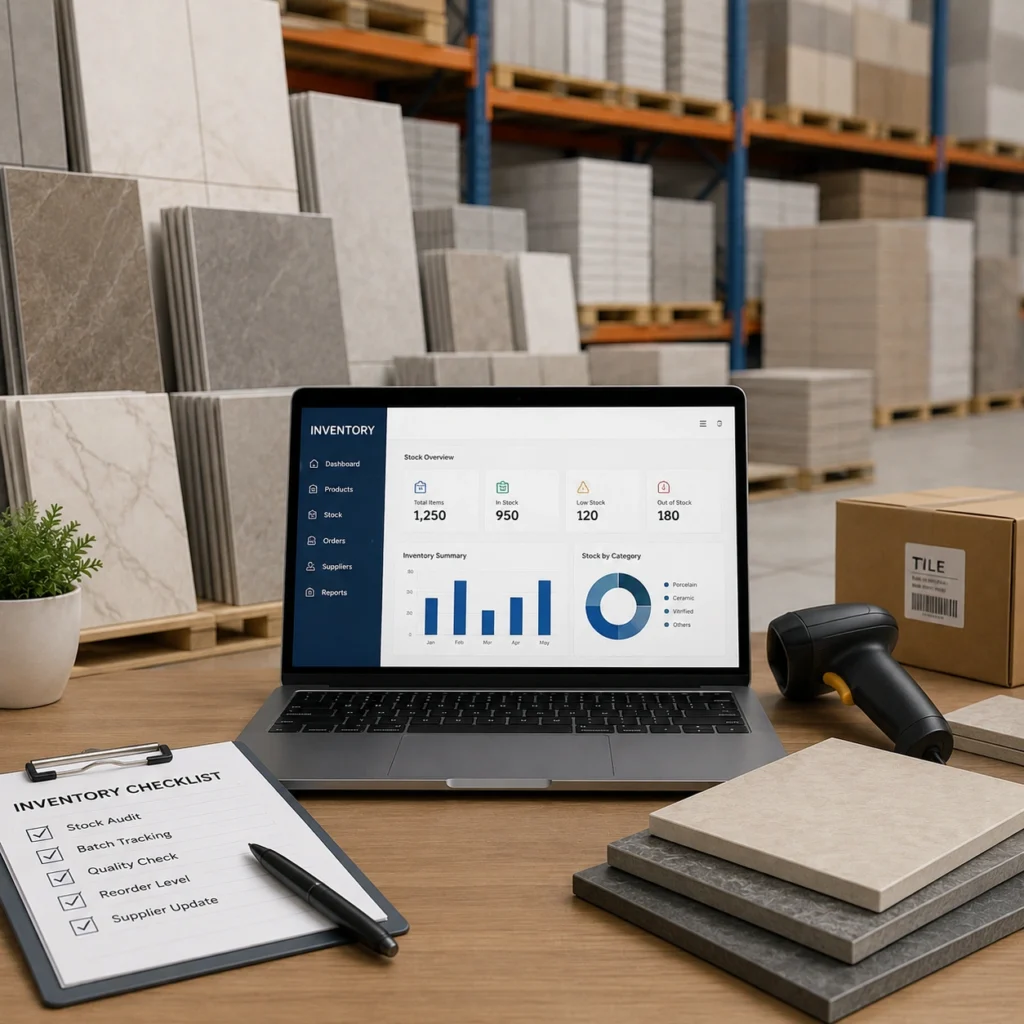
Real-time stock visibility across warehouses prevents the overselling problem described above. Manufacturers usually underestimate how much this one step matters until it’s missing.
3. Layer in ERP and CRM integration
Once the storefront and inventory are solid, connect order processing back to your core systems. This is what actually turns a website into a sales channel instead of a fancy lead form.
4. Add conversion tools once the basics hold
Calculators, visualization, and dealer portal features are all worth adding. They just perform best once the fundamentals are already reliable, not before.
Jumping straight to step four before the first three are solid is, typically, the single biggest reason tile ecommerce projects underperform.
Final Thoughts
Reach doesn’t come from having a website. It comes from a platform that actually matches how tile gets bought: correct pricing per account, real inventory numbers, a sample workflow that doesn’t frustrate buyers, and a catalog that behaves the same on a phone as it does on a desktop. Get those right and the dealers, contractors, and regions you couldn’t reach before start finding you on their own.
None of this has to happen at once. Most manufacturers get further by fixing the foundation first and layering in the rest as it earns its keep. The manufacturers still waiting to start are the ones handing that ground to competitors who already made the move.
Ready to see what a tile-specific ecommerce platform could do for your dealer network and your growth targets? Talk to Tile IT Solutions about your current setup and where the gaps are.
FAQs
1. Does ecommerce replace our sales reps?
No. It handles the routine orders and reorders so your reps can spend time on relationship accounts and new business, not order-taking.
2. Can a small or mid-sized tile manufacturer justify this investment?
Usually, yes. The features that matter most, like accurate pricing and inventory sync, scale down fine. You do not need enterprise volume to benefit from fewer errors and more reachable buyers.
3. How long does a tile ecommerce build typically take?
It depends on scope. A catalog and pricing foundation can launch in a few months. Full ERP and dealer portal integration usually takes longer, often built in phases.
4. Will this work if our dealers still prefer calling in orders?
Yes. Ecommerce adds a channel, it does not remove the phone. Many dealers use both depending on the order type.
5. What is the biggest reason tile ecommerce projects fail to expand reach?
Treating it as a website project instead of a sales infrastructure project. Skipping inventory sync or account-based pricing is the most common cause.