
Ask any tile distributor what keeps them up at night, and stock accuracy will land somewhere in the top three. A dealer places an order for 800 square feet of a specific porcelain SKU. Your system says it’s available. Two days later, your warehouse team finds it’s short by 40 boxes, or worse, the remaining stock is from a different lot with a slightly different shade.
That single miscount doesn’t just cost you the return. It costs you the dealer’s trust.
Real-time inventory visibility isn’t a nice-to-have anymore. For tile retailers, distributors, and manufacturers, it’s the difference between running a business and constantly firefighting one. If you’re evaluating what to fix first, our inventory management solution is built specifically around this problem.
The Hidden Cost of Inaccurate Inventory
Most tile businesses still run on batch updates. Warehouse counts happen once a day. Website stock refreshes overnight. ERP sync runs on a schedule. In between those updates, everyone is basically guessing.
Here’s what that guessing actually costs:
- Oversold SKUs that trigger refunds and rush replacements
- Under-quoted lead times that push customers to competitors
- Dead stock in one warehouse while another location loses sales
- Sales reps calling the warehouse manager three times a day just to confirm availability
None of these show up as a single line item on your P&L. They hide inside returns, discounts, expedited freight, and lost repeat orders. Add them up over a year and it’s usually a bigger number than most owners want to admit.
Must Read: The Hidden Costs of Poor Tile Inventory Management
What Real-Time Inventory Visibility Actually Means
The phrase gets thrown around loosely. Some vendors call an hourly sync “real-time.” It isn’t.
True real-time visibility means the moment tiles are received, transferred, picked, or shipped, every connected system reflects it. Website, dealer portal, sales team dashboard, ERP, accounting. All of them. Instantly.
That matters more in tiles than in most other categories. Why? Two words: lots and wastage.
A customer ordering 500 sq ft of vitrified tiles needs boxes from the same production lot to avoid shade variation. If your system tracks quantity but not lot, you’re going to disappoint someone. Same with the standard 8 to 10 percent wastage buffer contractors add. If your availability data is stale, they’ll simply call the next supplier.
Where Poor Inventory Visibility Hurts Tile Businesses
The impact of poor stock visibility hits different roles in different ways. Here’s a quick tour of where the cracks show up first across a tile business.
1. Sales Teams
Reps waste hours confirming stock manually. Every “let me check and call you back” is a chance for the buyer to look elsewhere. Deals close when the answer is yes, right now.
2. Ecommerce Managers
Conversion drops when the site shows availability that doesn’t hold up at checkout. Cart abandonment tied to stock issues is one of the quieter killers of tile ecommerce revenue.
3. Warehouse Supervisors
Cycle count discrepancies pile up with no audit trail showing when the numbers drifted. Explaining shrinkage becomes guesswork.
4. Dealers in Your B2B Network
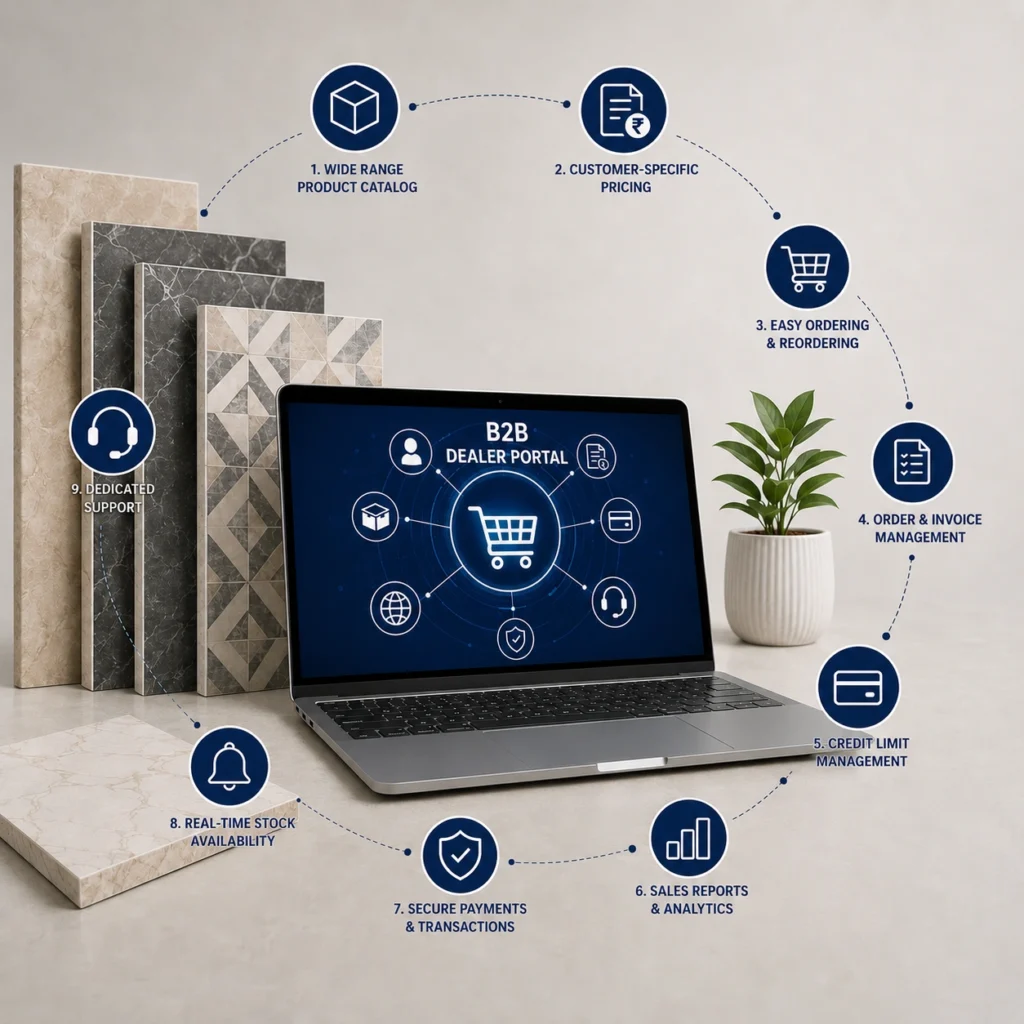
Trust erodes the moment two orders in a row get partially fulfilled. A dealer portal showing accurate stock, lot, and restock dates changes that dynamic completely. Our B2B dealer management solution is designed around exactly this workflow.
5. Finance Teams
Books don’t close cleanly when inventory value on the shelf doesn’t match what’s on the balance sheet.
One system fix. Five problems solved.
Why Lot-Level Inventory Tracking Matters for Tiles
Here’s a test. Right now, can your team tell you:
- How many boxes of a specific tile SKU are in stock across all locations?
- Which lots those boxes belong to?
- Which lot is currently being fulfilled from?
If any of those answers takes more than 30 seconds, you have a visibility problem.
Lot tracking sounds technical, but it’s the difference between a happy repeat customer and a rejected consignment. Especially for premium porcelain, natural stone, and imported ranges from Morbi or overseas suppliers where minor shade variation is part of the material.
Managing Inventory Across Multiple Warehouses
A lot of growing tile businesses avoid opening a second warehouse or showroom because they’re afraid of the inventory chaos. That fear is dated.
A properly built inventory system manages unlimited warehouse locations, showrooms, and distribution centers from a single dashboard. Stock levels by location. Automated transfer suggestions when one branch is overstocked and another is running low. Shipping cost reductions because the right box ships from the right place.
Growth stops being a data problem and starts being a business decision again.
Also Read: How to Manage Tile Inventory
Why Batch-Based Inventory Systems Fail as Tile Businesses Grow
A batch-sync setup works fine when you do 50 orders a day out of one location. Push volumes to 300 orders across three warehouses, and the cracks show fast.
Symptoms to watch for:
- Sales team maintains a private spreadsheet because they don’t trust the system
- Two customers get promised the same last-remaining pallet
- Weekly stock reports never match the warehouse floor
- Reorder points either fire too late or not at all
If more than one of those sounds familiar, you’re past the batch stage.
What Real-Time Inventory Management Delivers
Skip the marketing language. Here’s what tile businesses see in practice once they move to a real-time system:
- Sharp reduction in overselling and refunds
- Faster order-to-ship cycles because pickers know exactly where stock sits
- Cleaner cycle counts with full audit trails to investigate discrepancies
- Better demand forecasting based on actual movement, not estimates
- Sales reps closing deals in the meeting instead of promising to “check and revert”
Integrating Inventory With ERP, Ecommerce, and Dealer Portals
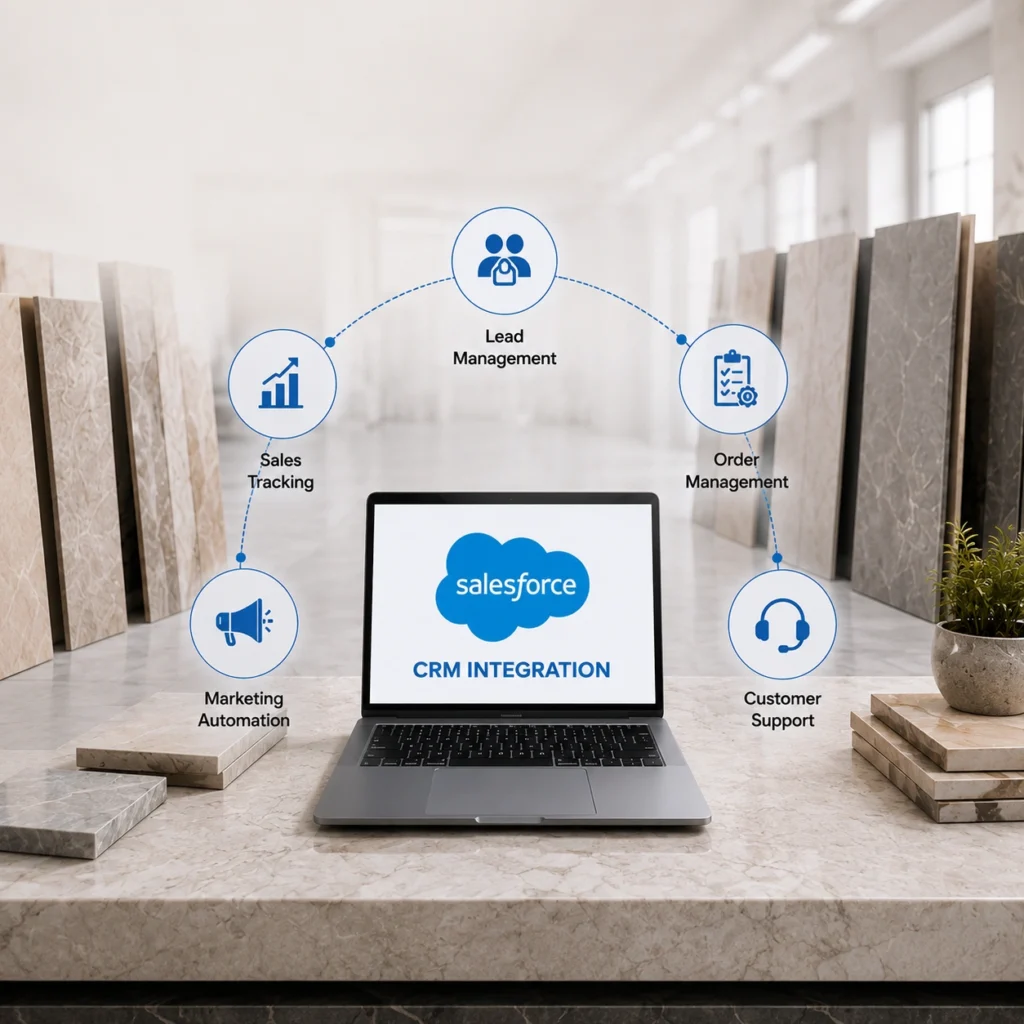
Real-time visibility only works if your systems actually talk. An inventory tool that doesn’t sync with your ERP, website, dealer portal, and accounting stack is just another dashboard nobody trusts.
The integration piece is where a lot of implementations quietly fail. Barcode scanning, RFID where it makes sense, ERP connectors for SAP or NetSuite, warehouse management workflows. All of it needs to move together. That’s the part most tile businesses underestimate and most generic software vendors underdeliver on.
If your ecommerce and inventory aren’t synced yet, our tile ecommerce platform solution plugs directly into the inventory backbone, so what the site shows is what the warehouse actually has.
The Business Impact of Real-Time Inventory Visibility
Inventory visibility isn’t an IT project. It’s a revenue project.
Every phantom stock issue is a lost sale, a shaken relationship, or a refund you didn’t budget for. Fix the visibility layer and everything downstream, from ecommerce conversion to dealer loyalty to warehouse throughput, gets easier.
The tile businesses growing fastest right now aren’t the ones with the most SKUs or the biggest showrooms. They’re the ones whose sales team can answer stock questions instantly, whose dealers trust the portal, and whose warehouse manager sleeps at night.
That’s what real-time visibility buys you.
Ready to See What Your Inventory Actually Looks Like?
If your sales team is still calling the warehouse to confirm stock, you’re leaving revenue on the table. We build inventory systems for tile retailers, distributors, and manufacturers who’ve outgrown spreadsheets and batch syncs.
Talk to our team about your setup. We’ll tell you honestly whether real-time visibility is your next move.
FAQs
1. What does real-time inventory visibility mean for a tile business?
It means the moment tiles are received, moved, or shipped, every connected system updates instantly. Website, dealer portal, ERP, sales dashboards. No overnight sync, no guessing.
2. How is this different from what my ERP already does?
Most ERPs update on schedules or after batch jobs. Real-time visibility means live sync across all channels, plus lot-level tracking, which standard ERP setups often skip.
3. Do I need this if I only run one warehouse?
Yes, and often more urgently. Single-warehouse operations still lose sales to phantom stock, mis-picks, and slow stock confirmations. Multi-warehouse just multiplies the pain.
4. Will it integrate with my existing SAP or NetSuite setup?
Standard integrations exist for SAP, NetSuite, Epicor, and most major PIM platforms. Custom connectors handle anything else.
5. How long does implementation usually take?
Depends on scope. A single warehouse rollout can go live in weeks. Multi-location deployments with ERP integration and staff training run longer. Talk to us and we’ll scope it properly.