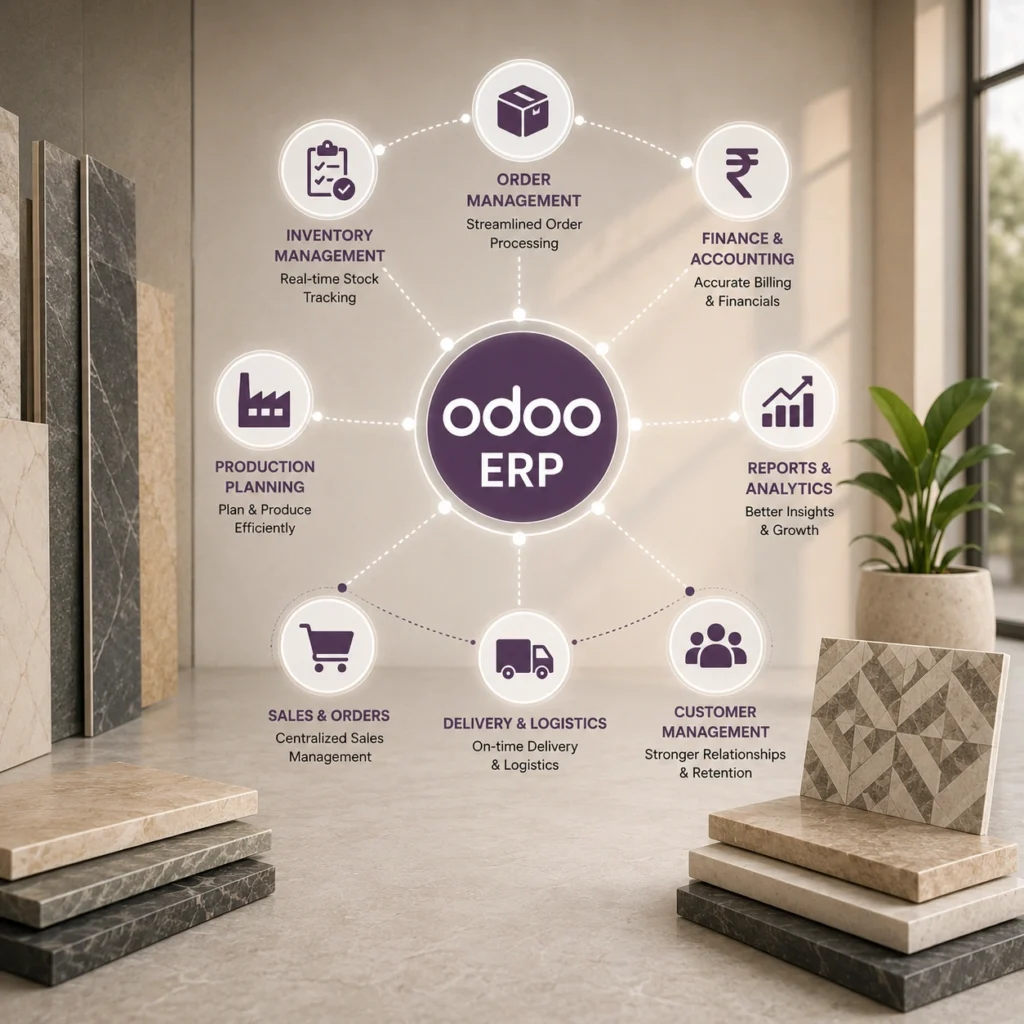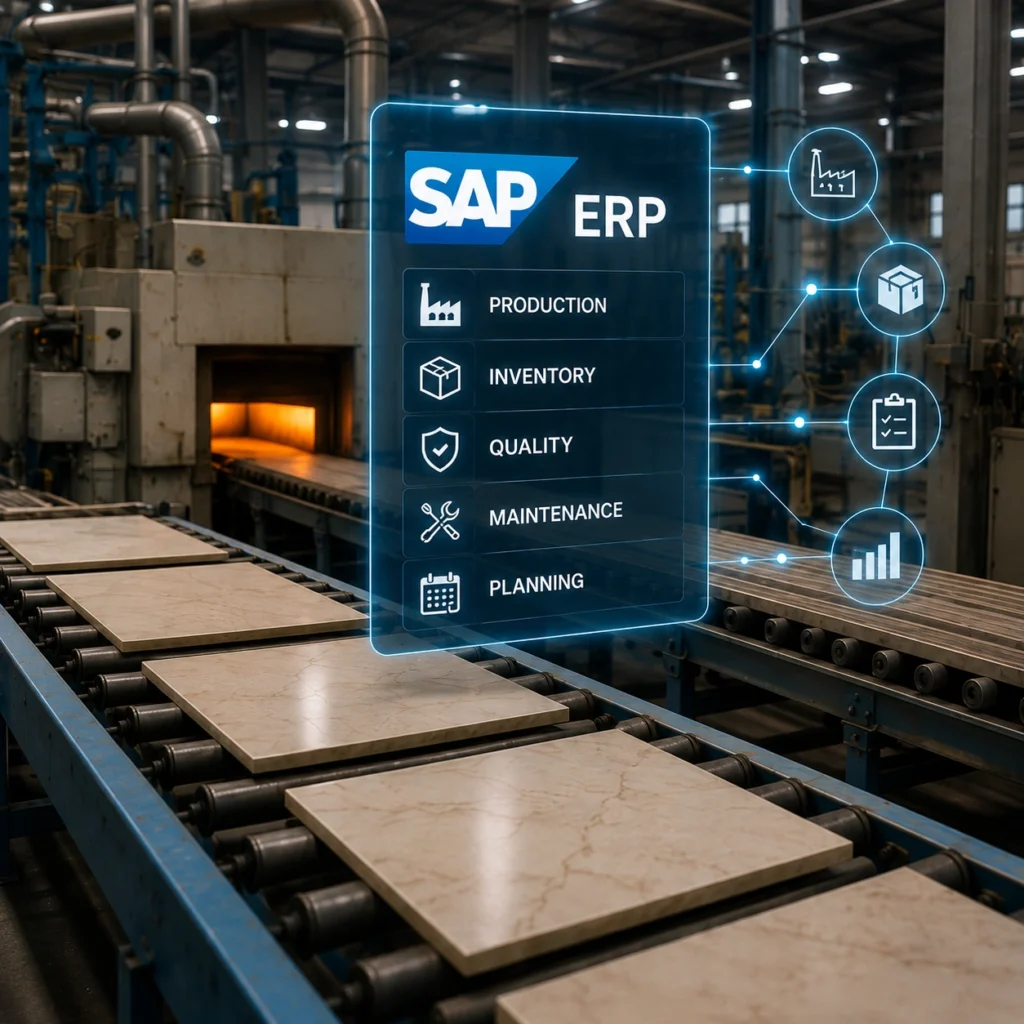
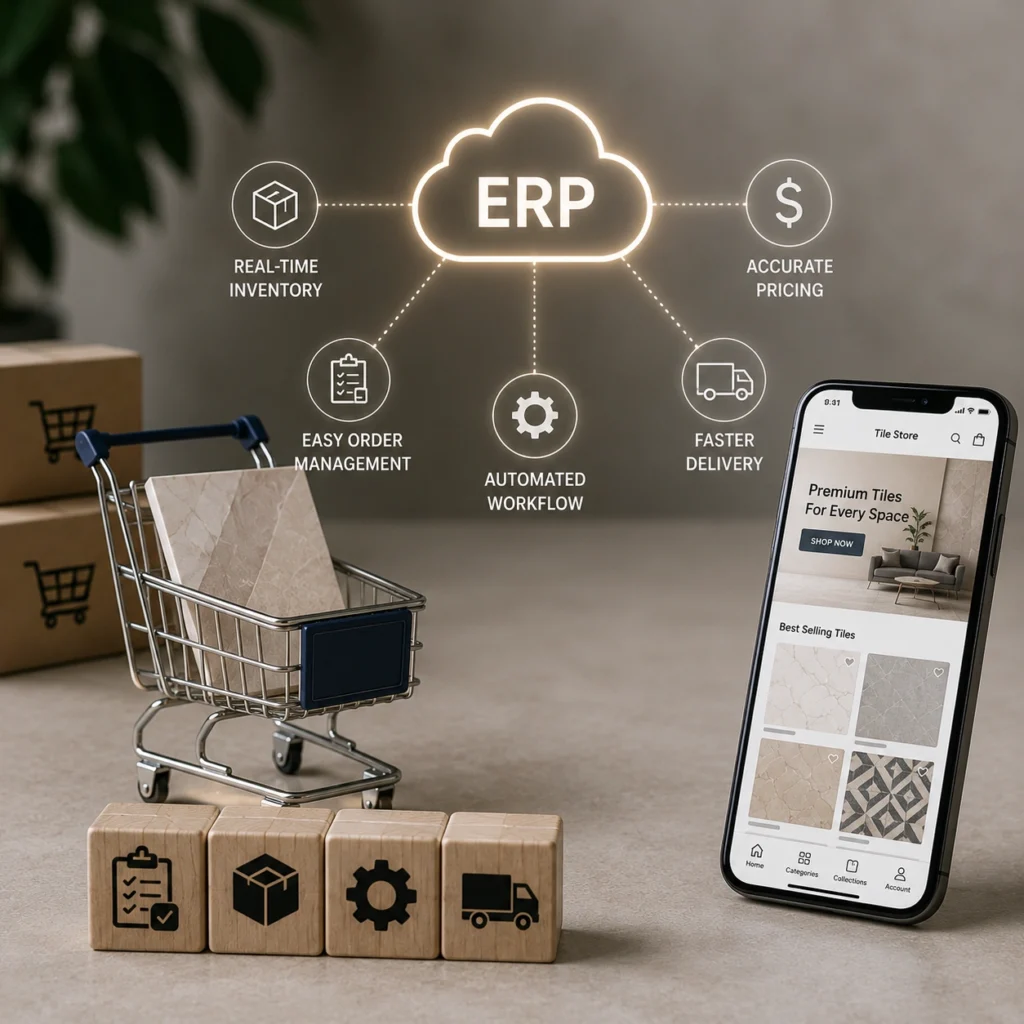
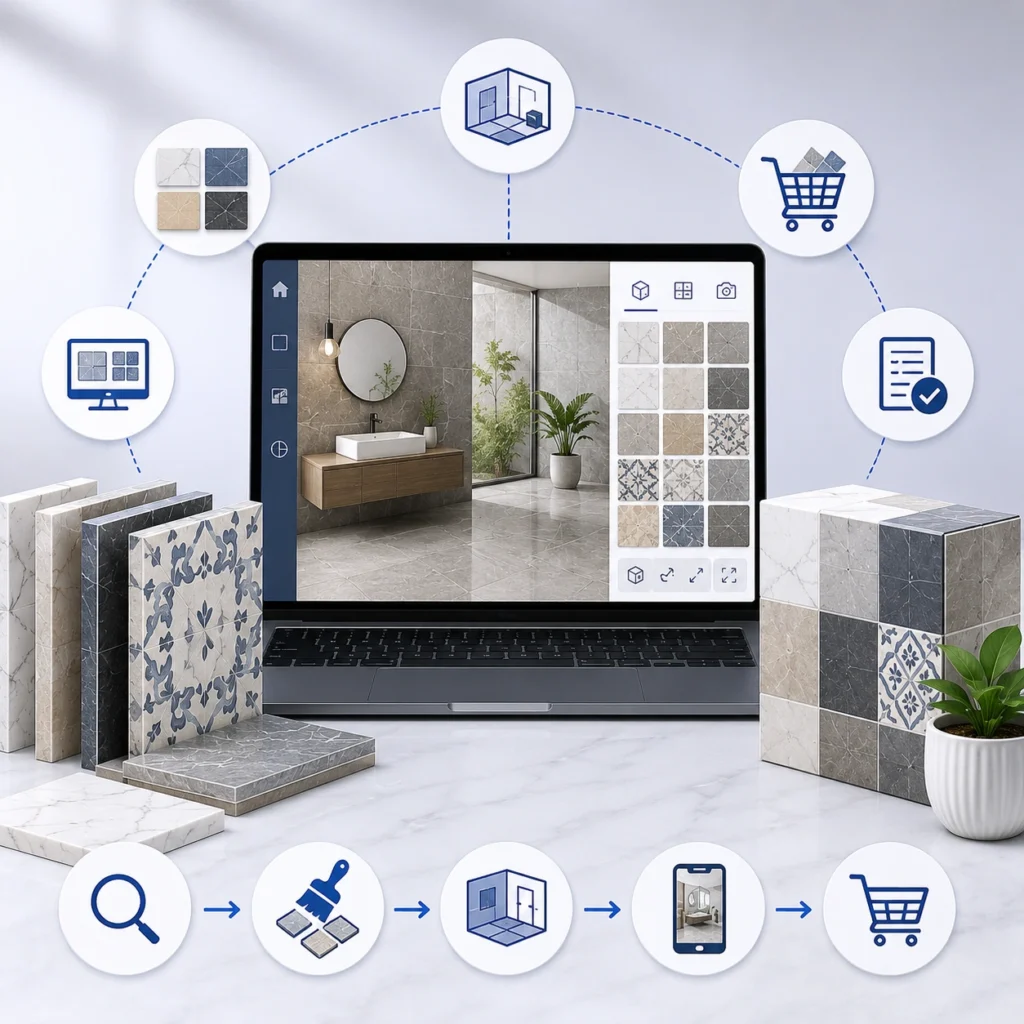
Selling tile online looks simple from the storefront. Behind it, most stores run on two separate worlds: the website and the back office. Orders come in, then someone retypes them into the ERP. Stock counts lag. A lot sells out, but the site still shows it in green. That gap costs money quietly, every single day. Closing it with a proper ERP and CRM integration solution is what separates a store that scales from one that firefights. This post covers why the link matters, and what breaks without it.
The Hidden Cost of Keeping Your Ecommerce Store and ERP Separate
Think about a normal Tuesday. A contractor orders 40 boxes of a porcelain wood-look plank. Your site takes the order. Great. Now what?
Someone opens the ERP and keys it in by hand. Maybe they get the lot right. Maybe they don’t. Meanwhile the same tile is being quoted to a dealer over the phone, and neither person knows the other exists. By Friday you’ve oversold a lot that only had 32 boxes left.
This is the daily tax of disconnected systems. It rarely shows up as one big failure. It shows up as small leaks: a refund here, an angry email there, a warehouse pick that has to be redone because the shade didn’t match.
None of it is dramatic. All of it adds up.
What ERP Integration Actually Means for Tile Businesses
Strip away the jargon and integration means one thing. Your systems stop guessing about each other.
When your ecommerce platform and ERP talk directly, an order placed online writes itself into the back office. Inventory drops in real time. Pricing pulls from a single source instead of three spreadsheets. Your team stops being human copy-paste machines and goes back to selling.
For tile specifically, that connection carries weight most industries never deal with. Lot numbers. Shade variation. Pallet-level counts. Coverage math that changes with waste factor. A generic sync built for t-shirts won’t hold any of that. A tile-aware one will.
That’s the difference between “we connected some APIs” and an integration that actually reflects how your business runs.
Signs Your Tile Ecommerce Store Has Outgrown manual entry
You don’t need an audit to know. Usually the symptoms are loud.
Orders sit for hours before anyone touches them. Stock on the site and stock in the warehouse disagree more often than they agree. Someone on your team spends the first hour of every morning reconciling numbers. Dealers call to confirm availability because they’ve learned not to trust the website.
If two or more of those sound familiar, you’ve hit the ceiling. Adding more staff doesn’t fix it. It just spreads the same broken process across more people.
Honestly, most tile companies wait too long here. They treat integration as a nice-to-have until a big oversell burns a key account. Don’t be that store.
What a Proper Tile ERP Integration Should Include
A real integration isn’t one connector bolted on and forgotten. It’s a set of pieces working together, each doing a specific job. Here’s what that looks like when it’s built for the tile trade, pulled straight from the systems we connect every week.
1. SAP, NetSuite, Dynamics, and Sage connections
The ERP runs the whole show. So the integration has to speak its language, not translate through some clumsy layer sitting in between. Say you’re on NetSuite. Orders, item records, and price levels all live in a specific structure, and the connection has to map to that exactly. Sage handles it differently. Dynamics, differently again. Get the mapping right and it just hums along in the background. Get it wrong and you’re back to fixing records by hand, which is the exact thing you were trying to stop.
2. CRM connectivity that keeps sales aligned
Orders are only half the story. Your customer relationships live in the CRM. Linking Salesforce, HubSpot, or Zoho means your sales team sees the same order history, credit status, and account notes the warehouse and finance teams see. One customer. One record. Fewer awkward “let me check on that” calls.
3. Bidirectional sync for orders, inventory, and pricing
This is the core, and the word that matters is bidirectional. Data flows both ways. An order placed on the site updates the ERP, and a stock adjustment made in the warehouse updates the site. Pricing tiers for dealers, contractors, and retail stay consistent everywhere they appear. What your customer sees is what’s actually true.
4. Middleware and API work for legacy systems
Not every tile company runs shiny new software. Plenty rely on systems that were installed a decade ago and still work fine. Those don’t have to be replaced. Custom middleware and API development bridge older platforms to modern storefronts, so you get the benefit of integration without ripping out what already works.
5. Real-time data pipelines with error handling
A sync that breaks quietly is the dangerous kind. Everything looks fine on the surface while stock counts drift, and nobody catches it for a week. Solid pipelines move data as it happens. But honestly, the bigger win is what they do when something goes sideways. A record fails to post? You get flagged right away, not three days later. And the audit log points to the exact record, the exact system, the timestamp. No guessing. No digging through screenshots someone sent from the warehouse floor.
Common Tile Industry Problems ERP Integration Solves
Here’s where generic advice falls apart. Tile isn’t a flat SKU.
- Lot and shade matching: A customer who orders 60 square feet expects those boxes to match. Sell them across two lots by accident and you’ve got a return, a reinstall, and a reputation hit. Integrated inventory tracks lots down to the box, so the site never promises a quantity that can’t ship from a single dye run.
- Coverage and waste: A homeowner ordering for a herringbone layout needs more tile than a straight lay. When your calculators, catalog, and stock counts share one data source, the number they buy is the number that’s actually reserved.
- Tiered pricing: Pricing is the quiet troublemaker. Tile runs on tiers. Retail, contractor, dealer, volume breaks. Keep those in separate places and someone eventually quotes the wrong one. Integration pins pricing to a single source, so a dealer logging into your B2B dealer portal sees exactly the price they’ve negotiated, not last quarter’s.
None of these are edge cases. In tile, they’re Tuesday.
Best Practices for Integrating ERP with Your Tile Ecommerce Store
Rip-and-replace is how projects die. A phased approach almost always wins.
Start by mapping what data lives where and where it drifts out of sync today. That single exercise usually surfaces the biggest leaks. From there, connect the highest-pain link first. For most stores that’s inventory, because stock accuracy touches every order.
A few things worth doing right from the start:
- Pick the one workflow that hurts most and fix that before touching anything else
- Insist on audit logging early, so you can prove the sync is working
- Test with real lots and real dealer accounts, not clean sample data
- Plan for the legacy system you’re pretending doesn’t exist
Once inventory is solid, layer in order sync, then pricing, then CRM. Each phase earns trust before the next one starts. It’s slower on paper. In practice it’s the version that actually ships.
If your storefront itself needs work alongside the integration, that’s worth handling together rather than in two disconnected projects. A modern ecommerce platform built for tile and clean inventory and warehouse systems tend to reinforce each other. Fixing one while ignoring the other leaves value on the table.
Conclusion
A tile ecommerce store without ERP integration works, right up until it doesn’t. It handles a handful of orders a day fine. Scale it, and the manual gaps turn into oversells, mismatched lots, pricing mistakes, and a team that spends its days reconciling instead of growing revenue.
Integration isn’t about technology for its own sake. It’s about the site telling the truth, every order, every lot, every price. That’s the whole point.
Tired of your website and warehouse disagreeing? Tile IT Solutions builds ERP and CRM integrations made for how the tile trade actually works, lots, shades, tiers, and all. Book a consultation and we’ll map where your data drifts today and how to close the gaps.
FAQs
1. What does ERP integration mean for an ecommerce store?
Your storefront and your back-office ERP start sharing data on their own. Orders, stock, prices, all of it stays in step without anyone retyping between systems.
2. Do I have to replace my current ERP to integrate it?
Rarely. Most builds connect to whatever you already run, even older setups, through custom middleware and APIs. Swapping the ERP out is usually overkill.
3. How does integration help with tile lot and shade matching?
This one’s a big deal for tile. It tracks stock at the lot level, so the site won’t sell someone a quantity that can’t ship from a single matching batch. Fewer shade-mismatch returns.
4. Which ERP and CRM platforms can be connected?
On the ERP side, think SAP, NetSuite, Dynamics, or Sage. For CRM, it’s usually Salesforce, HubSpot, or Zoho. Older legacy systems can be bridged too.
5. How long does a tile ERP integration take?
Depends on scope and how many systems are in play. A phased build that tackles inventory first tends to show results well before a full replacement would.
6. Is real-time sync really necessary, or is nightly enough?
For inventory, real time. With nightly sync your site can oversell all day and only correct itself overnight. In tile, that window gets expensive fast.