Someone searches “12×24 porcelain wall tile” at 11pm, scans three results, and never learns your company exists. That’s the gap digital marketing for tile businesses has to close, and most generic marketing advice doesn’t close it. Tile isn’t a lamp or a lawn service. Buyers need coverage math, lot availability, freight cost, and confidence that the shade on screen matches the pallet.
This guide covers what actually works for tile retailers, distributors, and manufacturers, plus the order to do it in. Our digital marketing service for tile companies were built around that difference.
What Digital Marketing for Tile Businesses Involves
Digital marketing for a tile business means using search, paid ads, marketplaces, content, and email to put your products in front of buyers at the moment they’re deciding, then giving them a site that can actually close the sale.
Six channels carry almost all of it:
- SEO, which earns rankings for product and category searches over time
- Local SEO, which makes showrooms findable in map results
- Paid search, which buys visibility immediately while SEO builds
- Marketplace optimization, for buyers who start on Amazon, Wayfair, or Home Depot
- Content, which answers the questions asked before the purchase
- Email, which recovers carts, follows up on samples, and keeps dealers informed
That list looks like every other industry. The execution doesn’t, and that’s where most tile companies lose money.
Why Digital Marketing for Tile Companies Is Different
Marketing guides written for contractors tell you to build a photo gallery and claim your Google profile. Fine advice. Nowhere near enough.
Tile carries friction no other product category has, and every piece of that friction is a place where paid traffic leaks away.
1. Buyers Shop by Space, Not Individual Tiles
Nobody needs 47 tiles. They need enough for a 68 square foot bathroom floor, plus waste.
If your page prices by square foot while your cart charges by the box, expect abandonment. Square meter to box conversion needs to happen on the page, with a waste buffer of roughly ten percent for straight layouts and closer to fifteen for diagonal or herringbone patterns.
2. Lot and Shade Consistency Builds Buyer Trust
Contractors have been burned by shade mismatch. They’ll ask about lot numbers before they ask about price.
Publishing that information openly beats any trust badge. So does photographing several pieces from the same run instead of one flawless studio shot.
3. Freight Costs Affect Purchase Decisions
Tile is heavy and it breaks. A shipping cost revealed at checkout, after the buyer has spent twenty minutes choosing, loses the sale and the goodwill. Show freight estimates on the product page.
4. Marketing to Both B2B and B2C Buyers
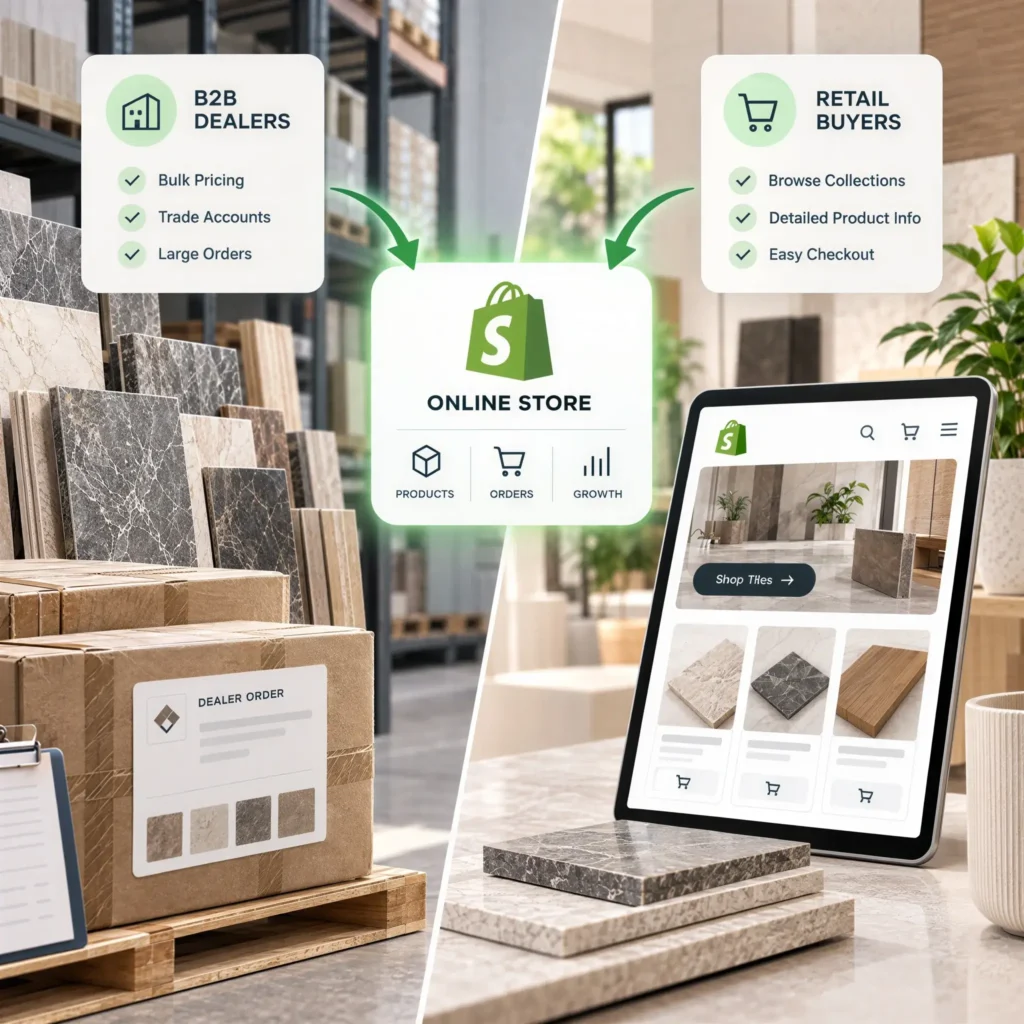
Homeowners want inspiration and retail pricing. Dealers want tiered pricing, stock visibility, minimum quantities, and payment terms.
Trying to serve both from one experience serves neither well. That’s a structural problem, not a copywriting one.
5. The Tile Buying Journey Is Longer Than You Think
A bathroom remodel decision can take six weeks. A commercial spec can take six months. Judge tile marketing on a thirty day attribution window and you’ll cut the channel that was working.
9 Ways to Attract More Tile Buyers Online
These are ordered roughly by return on effort. Not every one applies to every business, and a few actively don’t suit certain models. Where that’s true, it’s noted.
1. Optimize Your Website Before Investing in Marketing
Traffic is rarely the constraint. Conversion is.
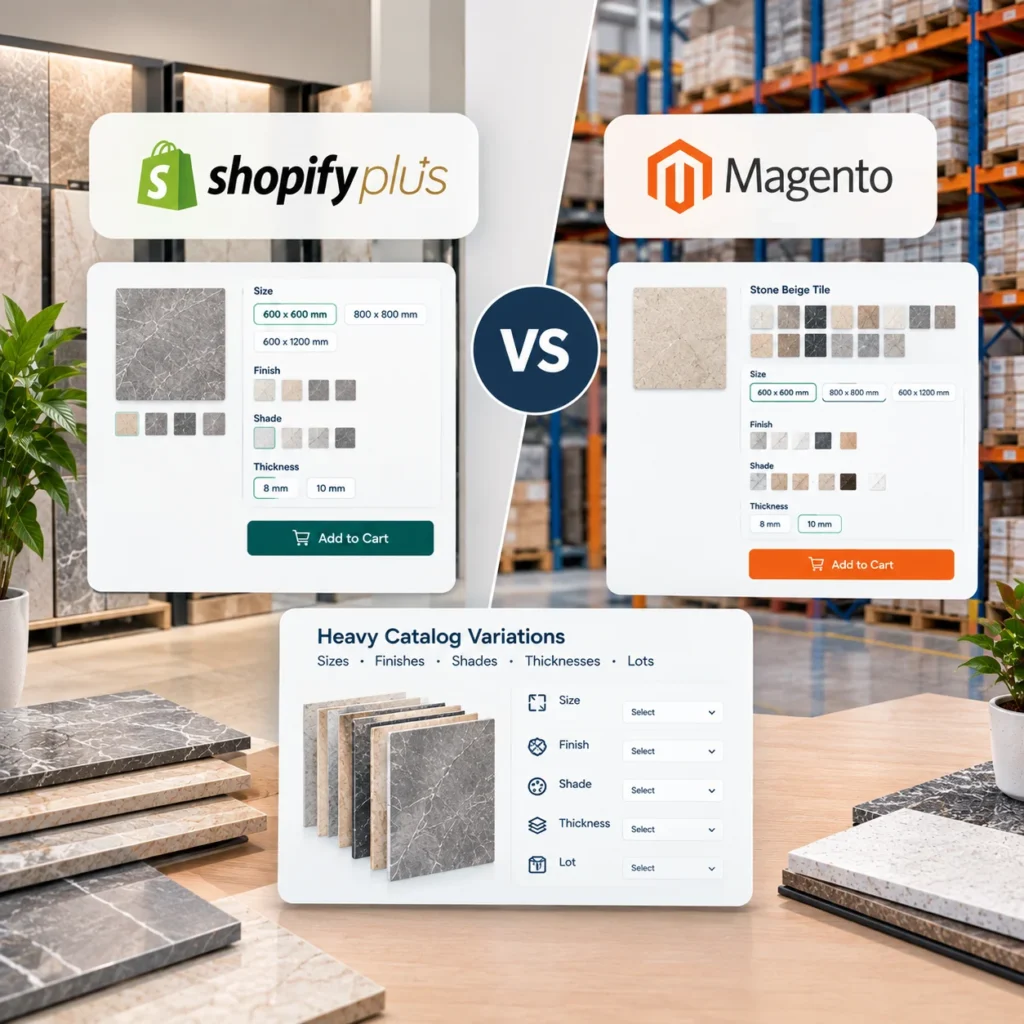
Double your sessions and revenue can stay flat if the site can’t answer coverage, stock, shade, and freight questions. The usual leaks: prices per square foot with no box conversion, no live stock visibility, one hero photo per SKU, no sample ordering path, and search that returns nothing for “24×48” because the catalog stores it as “24 x 48”.
Sequencing this first is the most profitable decision available to you. A proper tile ecommerce and catalog solution handles size, finish, shade, lot number, and pricing tier natively, which clears most of that list at once.
2. Create SEO-Friendly Category Pages
Product pages rarely rank. Category pages do.
Buyers search by attribute combinations: “large format porcelain kitchen floor,” “matte black hexagon wall tile,” “outdoor porcelain pavers 20mm.” Every one of those deserves a real page with real copy, not a filtered URL Google will ignore.
One warning on that. Faceted navigation across a large catalog spawns near infinite URL combinations. Left uncontrolled, crawl budget goes to “blue 6×6 matte glossy” dead ends while your best category pages sit unindexed.
3. Improve Local SEO for Tile Showrooms
Highest return work available to anyone with a physical location.
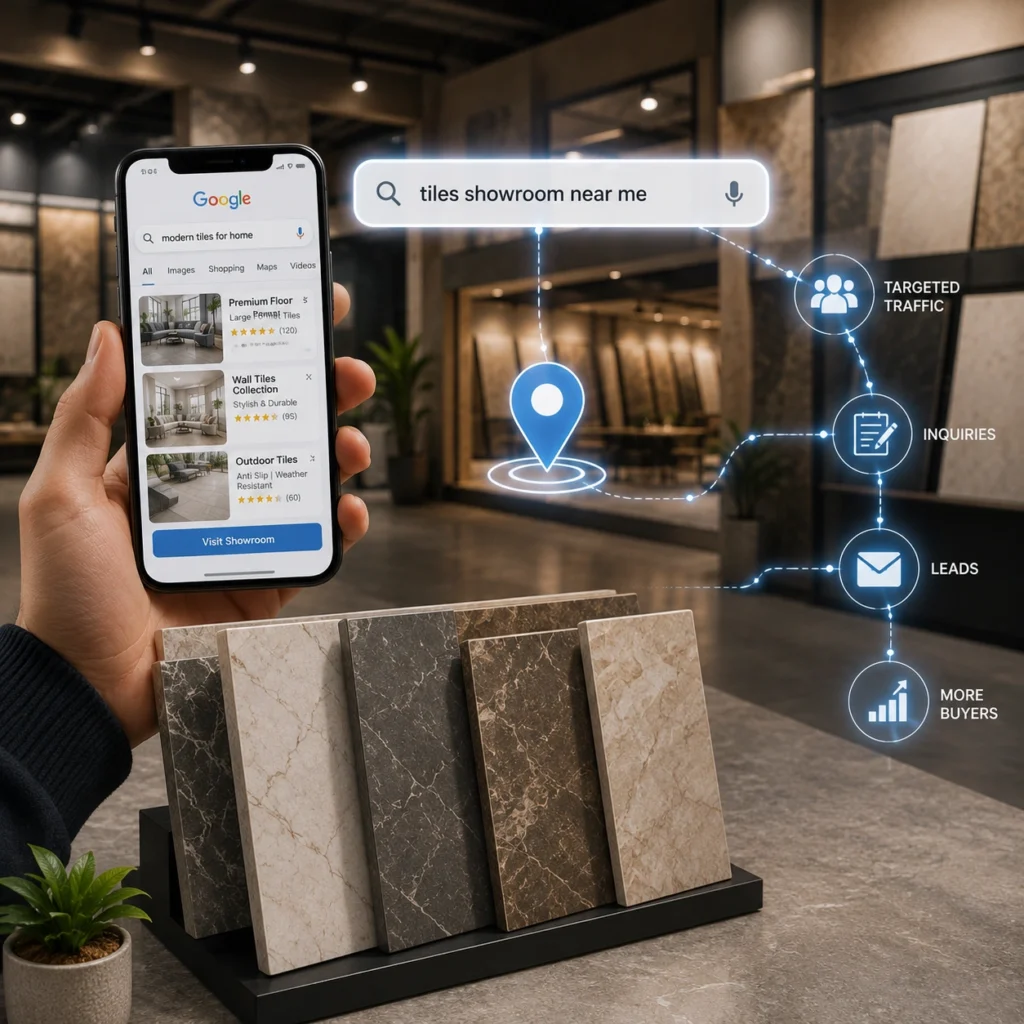
Complete the Google Business Profile properly. Keep name, address, and phone identical across directories. Build local citations. Respond to reviews, including the bad ones, because how you handle a complaint is what the next reader is evaluating.
Small detail that matters more than it should: showroom interior photos outperform product photos in local results. People are deciding whether the drive is worth it.
4. Add Tile Calculators and Interactive Tools
A coverage calculator does more for revenue than another round of ad creative. Usually by a wide margin.
It also earns links and rankings on its own, because “tile calculator” and “how many boxes of tile do I need” carry real search volume with obvious purchase intent. Grout, trim, and adhesive estimators extend the same idea. Our tile calculators and tools exist for exactly this reason.
5. Use High-Quality Product Images and Visualizers
Studio shots sell nothing in tile. Buyers want to know what a full floor looks like, how the pattern repeats, and how much piece to piece variation to expect.
Room scenes, installed photography, and variation grids all outperform isolated product images. Tile visualization tools go further by letting a buyer drop the tile into their own space, which shortens the decision and cuts return rates on samples.
6. Invest in Google Ads for High-Intent Keywords
PPC buys immediate visibility. That’s the job.
Split campaigns by tile type, room application, and customer segment rather than running one bloated account. Ad copy, landing page, and conversion path get optimized together, otherwise you’re paying for clicks that land somewhere never designed to convert them.
Honest caveat, and it’s an important one: paid search rarely works on low margin field tile against big box bidders. It works well on premium lines, large format, natural stone, outdoor pavers, and trade account acquisition. If your gross margin on a product is thin, don’t advertise it.
7. Optimize Marketplace Listings
Plenty of tile discovery happens on Amazon, Wayfair, and Home Depot before a buyer ever reaches a manufacturer site.
Listing optimization there means real descriptions, high quality images, and keyword placement matched to how people search on each platform specifically. Reviews and ratings need active management, since visibility is tied to them directly.
The trade off is channel conflict. If marketplace pricing undercuts your distributors, you’ll win a sale and damage a relationship worth far more. Overstock, discontinued lines, and seconds are the safer play.
8. Publish content that answers specification questions
Design trend posts get shared. Specification content gets bought from.
“What PEI rating do I need for a garage floor.” “Which finish holds up in a commercial kitchen.” “Can porcelain go outdoors in a freeze thaw climate.” These pages keep pulling qualified traffic years after publication.
Company news is not a content strategy. Frankly, most tile companies quit this channel two months before it starts paying.
9. Separate the trade journey from retail
If dealers, contractors, and designers are a meaningful share of revenue, they need their own path: tiered pricing, credit terms, reorder history, multi warehouse stock, and quote requests instead of retail checkout.
A dedicated B2B dealer portal solution handles that separation properly, and it changes what your marketing can promise. Hard to run a trade acquisition campaign when trade buyers land on a homeowner storefront.
How AI Search Is Changing Digital Marketing for Tile Companies
Search results increasingly include AI generated answers, and tile queries are heavily represented because they’re specification questions with clear answers.
What earns citations there is roughly what earns featured snippets, sharpened: direct answers stated plainly near the top of a page, real specification tables, structured data on products and FAQs, and content that reads like it came from someone who has handled the material.
Marketing pages full of adjectives don’t get cited. Pages that state a PEI rating and explain what it means do.
Most tile companies are ignoring this entirely, which makes it the cheapest visibility available right now.
A 90-Day Digital Marketing Plan for Tile Companies
Strategy is easy. Sequencing is what people get wrong. This assumes a limited budget and no dedicated marketing team, which describes most tile businesses honestly.
1. Days 1–30: Audit, Fix, and Measure
Audit technical health first. Speed, mobile rendering, indexation, product structured data.
Claim and complete every location’s Google Business Profile. Add or fix the coverage calculator. Pull search data to find product and category pages already sitting on page two, because those are your fastest wins.
Don’t launch campaigns yet. You’d be filling a leaking bucket.
2. Days 31–60: Capture Existing Search Demand
Optimize the pages with ranking momentum. Better titles, real specification detail, internal links from related collections.
Launch a small paid test, two or three tightly themed campaigns, not fifteen. Set up abandoned cart and sample follow up emails. Start publishing at one substantial buyer question per week.
3. Days 61–90: Scale Campaigns and Optimize Performance
Add marketplace listings if margins allow. Build local citations. Review what the paid test taught you about which categories convert.
By day 90 you should know your cost per qualified lead by channel. Not full revenue attribution, that takes longer given the research window, but enough signal to decide where the next dollar goes.
Digital Marketing Budget and KPIs for Tile Businesses
Traffic and impressions look good in a report and answer almost nothing.
| What to track | What it tells you | When to expect movement |
| Sample requests | Real purchase intent, earlier than any other signal | 30 to 60 days |
| Calculator usage | Whether the storefront fits how buyers shop | Immediately after launch |
| Local pack visibility | Showroom discoverability in your area | 30 to 90 days |
| Cost per qualified lead by channel | Where budget belongs next | 60 to 90 days |
| Trade account signups | B2B pipeline health | 60 to 120 days |
| Organic category rankings | Long term compounding traffic | 4 to 6 months |
On budget, the split matters more than the total. Spend on the site until it converts, then on channels. Sending paid traffic to a storefront that can’t handle tile buyers wastes the money either way.
Skip published industry benchmarks. A manufacturer, a distributor, and a single showroom get averaged into the same useless number. Compare yourself to your own trailing quarter.
Common Digital Marketing Mistakes Tile Companies Should Avoid
Chasing broad keywords like “tiles” while ignoring the specific phrases that carry buyers. Volume feels good. It converts poorly.
Running ads to a homepage.
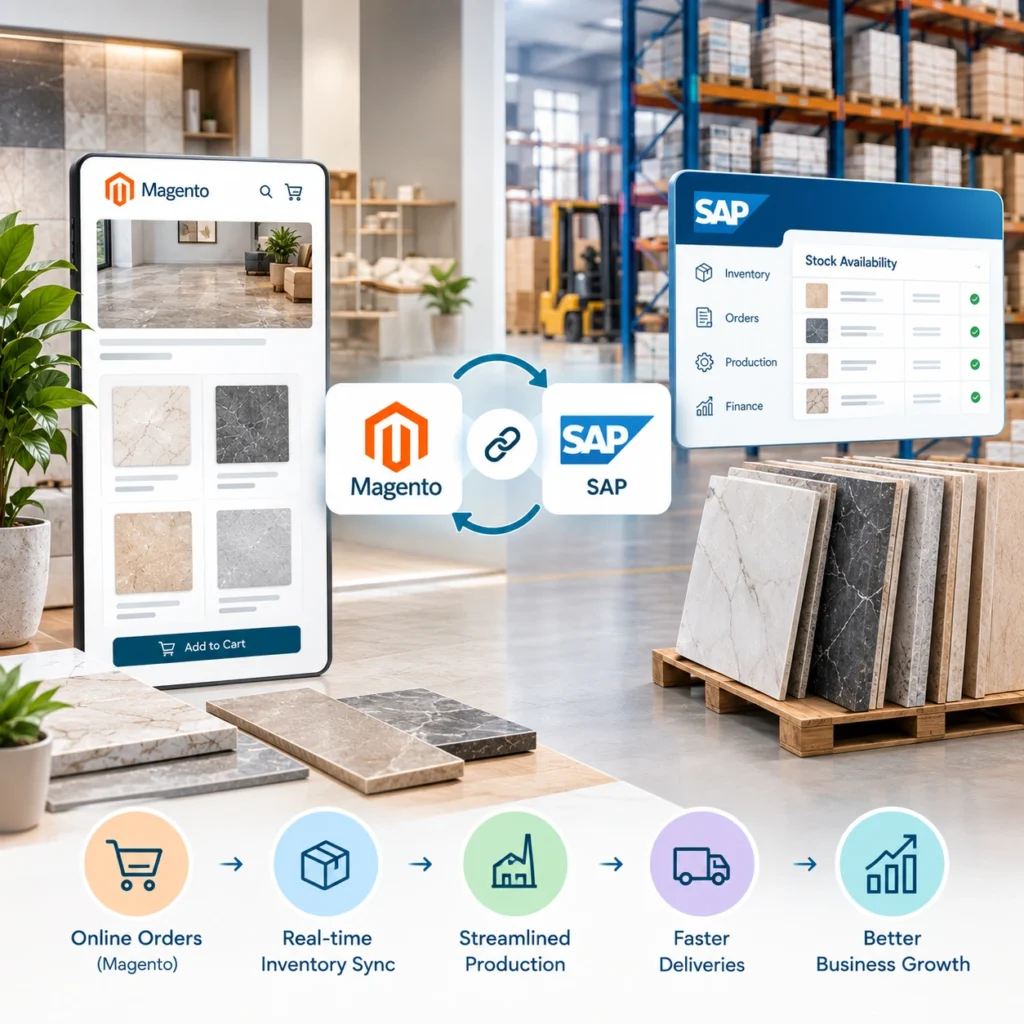
Marketing inventory that isn’t actually there. If the site doesn’t reflect real warehouse stock, campaigns push products with a three week lead time and buyers leave. That’s an integration issue, usually solved by connecting the storefront to inventory and warehouse systems, not a marketing one.
Publishing design trend roundups nobody searched for.
Judging results at thirty days, which given how tile decisions work is just guessing with extra steps.
How to Get Started with Digital Marketing for Your Tile Business
Storefront first. Then local search. Then organic content. Then paid, and marketplaces once margins justify it. Keep email running the whole time because it costs almost nothing.
The tile companies pulling ahead online aren’t outspending anyone. They’ve built sites that answer coverage, shade, stock, and freight before a buyer has to ask, then pointed steady, well targeted traffic at them.
Less exciting than it should be. It works.
Steady, qualified tile buyers online come down to two things: a storefront built for how tile is actually purchased, and marketing pointed at the right search intent. Tile IT Solutions works only in tile, flooring, and building materials, and has helped 50 plus tile companies improve rankings and online sales.
Request a marketing audit and we’ll show you where traffic is leaking and which channel deserves your next dollar.
FAQs
1. How long before digital marketing brings tile leads?
Local SEO and paid search can produce leads inside 30 days. Organic category rankings usually take four to six months to compound.
2. What’s the single best channel for a tile showroom?
Local SEO. Complete Google Business Profile, consistent listings, real showroom photos.
3. Should tile manufacturers sell on marketplaces?
Depends on margin and dealer conflict. Good for overstock and seconds. Risky if it undercuts distributor pricing.
4. How much should a tile business spend on marketing?
Fix the storefront first, then spend. Paid traffic pointed at a site that can’t convert tile buyers wastes budget regardless of the amount.
5. Does content marketing still work for tile?
Yes, when it answers specification and application questions. Company news and trend roundups don’t perform.
6. What kills tile ecommerce conversions most often?
Coverage confusion and freight surprises. Both are fixable on the product page.
7. How do we show up in AI search results?
Direct answers near the top of the page, real specification tables, and product plus FAQ structured data. Most competitors aren’t doing this yet.