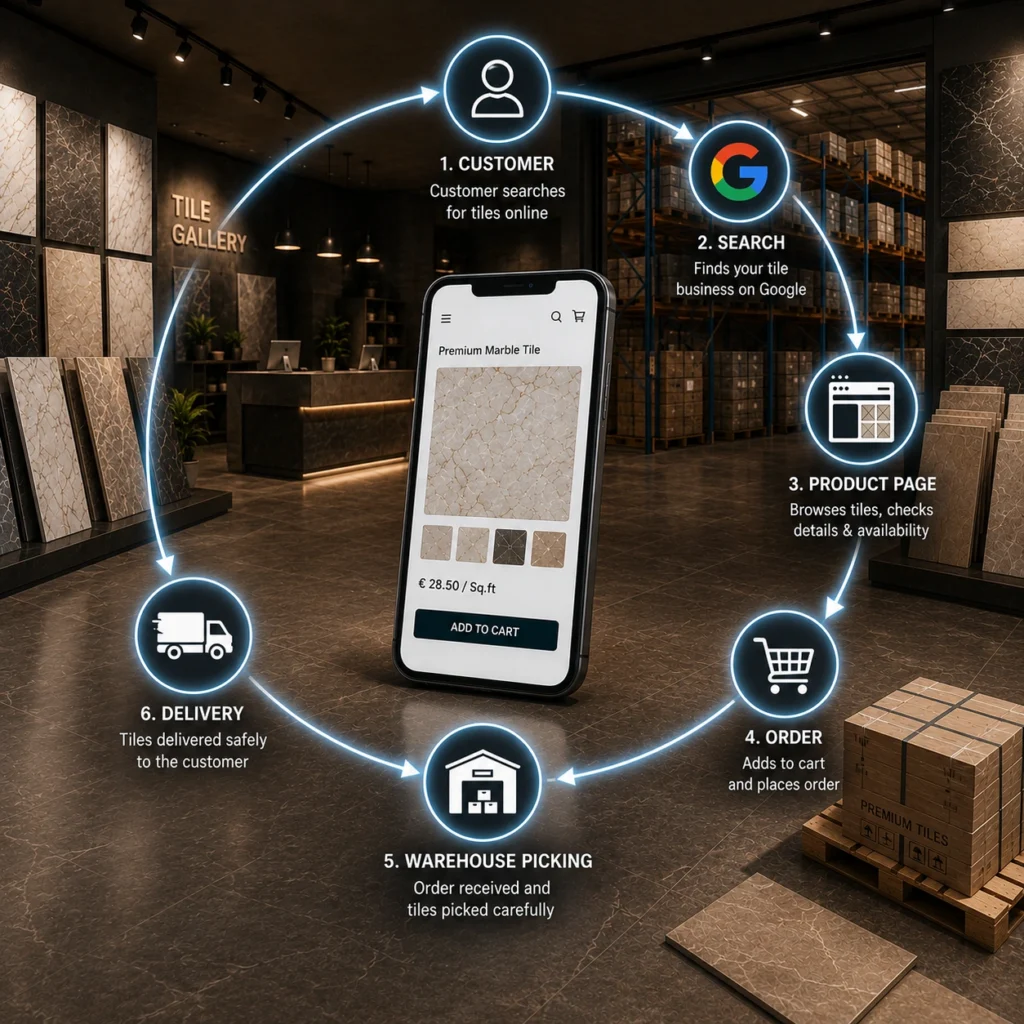
Tile used to sell in showrooms. Slabs on display racks, a contractor with a tape measure, a sales rep writing the order by hand. That model still exists, but it’s no longer where the buying decision starts. Most of it now happens on a phone, weeks before anyone walks in. Manufacturers, distributors and retailers who noticed this early have already rebuilt their digital front end, often starting with an ecommerce and catalog solution built for material specs rather than generic retail products.
Why the Tile Industry Is Moving Toward eCommerce
The demand side is healthy. The global ceramic tiles market was estimated at around USD 226.41 billion in 2025 and is projected to reach USD 380.61 billion by 2033, a CAGR of roughly 6.6 percent, driven by urbanization and infrastructure expansion across residential, commercial and public projects . Asia Pacific still dominates volume. Porcelain still dominates product mix.
What’s changing faster than the market itself is the channel. Online channels are expanding at about a 10.53 percent CAGR, with configurators letting buyers visualize rooms in augmented reality and sample box services shortening decision cycles. That gap between overall market growth and online channel growth is the whole story. Tile isn’t growing dramatically faster. Tile bought digitally is.
How Tile Buyers Research and Purchase Today
Three buyer types dominate, and they’ve all moved online for different reasons.
Homeowners research obsessively before spending anything. They compare finishes across five tabs, save Pinterest boards, then order samples from whoever makes sampling easy. Contractors are different. They buy from a truck cab between jobs and they care about one thing: is it in stock at the branch nearest the site. Architects and designers want technical data sheets, PEI ratings, slip resistance values and CAD files, and they’ll abandon a site that hides them behind a contact form.
Then there’s the dealer, ordering the same 40 SKUs every month, who has quietly started resenting the phone call and the fax confirmation.
None of these people want a brochure website.
Top 9 Tile eCommerce Trends Reshaping the Industry
Some of these are mature. Some are still early enough that adopting them is a real competitive edge. Honestly, the ranking below reflects what moves revenue rather than what looks impressive in a pitch deck.
1. Catalogs built for material attributes, not retail products
A tile SKU carries size, finish, colour body, thickness, PEI rating, lot, shade and application area. Generic platforms flatten all of that into a colour dropdown, which breaks filtering and destroys search.
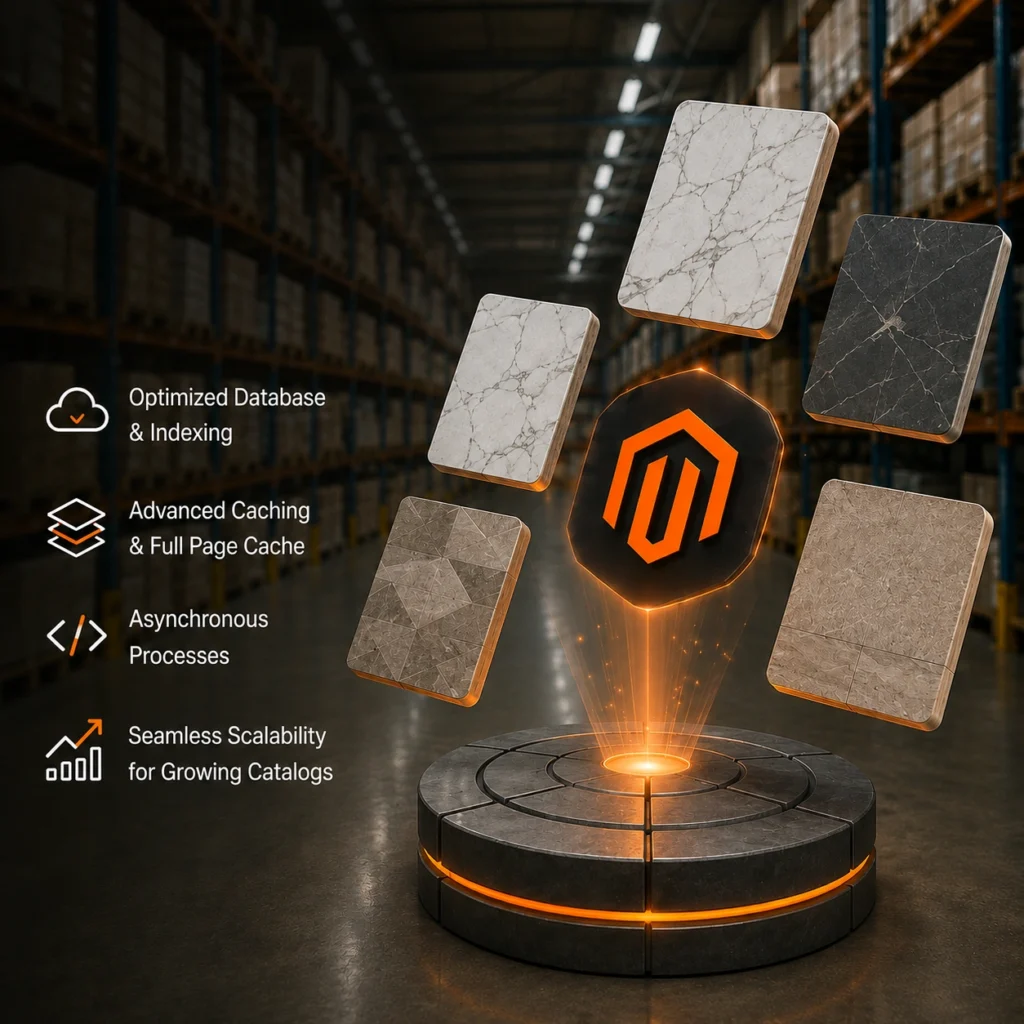
Purpose built catalogs handle it properly. Tile IT Solutions builds storefronts that handle over 50,000 SKUs with variations for size, finish, colour, lot and thickness, with faceted search and dynamic filters designed for materials buyers, and bulk import tools that cut product listing time by 60 percent. That listing time figure matters more than it sounds. A 4,000 SKU catalog refresh either takes a season or a fortnight, depending entirely on this.
2. Sample ordering became the primary conversion event
This is the trend most tile brands underestimate. The sample cart isn’t a nice extra. It’s the moment intent becomes measurable.
Ship a swatch, and the buyer stops shopping. Site data backs it: sample ordering raises customer confidence and conversion rates by around 35 percent on average, and buyers who receive samples are less likely to return products. The secondary benefit is data. Sample requests tell you which collections generate real interest, not just traffic.
3. AR and 3D Tile Visualization Improve Buying Confidence
Uncertainty is what kills online tile purchases. Nobody commits 60 square metres of porcelain to a room they can’t picture.
Web based visualizers and camera driven room preview close that gap. The product visualization solutions available today run in a browser with no app download, render accurate colour, texture and grout lines, and connect back to the catalog for direct add to cart. That last part is the difference between a marketing toy and a sales tool. A visualizer that doesn’t end in a cart is decoration.
4. B2B Dealer Portals Are Modernizing Wholesale Ordering
For distributors, this is the biggest revenue trend of the last three years. Dealers self serve, sales reps stop transcribing orders, and order errors drop sharply.
A working portal handles role based dashboards, contract specific catalogs per account, bulk ordering with CSV upload, quick reorder, live availability and lead times, plus invoicing and statements. One national distributor working with Tile IT Solutions reported that the B2B portal cut order processing time by over 60 percent.
Worth noting the trade off. Portals only work if pricing logic is clean before launch. Messy legacy discount structures get exposed immediately, and that’s usually a finance conversation, not a technology one.
5. Real-Time Inventory Visibility Is Now a Competitive Advantage
Phantom stock is expensive twice: once in the refund, once in the relationship.
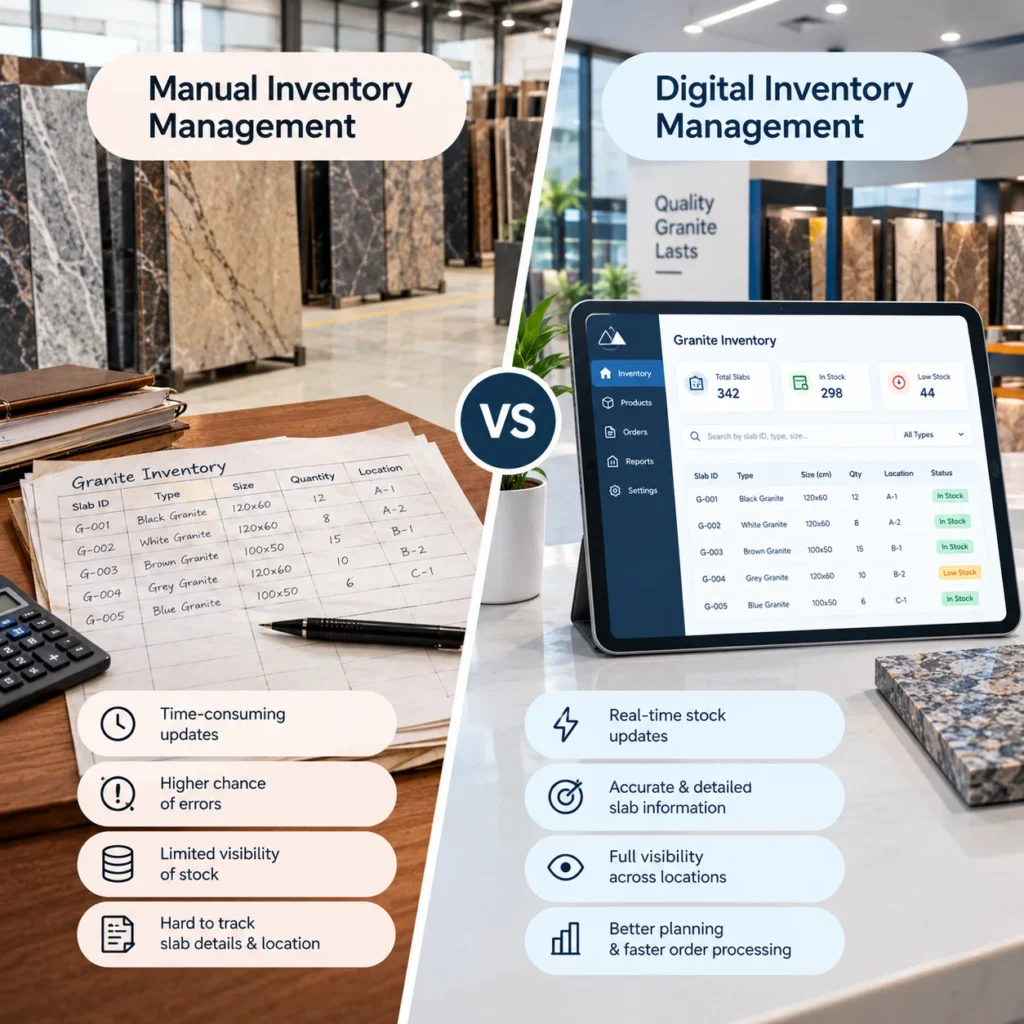
Modern inventory and warehouse solutions sync across warehouses in real time, track lot and shade with automatic matching, trigger replenishment on low stock, and forecast on historical demand. Lot and shade matching is the tile specific piece nobody outside this industry appreciates. Two boxes from different lots on the same floor is a callback, a reinstall and an unhappy builder.
6. Tile Calculators Help Increase Conversion Rates
Coverage math is where buyers hesitate. Square metres to boxes, waste factor for diagonal or herringbone layouts, grout volume, adhesive quantity.
Tile calculator tools remove that friction and, in practice, buyers who use one add to cart at noticeably higher rates. Cheap to build. Easy to embed on partner sites. Frequently skipped anyway.
7. ERP Integration Is Becoming Essential for Tile eCommerce
A storefront disconnected from the ERP just relocates the manual data entry. Orders get typed twice. Inventory drifts. Pricing goes stale.
Bidirectional integration with SAP, NetSuite, Microsoft Dynamics, Sage, plus CRM connectivity to Salesforce, HubSpot or Zoho, is now table stakes rather than a phase two ambition. Middleware for legacy systems handles the older installs that can’t expose clean APIs.
8. Mobile-First Shopping Is Driving More Tile Sales
Over 65 percent of tile industry searches happen on mobile, and platform load times under two seconds with one handed checkout flows matter directly to conversion. Contractors don’t sit at desks. If a spec sheet needs pinch zooming, it isn’t accessible.
9. AI Search Is Changing How Buyers Discover Tile Products
This one is early and moving fast. Buyers increasingly ask an assistant which porcelain suits a high traffic commercial corridor rather than typing a keyword. Structured product data, schema markup and clearly written technical content are what make a catalog quotable in those answers. Brands with thin product descriptions simply won’t appear.
Common Challenges in Tile eCommerce Adoption
Not every barrier is technical, and pretending otherwise wastes budget.
Product data quality is the usual culprit. Catalogs live in three spreadsheets, a legacy PIM and someone’s memory. No platform fixes that. Cleaning data is unglamorous work that has to happen first.
Channel conflict is the second. Selling direct to consumers while dealers carry the same collection creates real friction. It’s manageable through pricing tiers, regional rules and dealer locator handoffs, but it needs a decision at leadership level rather than a workaround in the admin panel.
Freight is the third, and the least discussed. Tile is heavy, fragile and awkward. Any eCommerce plan that doesn’t model palletized shipping, breakage allowance and delivery windows will look profitable on a spreadsheet and lose money in practice.
A Practical Roadmap for Launching Tile eCommerce
Most failed projects tried to launch everything at once.
A phased sequence works better. Start with catalog and data cleanup, because everything downstream depends on it. Launch the storefront with sample ordering next, since that’s the fastest path to measurable intent. Connect ERP and inventory in phase three. Add visualization, calculators and marketplace expansion after the core is stable.
The typical audit to launch path Tile IT Solutions runs follows the same logic: catalog audit, then build and integrate with ERP and PIM, then launch with A/B testing and conversion optimization, then ongoing monitoring and support.
Expected Results from a Modern Tile eCommerce Platform
Results vary by catalog size and starting point, so treat these as benchmarks rather than promises. Tile IT Solutions reports an average 45 percent increase in online sales within six months of launch, 99.9 percent platform uptime with 24/7 support, and volume discount logic that lifts average transaction value by around 40 percent.
The pattern behind those figures is consistent. Better product data leads to better search visibility, which brings more qualified traffic, which converts more often because samples, stock accuracy and visualization remove the reasons to hesitate.
Where Tile Companies Should Invest First
Fix the catalog and product data.
It’s the least exciting option on the list and the one that makes every other investment work. Visualization on top of bad data is a nicer looking failure. Get the SKU architecture, attributes and imagery right, then build outward from there.
If your catalog is growing faster than your systems can handle, that gap only widens. Tile IT Solutions builds eCommerce platforms, dealer portals and ERP connected inventory systems specifically for tile, flooring and building materials businesses. Book a consultation and we’ll review your catalog structure and show you where the fastest gains are.
FAQs
1. Is eCommerce actually viable for tile, given shipping weight?
Yes, but only with realistic freight modelling. Sample shipping, palletized delivery and local pickup options usually carry the economics.
2. Should tile manufacturers sell direct to consumers?
Depends on your dealer network. Many run B2B portals as the revenue channel and use the consumer site for discovery, samples and dealer referral.
3. How long does a tile eCommerce build take?
Typically three to six months for a full catalog and ERP connected launch. Data readiness is the variable that moves that most.
4. Do AR visualizers really increase sales?
They reduce hesitation, which shows up as higher add to cart rates. They work best when connected directly to the live catalog.
5. What platform suits tile catalogs best?
Both Magento and Shopify can work. The deciding factor is catalog complexity and integration needs, not the platform brand.
6. Is a B2B portal different from a normal online store?
Completely. Portals need role based access, contract pricing per account, bulk reorder and credit terms. Consumer checkout flows break under that.