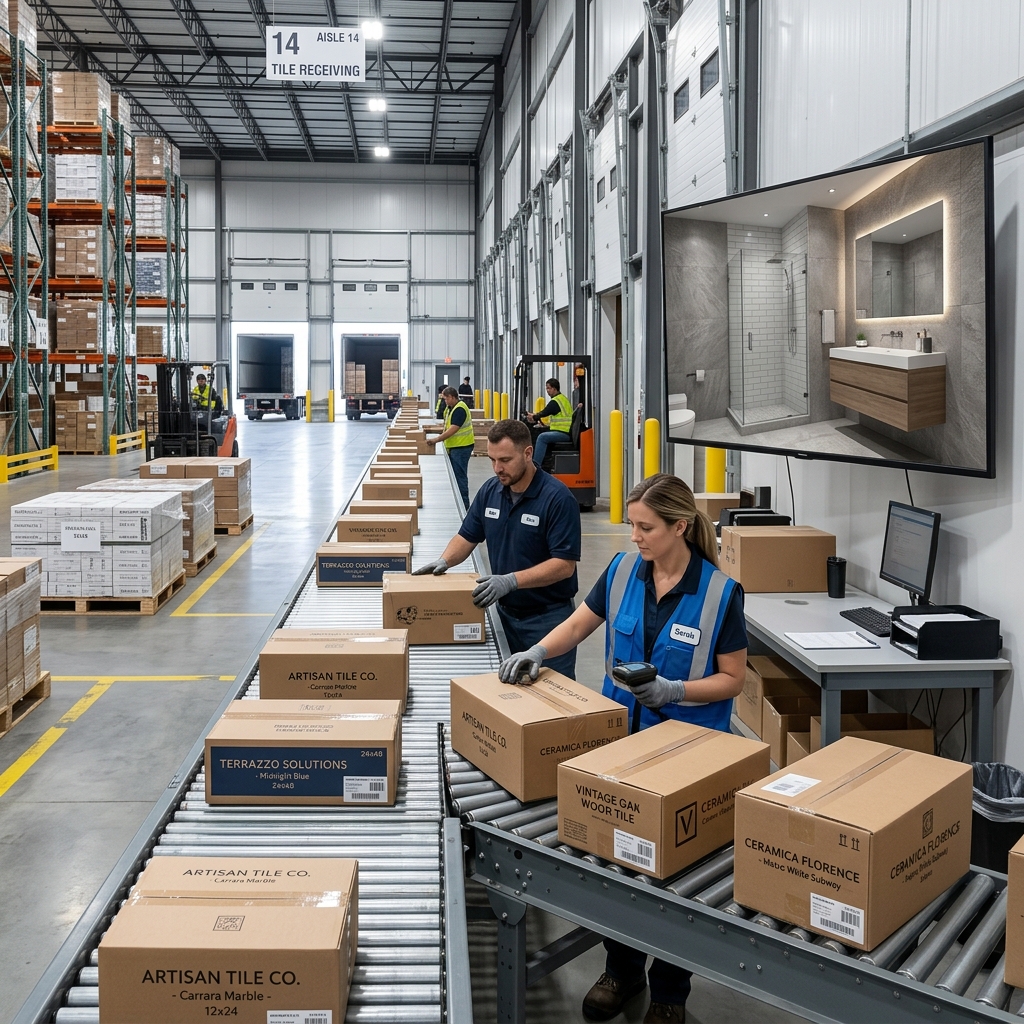
Marketplace integration for manufacturers who want to sell tile on Amazon and Wayfair list once, sell everywhere, without managing five separate spreadsheets.

Each marketplace has its own category rules, image requirements, and listing formats tile-specific attributes like finish, PEI rating, and coverage per box rarely map cleanly to a generic template. We set up and configure your seller accounts with the correct category mapping so listings aren't rejected or miscategorized at launch.
We push product data from a single source of truth your PIM or ERP out to every marketplace in the format each one requires. When you update a price or a finish description once, it updates everywhere, instead of you re-entering the same change five times.
Orders from Amazon, Wayfair, and your own storefront land in one dashboard instead of five separate seller portals. This keeps fulfillment teams working from a single queue and reduces the missed-order risk that comes from checking multiple logins.
When a pallet sells out on your own site, marketplace listings need to reflect that immediately, or you risk overselling and account penalties. We sync inventory across every channel in near real time, drawing from one stock count rather than separate allocations per channel.
Marketplace fees, shipping requirements, and competitive dynamics differ by channel, so a single list price rarely makes sense everywhere. We build pricing rules that adjust per marketplace accounting for referral fees and freight while keeping your margin visible in one place.
You need to know which marketplace is actually profitable, not just which one has the most orders. We build reporting that shows revenue, fees, and margin by channel, so channel investment decisions are based on net numbers, not gross order count.
We evaluate which marketplaces fit your product line and target markets, and audit your current product data for marketplace readiness.
We connect your PIM/ERP to each marketplace, configure category mapping, and set up centralized order and inventory sync.
We publish and QA your listings across each marketplace, checking category accuracy, imagery, and compliance before go-live.
We monitor channel performance, adjust pricing rules, and report monthly on revenue and margin by marketplace.
Find answers to common questions about marketplace tile ecommerce.
It depends on your product line and target buyer Amazon and Wayfair suit consumer-facing lines, while Faire and regional B2B marketplaces suit trade and boutique retail distribution. We assess this in the channel assessment phase.
Your own ecommerce store gives you full control over experience and pricing; marketplaces trade some of that control for built-in buyer traffic. Most brands run both.
Yes, when every channel draws from one centralized stock count rather than pre-allocated inventory per channel this is the core of the sync we build.
Both see our dedicated Marketplace Management Services page for ongoing listing optimization, account health, and channel strategy.