A tile store website rarely fails overnight. It just stops pulling its weight, one quiet month at a time. Quote requests thin out. The phone fills up with questions the product page should’ve answered.
If that sounds familiar, your range and pricing probably aren’t the problem. The site is. Tile is genuinely hard to sell online, because buyers weigh size, finish, shade, slip resistance and coverage per box all at once, and most store templates were designed for apparel or electronics, not 24×48 porcelain.
Below are five signs your tile store website needs an upgrade, what each one quietly costs you, and how to fix it. If you’re already comparing platforms, it helps to see how a tile ecommerce solution built around collections, lot numbers and sample ordering differs from a general retail theme.
What Are the Signs Your Tile Store Website Needs an Upgrade?
Your tile store website needs an upgrade when shoppers can’t filter by real tile attributes, product pages load slowly on phones, staff spend hours answering coverage and stock questions, buyers have no way to preview tile in a room, and organic search sends few qualified visitors. Spot two or more of these and the issue is usually structural, not cosmetic.
5 Signs Your Tile Ecommerce Website Needs an Upgrade
Every one of these shows up regularly across tile retail and distribution. A few can be patched in a week. Others mean the platform has hit its ceiling.
1. Poor Tile Product Filters
Picture a homeowner scrolling at 10 p.m. She wants a matte porcelain for a shower floor, roughly 12×24, slip resistant, warm grey. What she gets on many tile sites is a “Floor Tiles” category with 400 products and a price slider.
She leaves. Usually for a big box retailer whose filters actually work.
Tile buyers shop by attributes. At a minimum, they should be able to narrow by:
- Size and thickness
- Finish, such as matte, polished, honed or textured
- Material and PEI rating
- Where it goes: wall, floor, shower or outdoor
- Color family
There’s a back office side too. When every size and finish lives as a separate product, the catalog bloats, near duplicate pages compete in search, and one price change means editing twenty listings. That’s a data structure problem, and this walkthrough on managing complex tile product variants shows how to untangle it.
Quick test? Find one specific tile on your own site, on your phone, in under 30 seconds. Most owners don’t enjoy the result.
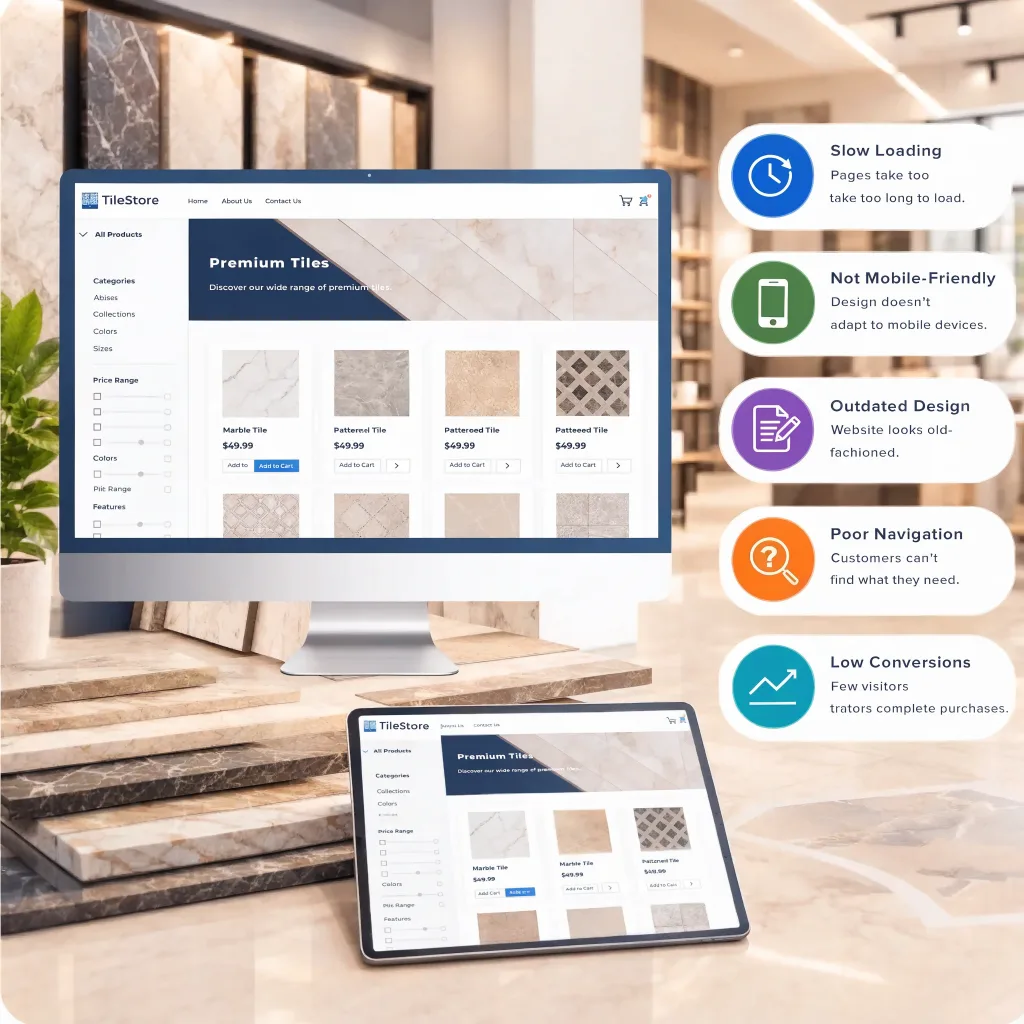
2. Slow Mobile Page Speed
Tile sells on pictures. Big, sharp texture shots are exactly what buyers want, and exactly what slows a page when images aren’t compressed, resized or lazy loaded.
Speed counts for more than it once did. Since July 5, 2024, Google has crawled sites for Search using only its smartphone crawler, so your mobile store is effectively the version being judged. Its Core Web Vitals guidance sets three targets: main content loading within 2.5 seconds, a response to taps in under 200 milliseconds, and a layout shift score below 0.1.
Older tile sites often miss all three. A gallery that jumps as photos load. A filter that freezes after each tap. A hero image that takes five seconds to show on a patchy connection.
No developer needed to spot it. Open the Core Web Vitals report in Google Search Console and check the mobile tab. If most product URLs sit in the poor or needs improvement range, you have your answer.
One caveat: compressing images helps, but a heavy, plugin stacked theme often caps how fast the site can get.
3. Missing Product Information
How many boxes do I need for 180 square feet? Is this in stock or special order? If I buy more next month, will it match?
Every one of those calls is a buyer who almost converted online, then hit a gap.
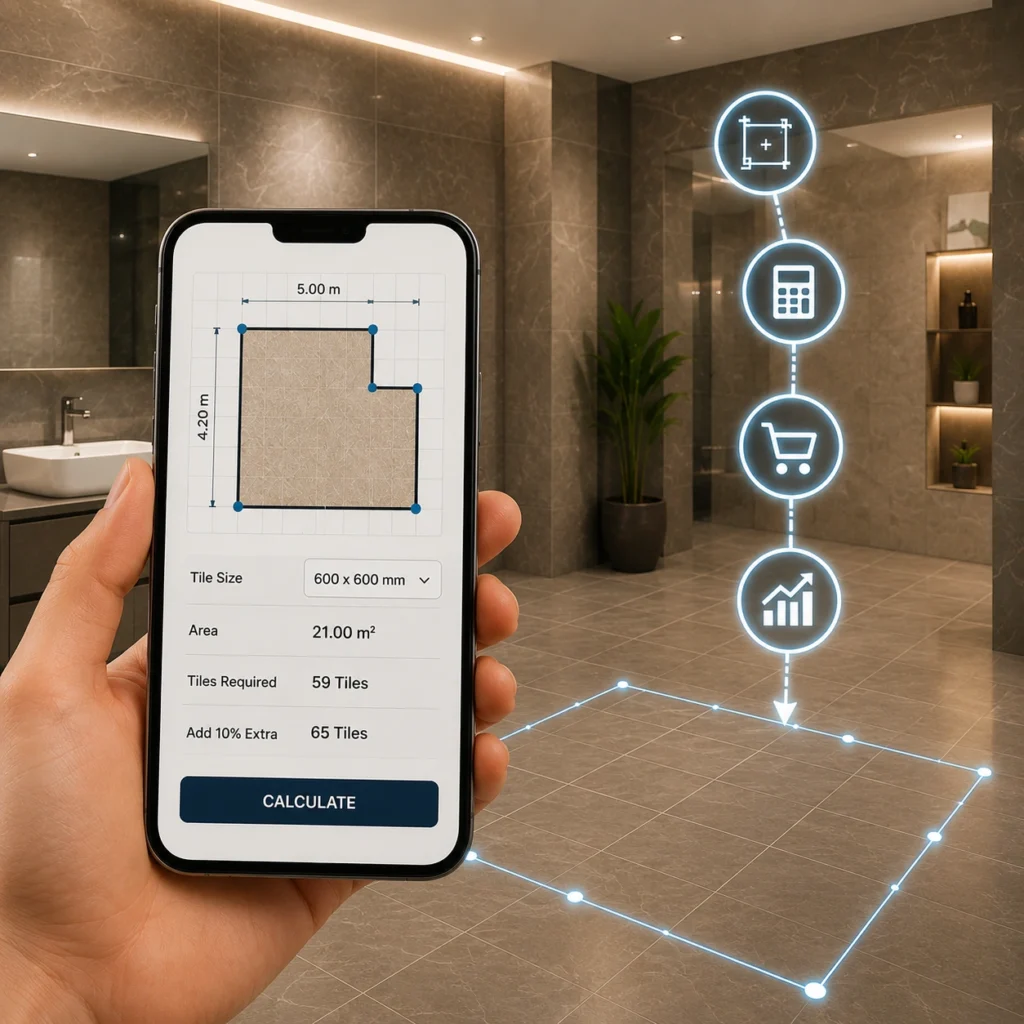
Coverage math causes the most trouble. Few shoppers know to add roughly 10 to 15 percent for cuts and breakage, so they under order and later reorder from a different batch. Put a calculator on the product page that converts room size into full boxes, waste included, and the problem is solved at the source. Our tile calculator solutions handle coverage, grout and layout.
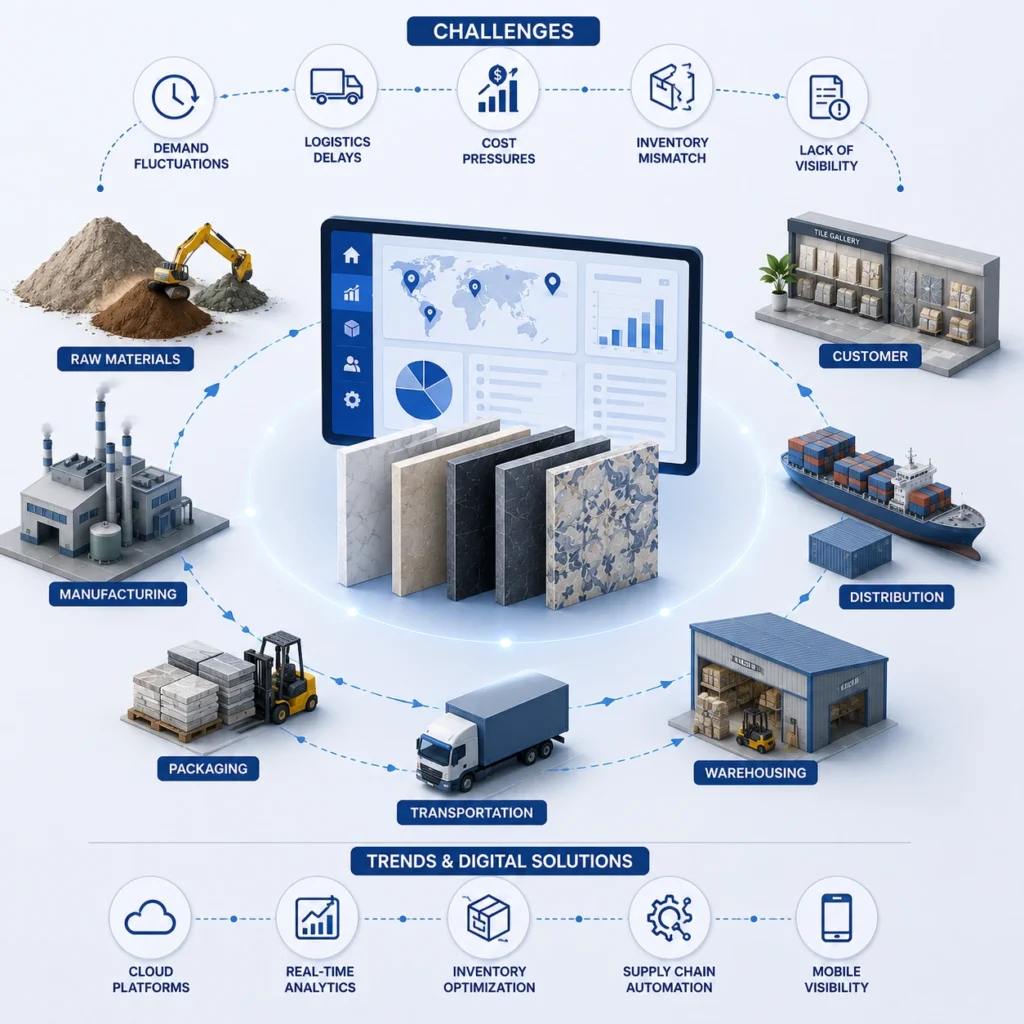
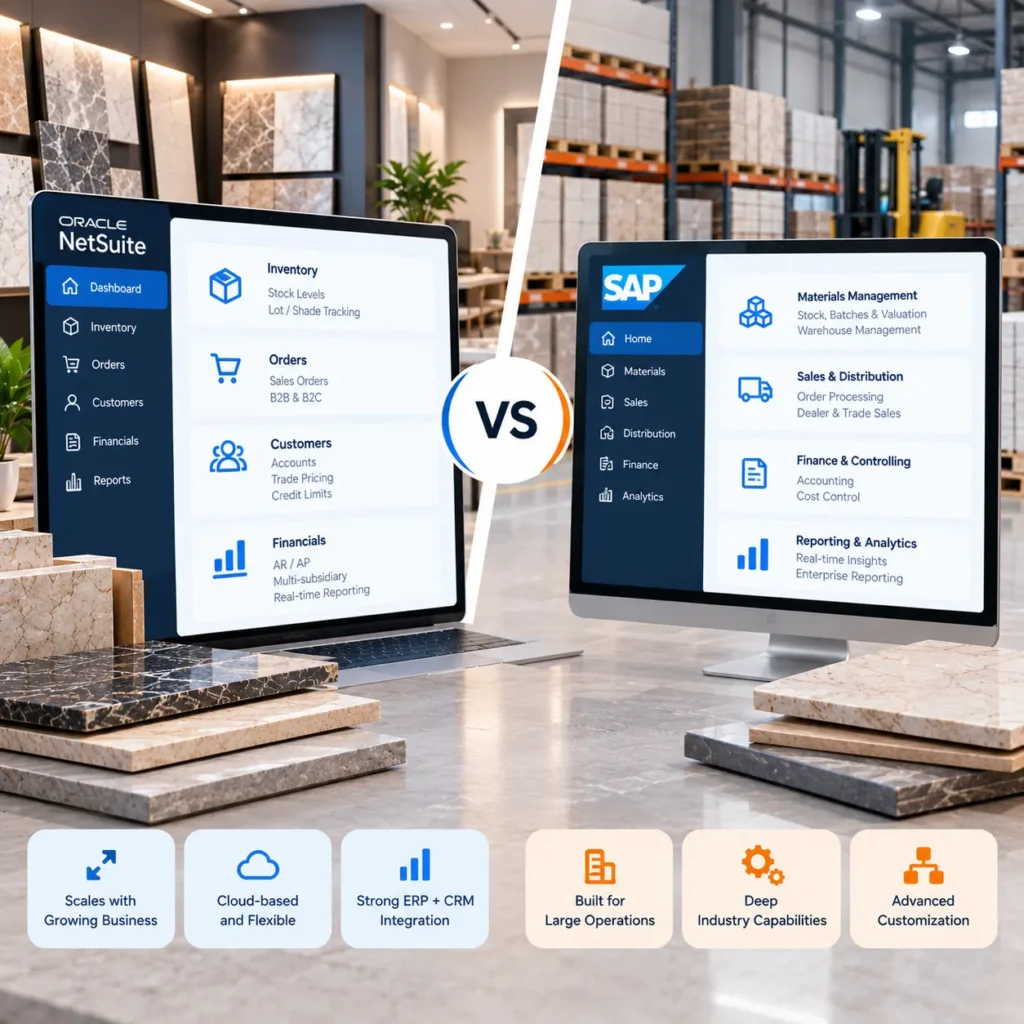
Stock is the next gap. “Call for availability” reads like a dead end, especially after hours. Real time sync with your warehouse data, through an inventory management solution, shows what’s actually on the shelf.
Then there’s shade. Experienced buyers ask about lot matching because they’ve been burned before. If you can show lot or shade codes, do.
The payoff shows up in the numbers. In one of our tile ecommerce case studies, a square footage and waste calculator built into product pages cut mismatched reorders by 64%.
4. No Room Visualization or Sample Ordering
Uncertainty kills tile sales.
A swatch on a white background tells a buyer almost nothing about how a whole kitchen floor of that tile will look under their lighting, next to their cabinets. So they hesitate, or drive to the showroom, or buy anyway and regret it. Then you’re handling returns of heavy, breakable stock you may not resell.
Two features close the gap:
- Sample ordering through a proper sample cart, not a contact form that says “email us for samples”
- Room visualization, where shoppers drop a tile into a room scene or onto their own floor using their phone camera
Do you need full 3D? Not always. A 2D room visualizer covers plenty of catalogs, and it’s lighter to build and maintain. But a site with neither samples nor visualization is asking people to spend serious money on a guess. Our product visualization solution ranges from photo based room scenes to AR on mobile.
5. Low Organic Search Traffic
Pull up the last 12 months in the Search Console. If clicks to product and collection pages haven’t moved, or most visits land on your homepage and contact page, Google doesn’t understand your catalog well enough to send buyers into it.
In tile, the usual culprits are:
- Manufacturer descriptions pasted word for word, so identical text sits on dozens of other sites
- Missing Product structured data, or markup that doesn’t match the visible price and stock
- Collection pages that are just an image grid with no helpful text
- Weak local signals for “tile store near me” searches, often an outdated Business Profile
AI Overviews raise the stakes a bit. They don’t rewrite the rules. Google’s own guidance on AI features says there are no extra requirements beyond normal Search eligibility, and it points back to basics: indexable pages, useful text, structured data that matches the page, and current Merchant Center and Business Profile details. Basic, yes. Still skipped on a surprising number of tile sites.
Our post on local SEO strategies for flooring companies covers the showroom visibility side. If organic growth has stalled for a year, specialist digital marketing services built around tile catalogs are worth a conversation.
Should You Redesign Your Tile Website or Rebuild It?
Not every sign calls for a new platform.
| What you’re seeing | What usually fixes it |
| Slow images, thin copy, missing schema | A focused refresh on your current platform |
| Weak filters, but clean product data | A new search and filter layer, or a better theme |
| Variants listed separately, no stock sync, no calculator | Catalog restructuring plus integration work |
| Three or more signs at once | A rebuild, ideally on a platform designed for tile |
A refresh can take a few weeks. A rebuild takes longer and needs careful redirect mapping, otherwise you risk losing rankings you’ve already earned. Before deciding either way, benchmark your site against this list of tile ecommerce website features.
One caution from experience. Don’t rebuild because a competitor launched something shiny. Rebuild when your platform blocks what buyers need.
Upgrade Your Tile Ecommerce Website to Convert More Buyers
If two or more of these signs feel uncomfortably familiar, it’s time for a closer look. Tiles IT Solutions builds ecommerce, catalog, calculator and visualization platforms for tile retailers, distributors and manufacturers. Start with a free audit. We’ll review your catalog structure, mobile speed and search visibility, then tell you plainly whether a refresh will do or a rebuild makes more sense.
Frequently Asked Questions
1. How often should a tile store website be upgraded?
There’s no fixed schedule. Review performance at least once a year and treat the five signs above as the real trigger. A site that still converts well on mobile doesn’t need replacing just because it’s a few years old.
2. Will upgrading my website hurt my Google rankings?
It can if URLs change without redirects. Map every old product and collection URL to its new version with 301 redirects, keep content that already ranks, and test before launch. Done carefully, the risk is small.
3. What features should a tile ecommerce website have?
Attribute filters for size, finish, material and application, coverage per box, a tile calculator, sample ordering, live stock levels, lot or shade details, fast mobile pages and, ideally, a room visualizer.
4. Do small tile stores need a 3D visualizer?
Not always. Often a 2D room visualizer or good installed photos are enough for a smaller catalog. What matters is giving buyers some way to see tile in context before they commit.
5. How much does a tile website upgrade cost?
It depends on scope. A speed and content refresh costs far less than a rebuild with ERP, inventory and calculator integrations. Catalog size and the number of connected systems drive most of the budget.